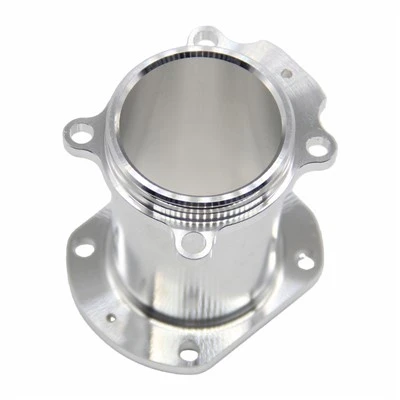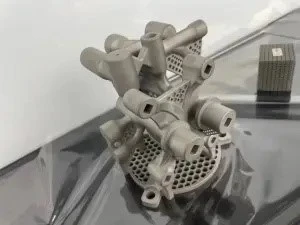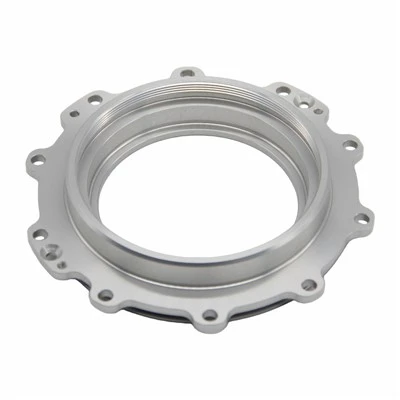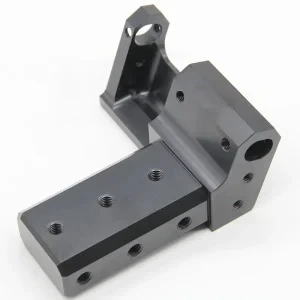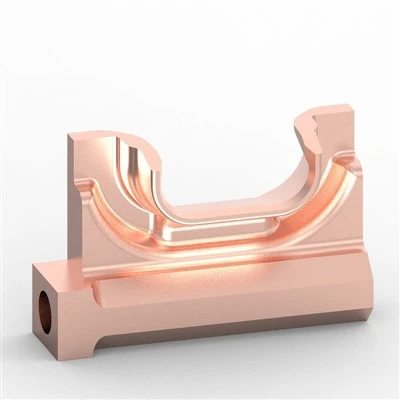

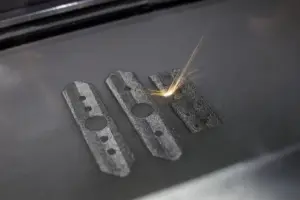


Titanium delivers the strength-to-weight ratio aerospace engineers need, yet it routinely turns prototype schedules into delays, drives scrap rates up, and frustrates suppliers who cannot hold tolerances. Low thermal conductivity, rapid work hardening, and aggressive tool wear make conventional approaches expensive and unreliable. Many shops discover the hard way that thin walls spring back or chatter under cutting forces, forcing rework that kills the schedule. 5-Axis Aerospace Components produced on modern multi-axis platforms change that equation-delivering the close-tolerance aerospace milled parts that meet FAA-grade requirements without endless re-setups or failed first articles.
Why Titanium Is Both a Blessing and a Headache for Aerospace Engineers
Titanium alloys, especially Ti-6Al-4V (Grade 5), offer excellent specific strength, corrosion resistance, and performance at elevated temperatures. That is why they dominate structural airframe parts, engine components, and fasteners. The same physics that make titanium valuable also make it difficult to machine.
Its thermal conductivity is only about 6.7 W/m·K-roughly 1/25 that of aluminum alloys. Heat stays concentrated at the tool-workpiece interface instead of leaving with the chip. The result is rapid tool softening, galling, and work hardening. Young's modulus is also lower than steel, so thin-walled or slender features deflect under cutting forces and produce chatter or spring-back. Cutting speeds must be kept far lower than for aluminum; industry data show roughing speeds often start around 50–120 SFM (15–37 m/min) versus several hundred SFM for aluminum, and overall cycle times can run 5–8× longer.
These realities turn Aerospace Milled Parts into high-risk items for any shop that treats titanium like aluminum or steel. Tooling costs climb, delivery dates slip, and yield suffers-exactly the pain points that drive engineers and procurement teams to look for specialists in aerospace-grade titanium alloy machining.
What Makes 5-Axis Machining the Standard for Aerospace-Grade Titanium
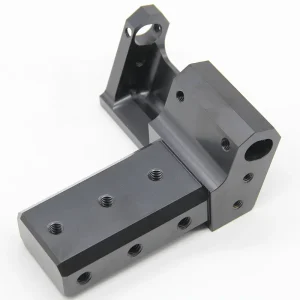
Simultaneous or positional 5-axis platforms have become the default for flight-critical titanium work because they attack the root causes of the problems above.
Fewer Setups, Tighter Tolerances
Each re-clamp introduces location error. 5-axis keeps the part in one fixturing while the tool approaches from virtually any angle. Critical datums stay locked, making close tolerance aerospace components (±0.01 mm or tighter on key features) repeatable rather than heroic.
Complex Geometries Without Compromising Structural Integrity
Blisks, spars, brackets with organic contours, and deep pockets with thin walls are common. 5-axis tool paths maintain optimal engagement and allow continuous finishing passes that preserve residual-stress profiles and fatigue life-requirements that matter under FAA and OEM structural substantiation.
Reduced Tool Wear Through Optimized Cutting Angles
By tilting the tool, programmers keep the cutting edge in a more favorable orientation, improve chip evacuation, and apply high-pressure coolant more effectively where it is needed most. On titanium this often means lower radial engagement combined with higher axial depth, which keeps heat manageable and extends insert life. The net result is more consistent surface integrity on 5-Axis Aerospace Components and fewer unexpected tool changes mid-run.
These advantages are why experienced titanium aerospace parts manufacturers treat 5-axis capacity as non-negotiable for both prototype and production work.
From Prototype to Production - Where CNC Milling Fits In
Prototype CNC Milling Services let design teams iterate quickly on titanium geometries while still holding aerospace tolerances. Small batches validate fit, form, and function before committing to larger runs. The same process knowledge and machine park that support rapid prototypes also scale into production volumes at an aerospace CNC machining factory. Capacity elasticity-quick changeovers, standardized fixturing, and documented process plans-keeps lead times predictable whether the order is five pieces or five hundred. Teams that already understand 5-Axis Aerospace Components can move from first-article approval into steady output without rewriting the entire process.
Real-World Proof - Sunhingstones Case Study
An aerospace customer needed a complex Ti-6Al-4V (AMS 4928) structural bracket roughly 180 mm in the longest dimension, featuring thin walls down to 1.2 mm and several positional tolerances of ±0.01 mm. Two previous suppliers had failed first-article inspection-primarily from spring-back on the thin sections and accumulated location error after multiple setups. Sunhingstones ran the part on simultaneous 5-axis platforms with optimized tool paths and high-pressure coolant. The first article passed CMM inspection on the initial submission. Cycle time dropped approximately 35 % versus the prior multi-setup approach, and overall yield settled above 98 % once the process was locked. Full material traceability, AS9100 process controls, and complete FAI documentation accompanied every lot. The program moved from prototype validation into steady production of wholesale aerospace milled parts without further drama.
Industry Recognition - A Nod from ESTA
External industry recognition, including relevant nods from bodies such as ESTA, serves as one additional trust signal for process maturity. While certifications, measured results, and customer outcomes remain the primary evidence, independent acknowledgments reinforce that the shop's methods are recognized beyond its own walls.
What to Look for in an Aerospace Titanium Machining Partner
When evaluating a titanium aerospace parts manufacturer or aerospace CNC machining factory, prioritize:
Current AS9100 (and ITAR if applicable) registration with evidence of effective implementation
Full material traceability back to mill certifications (AMS 4928 and related specs for Ti-6Al-4V)
Documented 5-axis titanium process plans (tool life limits, coolant strategy, in-process checks)
In-house CMM / inspection capability and readiness for FAI / AS9102 packages
Proven experience holding close tolerances on thin-wall or complex titanium features
Capacity to move from prototype CNC milling services into production without changing process fundamentals
These elements separate shops that can occasionally machine titanium from partners who consistently deliver flight-worthy 5-Axis Aerospace Components and wholesale aerospace milled parts.
Comparison of Key Machining Parameters
|
Parameter |
Ti-6Al-4V (typical) |
6061-T6 Aluminum (typical) |
Implication for Aerospace Work |
|
Thermal conductivity |
~6.7 W/m·K |
~167 W/m·K |
Heat concentrates at tool; tool life suffers |
|
Rough milling speed |
80–120 SFM (24–37 m/min) |
500–1,000 SFM |
Much lower metal removal rate |
|
Relative cycle time |
5–8× |
1× (baseline) |
Longer lead times if unoptimized |
|
Machinability rating |
~22 % |
~170 % |
Higher tooling & process cost |
|
Achievable tight tolerance |
±0.01 mm (with 5-axis + CMM) |
±0.01–0.025 mm |
5-axis + process control essential for FAA-grade |
|
Coolant requirement |
High-pressure flood essential |
Standard flood or mist |
Chip control & tool life critical |
Data synthesized from industry machining guides and published parameter comparisons.
FAQ
Q: What is 5-axis CNC machining used for in aerospace?
A: It produces complex structural and engine components-brackets, spars, housings, blisks, and fittings-in titanium, aluminum, and superalloys while holding the tight positional and geometric tolerances required for FAA and OEM compliance.
Q: How long does it take to machine titanium aerospace components?
A: Cycle time depends on geometry, stock removal, and process maturity. Simple prismatic features may finish in hours; complex thin-wall or multi-sided parts often require multiple shifts. Optimized 5-axis strategies routinely cut total time versus multi-setup 3-axis approaches.
Q: Can prototype CNC milling services handle aerospace-grade tolerances?
A: Yes, when the shop applies the same process controls, tooling, and inspection used for production. Many aerospace programs intentionally use prototype runs to prove the process before scaling.
Q: What titanium grades are best for aerospace parts?
A: Ti-6Al-4V (Grade 5 / AMS 4928) is the workhorse for structural and many engine applications. Commercially pure grades (e.g., Grade 2) appear in corrosion-critical non-structural uses; higher-temperature or higher-strength alloys are selected for specific engine or landing-gear roles.
Ready to Move Forward?
If you have a titanium drawing that has already caused schedule or quality problems-or a new design that needs to hit FAA-grade tolerances the first time-send the files. We will review manufacturability, confirm material and process suitability, and return a clear quote with realistic lead times. No generic pitch, just practical feedback from a team that machines aerospace-grade titanium every day and understands what it takes to deliver reliable 5-Axis Aerospace Components.