

Why Standard Turning Falls Short on Aerospace Parts
Titanium, superalloys, and high-strength aluminum each bring their own problems. Ti-6Al-4V conducts heat poorly, work-hardens, and loves to stick to the tool. Inconel generates high cutting forces and shortens tool life. Even 7075 aluminum can move under clamp pressure or residual stress if the process is not controlled. AS9100 and FAA expectations add another layer: tight positional tolerances, surface finishes in the Ra 0.4–1.6 μm range, and full material traceability.
Three-axis processes expose these weaknesses quickly. Multiple setups stack up datum errors. Thin walls deflect. Deep holes lose concentricity. Surface integrity suffers, and fatigue life drops.
What Changes with 5-Axis and Turn-Mill
A 5-axis or turn-mill machine finishes most features in one clamping. That single change cuts cumulative error and lets the tool approach the part at better angles. Thin walls stay more stable. Contoured surfaces come off the machine closer to final finish. For brackets, flanges, connectors, and certain blade-related components, the difference is measurable.
In practice, buyers looking for 5-Axis Aerospace Components, Aerospace Milled Parts, and Tight Tolerance Turned Parts now treat simultaneous 5-axis capability as a baseline rather than a nice-to-have.
Materials That Benefit Most from 5-Axis Work
|
Material |
Common Uses |
Main Challenges |
How 5-Axis Helps |
|
Titanium (Ti-6Al-4V and similar) |
Structural fittings, engine interfaces |
Heat, built-up edge, work hardening |
Better tool orientation and coolant access improve surface quality and reduce distortion |
|
Aerospace aluminum (7075, 6061) |
Brackets, housings, lightweight frames |
Wall deflection, finish requirements |
Single setup maintains position; higher speeds keep surfaces clean |
|
Superalloys (Inconel family) |
Hot-section hardware, high-load fasteners |
Cutting forces, tool wear |
Continuous cutting reduces setups and stabilizes the process |
Aerospace Grade Titanium Machining in particular rewards shops that understand how to manage heat and residual stress rather than simply push harder.
Why Prototype Work Still Matters
Aerospace programs move slowly and the cost of a late design change is high. Good Prototype CNC Milling Services let you test manufacturability, tolerance stack-up, and assembly fit using process paths that can later scale. Most complex 5-axis prototypes land in the 5–14 day window when the shop is set up for it. The real value appears when the same fixturing logic, toolpaths, and inspection plan carry forward into low-volume production. That continuity is what prevents the classic "prototype worked, production failed" problem.
One titanium bracket project showed the pattern clearly. Early parts revealed local stiffness issues that caused wall movement beyond tolerance. A revised toolpath strategy plus a small geometry tweak fixed the problem before any production tooling was cut. Catching it at the prototype stage saved both scrap and schedule.
Case Example: Titanium Connector for a Structural Interface
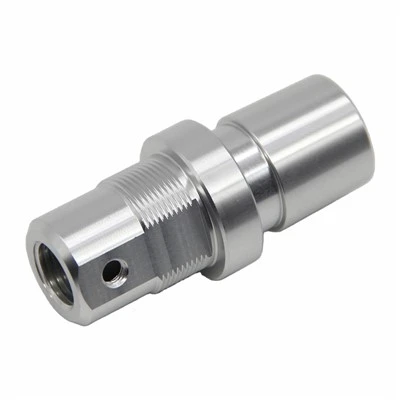
A recent titanium connector required thin walls, several deep holes, and critical dimensions held to ±0.008 mm under full AS9100 documentation. Earlier 3-axis attempts needed three setups and still struggled with wall deflection and hole alignment.
Moving the job to a 5-axis turn-mill platform allowed most features to be completed in one clamping. Toolpaths were adjusted to keep cutting forces low and consistent; in-process probing checked the deep holes before the part left the machine. First-article yield rose sharply, the delivery date held, and the same process parameters transferred cleanly into the first production lot. The customer's incoming inspection reports matched the process data, which is the result that actually builds long-term confidence.
How to Evaluate an Aerospace Turning Supplier
When you are choosing a CNC Turning Manufacturer or Aircraft Component Factory, look past the brochure claims:
Real AS9100 implementation-not just the certificate. Ask for recent FAIs and process control examples.
Actual 5-axis capacity and metrology (CMM, on-machine probing, surface measurement).
Full material pedigree and serial-level traceability.
Proven ability to move from prototype to production without rewriting the process.
Technical responsiveness. Fast, useful DFM feedback usually matters more than the lowest unit price.
Shops that clear these checks are the ones capable of delivering Precision Turned Aerospace Parts Wholesale at consistent quality.
FAQ
Q: What is 5-axis CNC turning and how does it differ from 3-axis?
A: 5-axis (or turn-mill) machines move the tool or the part across five axes at once. Complex surfaces, angled holes, and multi-face work can finish in one setup. 3-axis work usually needs several re-clampings, each adding risk of error and distortion.
Q: Are 5-axis aerospace components always more expensive?
A: The machine rate is higher, but fewer setups, better yield, and shorter overall lead times often bring the total project cost down-especially on complex or tight-tolerance parts.
Q: What materials are common for aerospace milled and turned parts?
A: Titanium alloys, 7075 and 6061 aluminum, certain stainless grades, and nickel-based superalloys. The right shop needs both the process knowledge and the traceability systems for the material you specify.
Q: How long do aerospace prototypes usually take?
A: Complex 5-axis work typically runs 5–14 days depending on material, geometry, and inspection requirements. Simpler aluminum parts can be faster when capacity is available.
Q: Is AS9100 required?
A: For most flight hardware and OEM programs, yes. Even for early prototypes, working with an AS9100 shop reduces documentation and process risk later.
Next Step
If you have drawings that have already been turned down elsewhere, or you simply want a realistic assessment of lead time and capability, send the files. A shop that can run true 5-axis processes and maintain process control from first article through production will tell you quickly what is practical-and what needs adjustment.