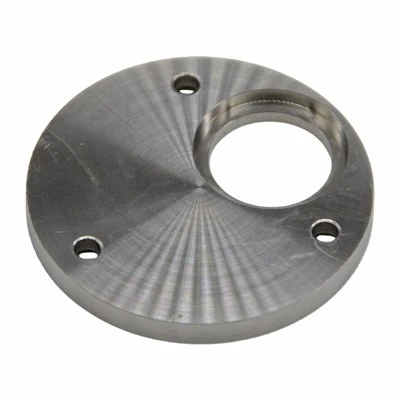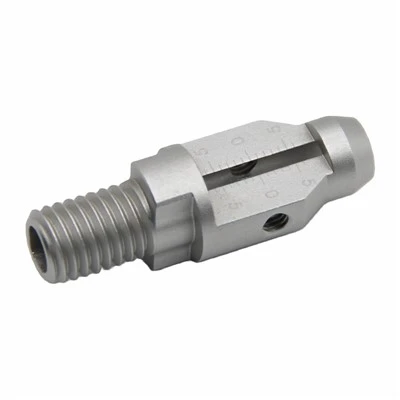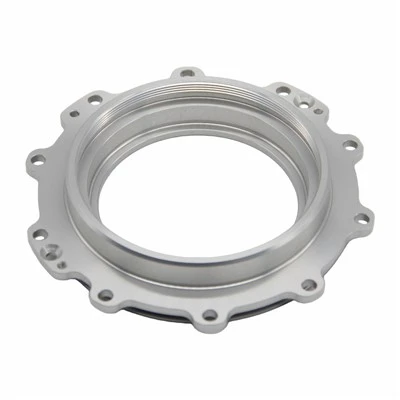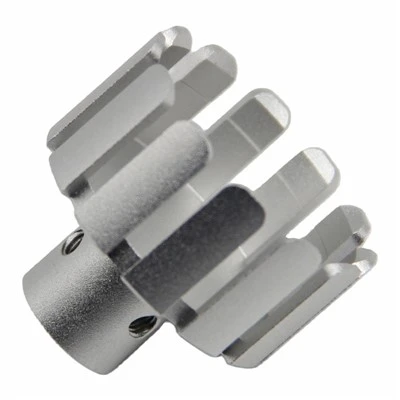
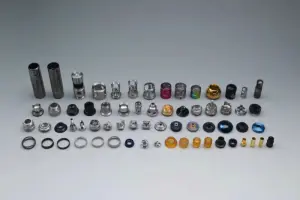

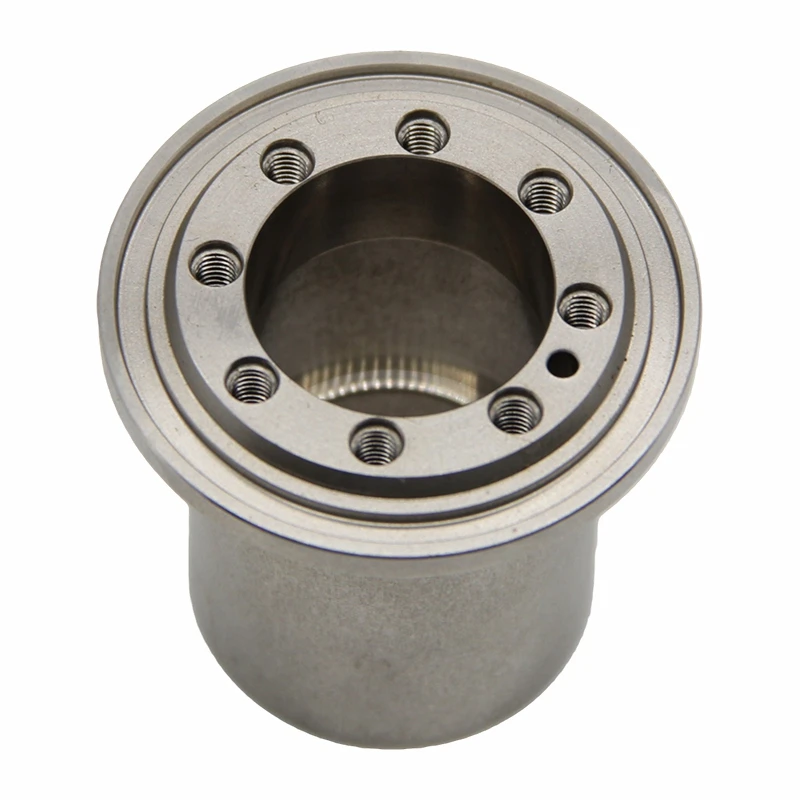
Processing Capabilities
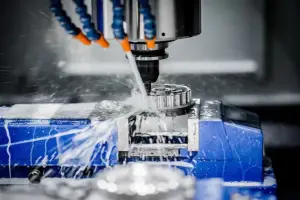
Our shop runs a mix of 3-axis, 4-axis, and 5-axis CNC centers, alongside EDM and precision grinding lines. In practice, that breaks down like this:
CNC Turning - shafts, sleeves, and other rotational parts where batch consistency matters more than geometric complexity.
CNC Milling (3/4/5-axis) - for parts that can't be made in a single setup: deep cavities, compound angles, undercuts.
EDM (Electrical Discharge Machining) - reserved for hardened tool steel and mold cavities where cutting tools simply can't reach or wouldn't survive.
Precision Grinding - the final pass on mating surfaces where a milled finish isn't tight enough.
One recurring pattern we see: customers send us a drawing optimized for injection molding or casting, and it needs rework before it's machinable efficiently. We flag those issues during quoting, not after the first article inspection - it saves a redesign cycle later. If your part has features that seem hard to fix a price on (blind pockets under 3mm, thread depths near the material limit), that's usually a sign to loop in engineering before finalizing the drawing.
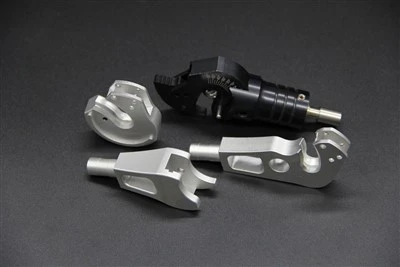
Material Options
Material choice usually gets decided by one dominant constraint - weight, corrosion exposure, or thermal load - and everything else follows from there.
Metals:
Aluminum 6061 / 7075 - 6061 for general structural parts and heat sinks; 7075 when you need aerospace-grade strength and can accept a higher cost and slower removal rate.
Stainless Steel 304 / 316 - 304 covers most indoor and food-contact uses; 316 is worth the premium in marine or chemical-exposure environments.
Titanium Alloys - strength-to-weight ratio that aluminum can't match, but expect 3-5x the machining time of aluminum, which shows up in lead time and cost.
Copper Alloys - used almost exclusively where electrical or thermal conductivity is the actual spec, not just a nice-to-have.
Tool Steel - for mold inserts and high-wear components, not general production parts.
Engineering Plastics:
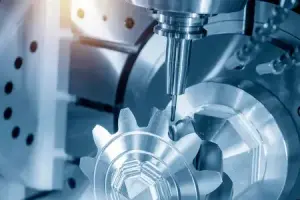
POM - dimensionally stable enough for precision gears without the cost of metal.
PEEK - the default when a plastic needs to survive sterilization cycles or sustained heat above 250°C.
PTFE, Nylon - selected for friction coefficient or dielectric properties, on a case-by-case basis.
On one recent aluminum housing project, the customer's initial spec called for 7075 by default, but the part carried no significant structural load - switching to 6061 cut material cost by roughly 30% with no functional trade-off. That kind of review is part of standard quoting, not an add-on service.
All materials are matched against RoHS and REACH compliance where the end application requires it.
Machining Precision
Here's where a lot of quotes get vague, so let's be specific instead:
Standard tolerance range: ±0.005mm–±0.01mm, holding tighter is possible on select features but adds cost and cycle time - worth discussing before it's baked into a drawing by default.
Surface finish: Ra 0.4–1.6 as standard, finer on request for sealing or optical surfaces.
In-process checks happen on the machine, not just at final inspection - tool wear compensation is applied in real time rather than corrected after a batch runs out of spec.
A ±0.005mm tolerance called out on every dimension of a drawing, including features that don't need it, is one of the more common reasons quotes come back higher than expected. Tightening only the dimensions that actually control fit or function usually brings cost down without changing how the part performs.
Quality Inspection
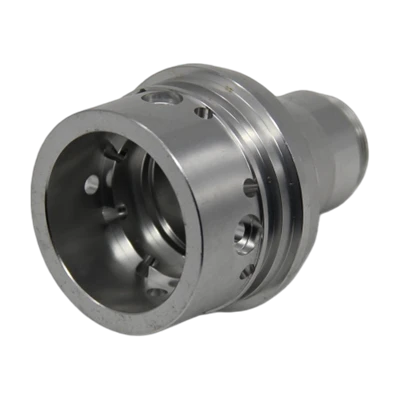
Inspection isn't a single checkpoint at the end - it's three separate stages, and each one exists to catch a different kind of failure:
First Article Inspection - full dimensional check before the rest of the batch runs. This is where a bad fixture setup or a misread drawing gets caught early, not at part 200.
In-Process Sampling - periodic checks during the run to catch tool wear or thermal drift before it accumulates across the batch.
Final Inspection - CMM, optical projection, and roughness testing, full or sampled depending on the part's risk profile and the customer's incoming inspection requirements.
For critical materials, we can also provide spectral analysis reports confirming alloy composition batch-to-batch - this comes up most often on aerospace and medical orders where material certification is part of the customer's own audit trail.
Our quality system is ISO 9001 certified, with select lines carrying AS9100 certification for aerospace work.
Industry Applications
Aerospace is usually the most demanding category we work with - not just on tolerance, but on documentation. Material certs, full dimensional reports, and AS9100 traceability are typically non-negotiable, and lead times get built around that paperwork as much as the machining itself.
Medical devices bring a different set of constraints: surface finish and material biocompatibility often matter as much as dimensional accuracy, and sterilization compatibility (autoclave, gamma, EtO) needs to be considered at the material selection stage, not after the part is made.
Automotive electronics, industrial automation, and new energy equipment round out the rest of our regular work - sensor housings, robotic joint components, and battery structural parts, respectively. These tend to be higher-volume, more cost-sensitive projects where consistency across thousands of units matters more than any single part's complexity.
FAQ
Q: What tolerances can you actually hold in production, not just on a first article?
A: ±0.005mm–±0.01mm is achievable and repeatable across a full batch, not just on a hand-picked sample. If a spec is tighter than that, we'll tell you during quoting rather than after the fact.
Q: I don't know which material to pick - how does that conversation usually go?
A: Most of the time it comes down to one factor: is the part load-bearing, does it see corrosive exposure, or does it need to conduct heat/electricity? Send the use case, even without a finished drawing, and we can narrow it down before you commit to a spec.
Q: What does your inspection report actually include?
A: Depends on the order - a first-article report typically has full dimensional data against the drawing; for AS9100 or medical work, you'll also get material certs and, where applicable, spectral analysis.
Q: Do you work with startups or one-off prototype orders, or only production volumes?
A: Both. Prototype and low-volume orders run through the same process controls as production batches - the difference is mainly in setup time and per-unit cost, not in how the part is inspected.
Q: Lead times for prototyping vs. full production?
A: Prototypes: typically a few business days depending on complexity. Production: depends on volume, material lead time, and whether the drawing needs any DFM adjustments - send drawings early and we'll give a real number, not a range.
Hot Tags: precision parts processing services, China precision parts processing services manufacturers, suppliers, factory, cnc machining complex parts