


Core Advantages of Our Prototype CNC Milling Services
Fast turnaround without skipping quality steps. Standard prototype orders typically ship in 3–5 business days, with rush options available in 24–72 hours depending on part complexity and material. The schedule isn't compressed by skipping first-article inspection. It's compressed by running dedicated prototype cells that aren't queued behind production orders.
Tight, repeatable tolerances. Our standard CNC milling tolerance holds at ±0.005mm (±0.0002in) on critical features, with tighter tolerances available on request for fit-critical prototypes such as housings, brackets, and mating assemblies. This matters most when a prototype has to validate an actual assembly fit rather than serve as a visual mockup.
Broad material availability from day one. Because a prototype is often the first physical test of a design decision, we keep common aluminum, steel, and engineering plastic stock on hand instead of sourcing per order. That stock availability is a major reason turnaround stays short.
Multi-axis machining capability. Our 3-axis, 4-axis, and 5-axis CNC milling centers cover everything from simple flat-face parts to complex, undercut, or compound-angle geometries in a single setup. Machining a part in one setup, instead of repositioning it several times, also reduces fixturing error.
Direct engineering feedback, not just order processing. When a prototype order shows a design risk, such as thin walls, deep pockets, or tight internal corners, our engineers send a short DFM (Design for Manufacturability) note back to the client before machining starts. Catching a wall-thickness issue during quoting costs far less than catching it after the part is cut.
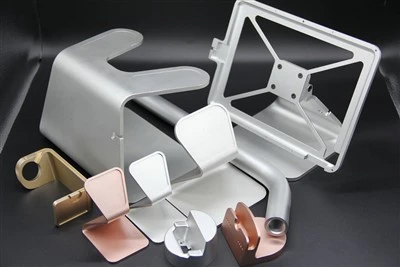
Technical Parameters
|
Item |
Specification |
|
Machine types |
3-axis, 4-axis, and 5-axis CNC milling centers |
|
Max part size |
Up to 800 x 500 x 500mm (larger on request) |
|
Standard tolerance |
±0.005mm (±0.0002in) on critical features |
|
General tolerance |
±0.02mm on non-critical dimensions |
|
Surface roughness |
Ra 0.8–3.2μm, finer on request |
|
Minimum order quantity |
1 piece |
|
Lead time |
3–5 business days standard, 24–72 hours rush |
|
File formats accepted |
STEP, IGES, STL, native SolidWorks/ProE |
|
Post-processing options |
Anodizing, bead blasting, powder coating, electroplating, silk-screen printing, passivation |
Prototype CNC Milling Capabilities
Prototype milling is rarely a matter of feeding a CAD file into a machine and waiting. The process has to account for geometry that, in many cases, no one has cut before. Our shop routinely handles:
Face milling and contour milling for flat mounting surfaces and outer profile accuracy
Pocket and cavity milling for enclosures, housings, and internal cooling or wiring channels
Drilling, tapping, and thread milling for hardware interfaces, including blind holes and metric/imperial thread combinations
Complex surface and contoured milling on 4/5-axis equipment for parts with compound curves, such as impellers, angled-mount brackets, or ergonomic enclosures
A common scenario we see: a client sends a thin-wall aluminum enclosure design for an electronics housing. Printed in 3D, that geometry would likely warp or shrink unpredictably. Milled from solid stock, it holds its shape and flatness reliably. Another frequent case is a motor mount or gearbox bracket that has to bolt directly onto an existing test rig, which means hole positions and tolerances need to match the final design intent exactly, rather than approximately.
Precision & Quality Control for Prototype CNC Milling
Precision on a prototype run isn't optional. If the first part is off, the entire design validation cycle is off with it. Every batch goes through first-article inspection before the rest of the run proceeds, and critical dimensions are verified on a CMM (coordinate measuring machine) rather than manual calipers alone. For parts with tight geometric tolerancing (flatness, perpendicularity, position), we provide an inspection report on request, so engineers can compare measured values against drawing callouts directly instead of taking our word for it.
This inspection step also catches design issues early: a hole that's technically machinable but sits too close to an edge, a pocket depth that leaves a wall thinner than intended, or a tolerance stack-up that won't actually assemble. Flagging these problems before tooling investment is a core part of why prototype CNC milling exists as a step in the first place.
Materials for Prototype CNC Milling
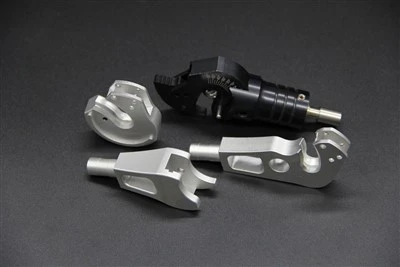
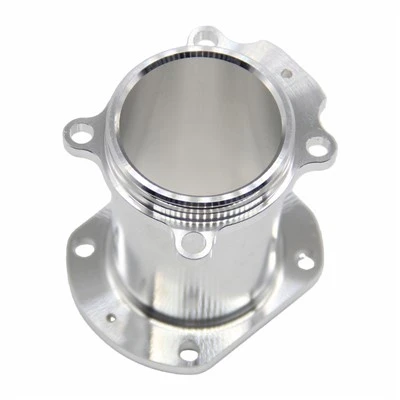
Aluminum alloys (6061, 7075, 5052): the default choice for structural prototypes, enclosures, and lightweight brackets. Good machinability, decent strength-to-weight, and anodizes well for a production-representative finish.
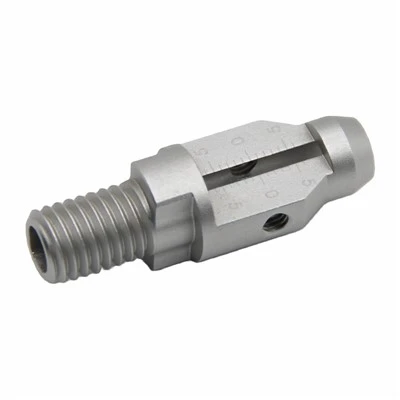
Stainless steel (303, 304, 316): used when the prototype needs to represent corrosion resistance or higher mechanical strength. Common in medical and marine-adjacent applications.
Brass and copper: chosen for electrical conductivity testing, or when a part needs a specific thermal or EMI-shielding property.
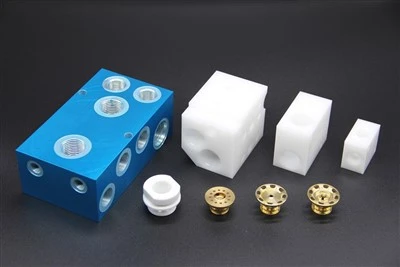
Engineering plastics (ABS, POM/Delrin, Nylon, PC, PEEK): used for functional prototypes where weight, insulation, or chemical resistance matters more than metal strength, as well as for lower-cost visual and fit-check prototypes.
Choosing the right prototype machining material depends as much on what you're testing as on what the final part will be made of. A fit-check prototype doesn't need production-grade material, but a functional or drop-test prototype usually should match it.
Prototype CNC Milling Applications
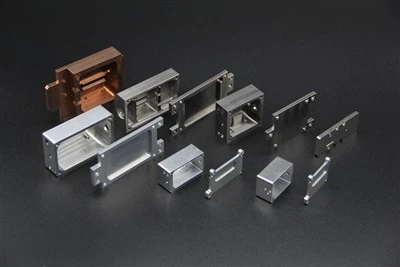
New energy vehicle (NEV) components: battery enclosure brackets, motor housings, and connector mounts, where dimensional accuracy directly affects assembly with other prototype subsystems
Medical device housings: prototypes that need tight tolerances and clean, contamination-free surface finishes ahead of regulatory design verification
Consumer electronics: enclosures and internal brackets where wall thickness and fit tolerance affect both function and appearance
Industrial automation: sensor mounts, gearbox brackets, and custom fixtures used to validate mechanical assemblies before a production run
Aerospace-adjacent components: low-volume structural and bracket parts where material traceability and tight tolerance matter even at the prototype stage
Across these industries, the common thread is the same: our prototype CNC milling services help validate a design decision before it's locked into expensive tooling, rather than simply producing a display model.
Quality You Can Verify on Every Prototype CNC Milling Order
Every prototype we ship carries the same inspection discipline as our production runs: first-article inspection, CMM verification on critical dimensions, and a written inspection report available on request. Engineers can cross-check reported tolerances against the part in hand, instead of relying on a supplier's word alone.
FAQ
Q: Can you machine a single prototype piece, or is there a minimum order quantity?
A: Yes, single-piece orders are common and there's no minimum order quantity. Most prototype clients start with 1–5 pieces before deciding whether to move to a small batch or full production tooling.
Q: Will the tolerance on my prototype match what I'll get in production?
A: For CNC-milled parts, yes. The prototype is typically cut on the same class of equipment, using the same tolerance standards, as a production milling job - one of the main advantages over 3D-printed prototypes. If your final part will be injection molded, prototype tolerance may still differ slightly from eventual molded tolerance; we'll flag that during quoting.
Q: What file formats do you accept for quoting?
A: STEP and IGES are preferred for accurate quoting since they preserve exact geometry. STL is accepted but is less precise for tight-tolerance features. Native SolidWorks or ProE files also work.
Q: Do you provide design feedback before machining starts?
A: Yes. When a design carries a manufacturability risk - thin walls, deep narrow pockets, hard-to-reach internal features - our engineers send a short DFM note back before the order is confirmed, so you can adjust the design or proceed as-is.
Q: How fast can a rush prototype be completed?
A: Simple geometries in common materials like 6061 aluminum can often be turned around in 24–72 hours. More complex 5-axis geometries or harder materials like stainless steel typically need the standard 3–5 day window, to allow for proper tool paths and inspection.
Q: Does surface finishing add to the lead time?
A: Yes, typically 1–3 additional days depending on the process. Bead blasting and basic anodizing add the least time; multi-step finishes like electroplating with a specific color match take longer. We'll confirm the exact impact during quoting.
Have a CAD file ready? Send it over for a quote and DFM check on your prototype CNC milling project - most orders get a response within one business day.
Hot Tags: prototype cnc milling services, China prototype cnc milling services manufacturers, suppliers, factory, cnc milling services, Complex Milling Components, Delrin Machined Parts, Electronic CNC Machining, High Tolerance Milling, On demand CNC Machining