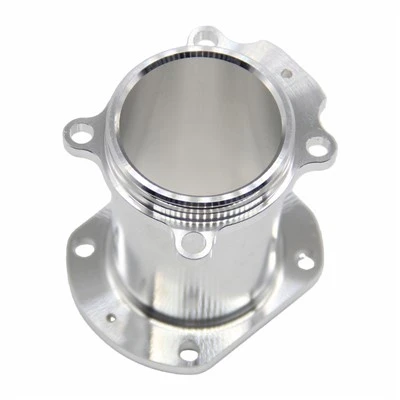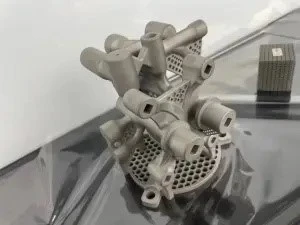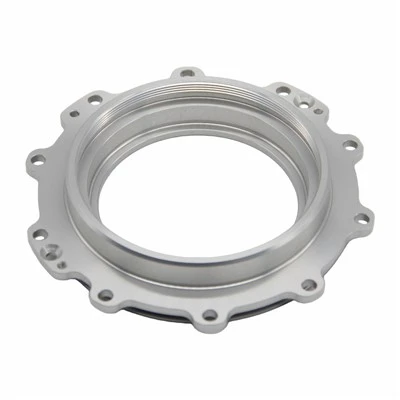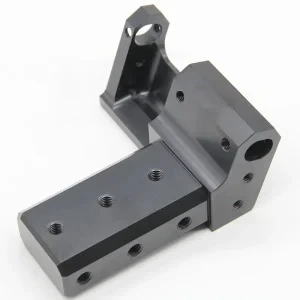


Modern aircraft aluminum parts combine thin walls, multi-angle features, and free-form surfaces that demand tighter control than multi-setup machining can reliably deliver. Single-setup five-axis machining has therefore become the practical standard for these components. This article examines where traditional methods fall short, what five-axis capability actually changes, how one project moved from recurring non-conformances to stable output, and how buyers can reduce risk from prototype through production while selecting a capable partner.
Why Traditional Machining Falls Short for Aerospace Aluminum Parts
Aircraft aluminum components typically feature thin walls, complex contours, multi-face relationships, and high strength-to-weight requirements. Alloys such as 7075, 6061 and 2024 deliver the needed performance, yet they also respond to cutting forces, residual stress and heat in ways that amplify any process instability.
Multiple setups remain the core limitation of 3-axis and many 4-axis routes. Each reclamping adds positional variation. Surface finish changes with tool approach angle. Thin sections become more susceptible to chatter or distortion. Aerospace programs commonly require general features held to ±0.025 mm and critical interfaces tighter still, while surface finish targets often fall in the Ra 0.8–3.2 µm range. Multi-setup processes struggle to hold these values consistently across a batch.
Industry data reflects the resulting shift. Five-axis platforms now account for the largest share of aerospace CNC machining service volume in recent market analyses, driven by the need for complex geometry and shorter, more predictable lead times. Complex five-axis parts are no longer a specialty option for most structural and interface work.
What Makes Five-Axis Machining Different
One-Setup Access to Multiple Surfaces
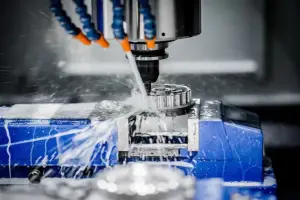
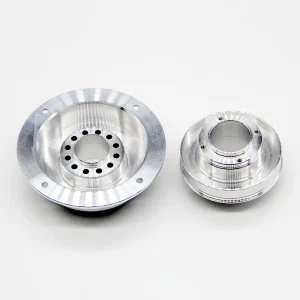
Simultaneous five-axis (or well-executed 3+2) machining reaches most surfaces of a part in a single fixturing. Feature relationships stay locked to the original datum. Cumulative setup error drops sharply. Thin-wall sections benefit from toolpaths that keep cutting forces lower and more consistent, reducing the risk of distortion. First-pass yield rises and overall cycle time shortens.
Aerospace Aluminum Alloys in Practice
Three alloys cover the majority of structural applications:
7075 (T6 or T7351) supplies the highest strength and is the usual choice for primary structure, wing ribs, bulkheads and high-load brackets.
6061 (T6) offers excellent machinability, solid corrosion resistance and weldability, making it suitable for secondary structure and fittings.
2024 (T3/T351) provides strong fatigue performance and remains common in skins and tension-critical details.
All require certified material, heat-lot traceability and controlled machining parameters to preserve mechanical properties and meet AMS or customer specifications.
Tolerance and Surface Finish Expectations
AS9100 remains the baseline quality system, adding configuration control, risk management and product-safety requirements to ISO 9001. Typical production ranges for precision aluminum components look like this:
|
Feature Type |
Typical Tolerance Range |
Common Application |
|
General structural features |
±0.025 mm (±0.001″) |
Brackets, frames, non-critical interfaces |
|
Precision interfaces & holes |
±0.010–0.015 mm |
Mating surfaces, alignment features |
|
Critical fits / sealing surfaces |
±0.005 mm or tighter |
Bearing bores, precision datums |
|
Machined surface finish |
Ra 0.8–3.2 µm |
Function-dependent; finer for sealing |
These values are verified with calibrated CMM or equivalent methods, often supported by First Article Inspection documentation under AS9102.
Real-World Case Study - Sunhingstones 5-Axis Aerospace Project
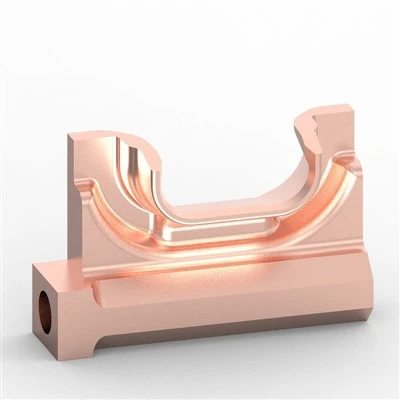
An aerospace customer needed a structural bracket with complex free-form surfaces, thin walls prone to distortion, and multi-angle features that previously required several setups. Tolerance stack-up and wall-thickness variation produced repeated non-conformances and delayed shipments.
Sunhingstones moved the part onto five-axis equipment and completed the critical geometry in one setup. Controlled toolpaths and fixturing kept cutting forces manageable. Critical dimensions stayed within ±0.02 mm and wall thickness remained consistent across the batch. Surface quality improved and the previous pattern of late deliveries and rework disappeared. The same process knowledge then supported a clean transition from prototype validation into low-to-medium volume production. Prototype CNC milling services of this type allow design and process risks to be identified early, before production commitments lock in cost and schedule exposure.
From Prototype to Production - How Prototype CNC Milling Services Reduce Risk
Prototype machining is a risk-reduction step, not simply a small-quantity order. It validates geometry, material behavior, fixturing and inspection methods while the cost of change is still low.
Typical progression includes:
Early design-for-manufacturability review focused on thin walls, tool access and datum strategy
Material certification and parameter validation on actual aerospace-grade stock
Limited-quantity five-axis machining with full dimensional and surface verification
First-article documentation and feedback into design or process refinements
Controlled ramp to production volumes on the same or parallel platforms, preserving the process knowledge already gained
This sequence reduces the chance of expensive production rework and gives procurement clearer visibility into real cycle times and yields. When evaluating an aerospace parts manufacturer, a 5-axis CNC factory or an aluminum aerospace parts supplier, confirm the partner can support both the validation stage and subsequent production without a break in process continuity.
Industry Trends
Five-axis capability continues to expand across commercial and defense programs. Market analyses of aerospace CNC machining services show five-axis platforms capturing the largest share of recent volume, driven by complex geometry requirements and the need for more predictable lead times amid rising aircraft production rates. Aluminum structural content remains high, reinforcing demand for processes that protect material properties while delivering the required precision. Continuous investment in five-axis capacity and robust quality systems is now expected rather than exceptional.
How to Choose the Right 5-Axis Aerospace Machining Partner
Use a practical filter when screening suppliers:
Active AS9100 (or equivalent) certification with demonstrated configuration control and First Article capability.
Full material traceability from mill certificates through finished part, including proper handling of aerospace aluminum alloys.
Calibrated in-house metrology and the ability to report critical characteristics.
Proven range from prototype CNC milling through stable production volumes on five-axis equipment.
Documented on-time performance and the capacity to absorb schedule pressure without quality trade-offs.
Willingness to discuss DFM, toolpath strategy and risk items early in the RFQ stage.
Watch for partners that can only quote prototypes or only run high-volume work; the gap between the two stages is where many programs lose time and money. A manufacturer or factory that understands both ends of the spectrum, and that can discuss volume pricing structures as programs mature, reduces downstream friction.
FAQ
Q: What is 5-axis machining and why is it used for aerospace aluminum parts?
A: Five-axis machining moves the tool or workpiece in five axes, allowing complex surfaces and multi-angle features to be completed in fewer setups-often one. This reduces cumulative error, improves thin-wall integrity and shortens lead times for the geometries common in aircraft structural and interface components.
Q: How accurate can 5-axis aerospace components be?
A: Production capability routinely supports ±0.025 mm on general features and ±0.005–0.015 mm (or tighter) on critical interfaces when fixturing, toolpaths and thermal control are properly managed. Actual drawing requirements and verification methods set the final acceptance criteria.
Q: Is 5-axis machining suitable for low-volume prototype orders?
A: Yes. Prototype CNC milling on five-axis platforms is an efficient way to validate complex geometry and material behavior before production commitment. Many shops run single-piece through low-volume lots under the same quality system used for production.
Q: What aluminum alloys are best for aircraft parts?
A: 7075 for high-strength primary structure, 6061 for general structural and secondary components where machinability and corrosion resistance matter, and 2024 for fatigue-critical applications. Final selection follows the specific load, environment and certification requirements of the part.
Q: How do I find a reliable 5-axis CNC aerospace parts manufacturer?
A: Prioritize AS9100-certified suppliers with demonstrated material traceability, in-house metrology and a track record that spans prototype validation to production. Request recent evidence on similar parts, inspection reports and lead-time performance, then engage early on manufacturability.