
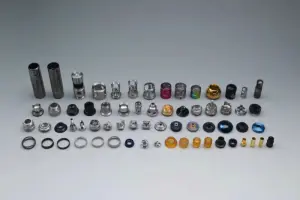

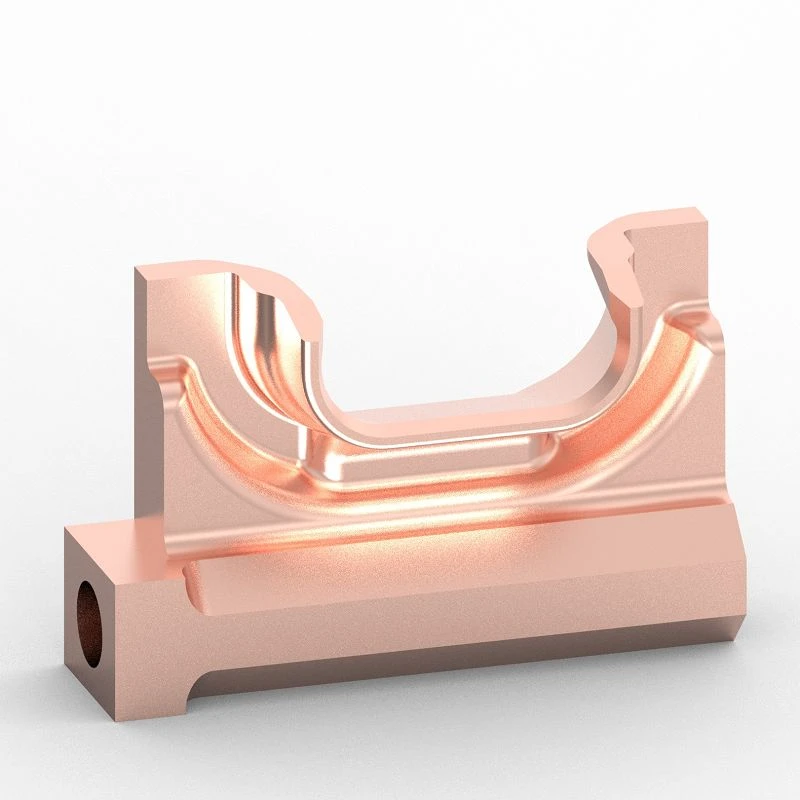
Brass Grades / Material Selection
The best brass alloy for CNC machining is rarely a single universal answer-it depends on the priorities of each application. C36000 free-cutting brass is the grade we specify most often. Its lead content produces short chips and excellent surface finish at high speeds, keeping cycle times short and tool life long on high-volume electrical terminals, fittings and connectors. When a design needs greater ductility or must retain spring characteristics after forming, we switch to C26000. The lower lead content reduces machinability slightly but improves formability, making it better suited to thin sections that will be bent or that must maintain elasticity in service. For outdoor or marine environments with chloride exposure, C46400 naval brass is the usual recommendation. Corrosion resistance improves noticeably, although cutting parameters require modest adjustment.
In practice we discuss these trade-offs early with customers. If cycle time and tool life dominate cost, C36000 is the clear choice. When the geometry includes thin walls that must flex or when secondary forming is planned, C26000 usually wins. When the part will see seawater or prolonged outdoor exposure, C46400 is selected even if machining time increases a little. Getting the material decision right at the start supports both function and manufacturability of the finished brass CNC milling parts.
Machining Precision / Tolerances
Most features on our brass components are held between ±0.01 mm and ±0.05 mm, with tighter limits applied to critical diameters, hole positions and sealing surfaces. Capability comes from rigid three- and five-axis machines, high-speed spindles tuned for brass, and a disciplined inspection routine rather than from optimistic claims.
Tool paths are written to keep cutting forces low on thin walls and slender features. After primary milling, key dimensions are verified on our in-house CMM. First-article reports list actual measured values against the drawing; during production we sample at defined intervals and track process capability so any drift is caught before it affects the batch. For the tightest features we also use optical comparators and air gauges. This combination of machine capability and measurement discipline is what keeps large runs of precision brass CNC machining parts consistent.
Complex Geometry Capability
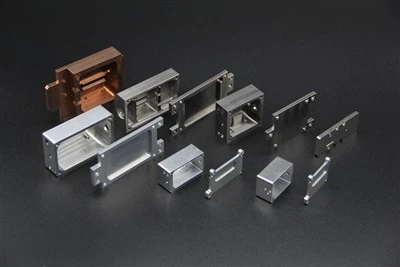
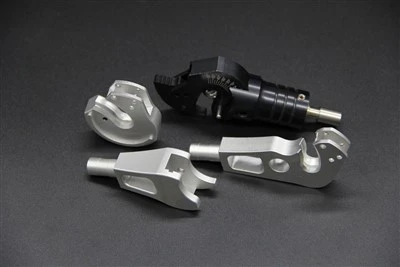
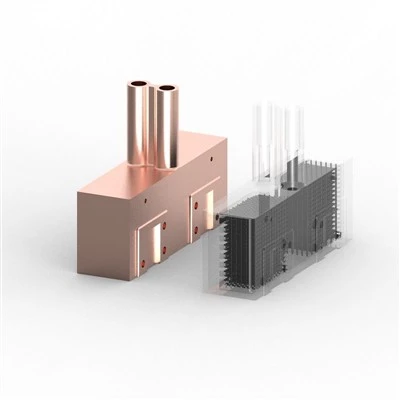
Many of the custom brass CNC milled components we produce include thin walls, deep pockets, undercuts or multi-sided features that would require multiple setups on conventional equipment. Five-axis simultaneous machining lets us complete most of these geometries in a single clamping, reducing cumulative error and eliminating successive fixtures.
We routinely hold wall thicknesses in the 0.5–0.8 mm range when the design requires it, using adaptive tool paths and specialized work-holding to control deflection. Intersecting cavities, free-form surfaces and integrated ports are produced with continuous five-axis motion. The same flexibility supports mounting bosses and sealing faces that must align accurately with mating parts. Because brass machines cleanly, these complex shapes can often be finished without the secondary operations needed in harder materials.
Not every geometry is ideal, however. Extremely deep, narrow slots with high aspect ratios can still present chip-evacuation challenges even in free-cutting grades. In those cases we discuss design adjustments or alternative tool strategies before committing to production of the brass CNC milling parts.
Threading & Hole Features
Threaded brass CNC parts appear frequently on fittings, connectors and instrumentation components. We produce both UNC/UNF and metric threads by single-point threading, thread milling or precision tapping according to size, depth and volume. Blind holes, through holes and cross-drilled features are routinely combined with external or internal threads in the same setup.
Thread quality is checked with calibrated gauges and, when required, optical inspection of flank form and pitch diameter. Thread milling is preferred for larger diameters or deep holes where chip control matters. Generating clean, accurate threads without a separate operation remains one of the practical advantages of machining brass on modern CNC equipment.
Surface Finishing
Surface condition affects conductivity, corrosion resistance and how the part behaves in assembly. Common finishes we apply include nickel plating for wear and corrosion protection, tin or silver plating for electrical contact surfaces, mechanical polishing for sealing or cosmetic faces, and chemical passivation or bright dipping to remove residual films.
Deburring is handled by a mix of automated tumbling, selective electrochemical methods and hand finishing on critical edges. In humid or outdoor service, nickel-plated surfaces show slower tarnish formation than unfinished brass; tin-plated contact areas maintain lower contact resistance over time. The finish is chosen according to the actual operating environment rather than by a generic plating list, ensuring the completed brass CNC milling parts perform as intended in the field.
FAQ
Q: Can these parts handle high-frequency electrical applications?
A: When the right free-cutting or high-conductivity grade is selected and finished with tin or silver plating of controlled thickness, the resulting components perform reliably in connectors and terminals operating at elevated frequencies. Surface roughness and plating integrity matter as much as the base alloy.
Q: What's the minimum order quantity for custom brass CNC milling parts?
A: Minimum quantities are set project by project. Fully custom geometries usually start in the low hundreds of pieces; prototype and small validation runs are available so designs can be proven before larger volumes are released.
Q: How do you keep tolerances consistent across large batches?
A: Process capability is established at first article and maintained through statistical sampling, periodic CMM checks and tool-wear monitoring. Critical dimensions are tracked throughout the run so corrections can be made before they affect finished parts.
Q: What lead times should we expect?
A: Production quantities typically ship in 2–4 weeks after design approval, depending on material availability and current machine load. Expedited schedules can be arranged when the project requires it.
Q: How does brass compare with aluminum when corrosion resistance is a priority?
A: Brass generally provides better resistance in many aqueous and marine environments and higher electrical conductivity. Aluminum is lighter and often lower in cost. The better choice depends on the specific mix of weight, conductivity, exposure conditions and budget for each application.
As a brass CNC milling parts manufacturer, we support customers from material selection and design review through production and finishing. Whether you need a short prototype run or ongoing supply of custom brass CNC milling parts, our team can review your drawings, recommend the appropriate alloy and process, and provide clear feedback on manufacturability before production begins.
Hot Tags: brass cnc milling parts, China brass cnc milling parts manufacturers, suppliers, factory, cnc high precision, cnc machining turning, cnc turning milling, precision cnc machined components, precision cnc milling machine, rapid prototyping cnc milling