
Core Advantages
Traditional extruded heat sinks are constrained by die geometry, simple fin profiles, and longer tooling lead times. CNC milling removes those limits, making it the preferred choice for custom, high-performance thermal solutions - especially in low-to-medium volumes.
Six key advantages:
Unlimited fin geometry:
straight fins, pin fins, cross-cut, oblique, and 3D arrays - maximizing surface area and airflow efficiency.
No tooling cost & rapid prototyping:
from drawing to sample in 5–7 working days, accelerating product development.
Integrated mounting features:
mounting holes, threads, alignment pins, and heat-pipe grooves machined in a single setup, reducing assembly steps.
High base flatness:
base flatness down to 0.01 mm achievable, reducing contact thermal resistance.
Aluminum–copper hybrid capability:
copper base with aluminum fins for an optimal balance of thermal conductivity and weight.
DFM thermal optimization:
engineering recommendations on fin thickness, spacing, and layout based on your thermal targets and CFD results.
Material Selection
Material choice is driven by thermal performance, weight, cost, and end application.
Aluminum 6061-T6 - The Versatile Standard
Thermal conductivity ~167 W/(m·K), excellent strength-to-weight ratio, and good machinability. A solid choice for most consumer and industrial electronics. Minimum fin thickness ~0.5 mm with 5-axis milling.
Aluminum 6063-T5 - For Complex Fin Geometries
Higher thermal conductivity (~201 W/(m·K)) and better extrusion / forming behavior. Useful for high–aspect-ratio fins (up to ~12:1 with care) and offers a more uniform anodized appearance.
Copper C110 - Maximum Thermal Conductivity
Thermal conductivity ~388 W/(m·K) - roughly 2.3 × that of 6061 aluminum. Best suited to ultra-high power-density applications (lasers, power semiconductors, RF amplifiers). Often used as a base plate combined with aluminum fins for a good weight–performance trade-off.
AlSiC / Copper-Tungsten - For Extreme Thermal Applications
Engineered composites with tailored CTE (coefficient of thermal expansion) to match semiconductor substrates. Used in aerospace, defense, and high-reliability electronics.
Material Thermal Performance Comparison
|
Material |
Thermal Conductivity (W/m·K) |
Density (g/cm³) |
CTE (ppm/°C) |
Machinability |
Relative Cost |
Typical Applications |
|
6061-T6 |
~167 |
2.70 |
23.6 |
Excellent |
Low |
General electronics |
|
6063-T5 |
~201 |
2.70 |
23.4 |
Excellent |
Low |
Complex fin structures |
|
C110 Copper |
~388 |
8.96 |
16.8 |
Good |
High |
High–power-density bases |
|
AlSiC |
~170–200 |
~2.90 |
7–12 |
Fair |
Very high |
Aerospace, high-reliability |
Process Comparison
CNC Milling vs Aluminum Extrusion
Extrusion is cost-effective for high volumes (typically >5,000 pieces) with simple profiles. CNC milling is preferable for custom geometries, integrated features, and volumes under a few hundred pieces, where total cost and lead time are more favorable.
CNC Milling vs Die Casting
Die castings can suffer from porosity that reduces effective thermal conductivity, and they generally hold looser dimensional tolerances. CNC milling provides porosity-free material, higher precision, and no tooling cost - making it well-suited to prototyping and mid-volume production.
CNC Milling vs Skived-Fin Heat Sinks
Skived fins reach very high aspect ratios (commonly up to ~30:1 in production) but are limited in shape and orientation. CNC milling offers superior design freedom, including angled, pin, and 3D fin structures.
Design Capabilities
We act as your thermal-design partner, not just a machining supplier.
Fin Geometry Engineering
Experience across straight fins, pin fins, cross-cut, and oblique designs. Minimum fin pitch 0.8 mm; maximum aspect ratio up to ~15:1 with careful tool and fixture selection. 5-axis machining enables optimized fin angles for natural or forced convection.
01
Integrated Features
Single-setup machining of mounting holes, threads, alignment pins, heat-pipe grooves, and TIM pockets - reducing assembly steps and improving thermal-interface control.
02
Thermal Simulation Collaboration
We work with your CFD models (Icepak, FloTHERM, 6SigmaET, etc.) to align machining tolerances with thermal targets. As a rough guide, base-flatness deviation increases contact thermal resistance roughly in proportion to the resulting TIM bond-line thickness - we use this principle to set flatness specs for each project rather than quoting a fixed coefficient.
03
DFM for Thermal Performance
Free DFM analysis includes fin manufacturability assessment, tool-interference checks, and thermal-optimization recommendations.
04
Surface Finishing
Surface treatment affects both thermal radiation and corrosion protection.
05
Black Anodizing - Maximizing Thermal Radiation
Increases emissivity from approximately 0.05 (bare aluminum) to 0.85+ (black anodized). In natural-convection-dominated systems, this can reduce overall thermal resistance by approximately 5–15%, with the exact gain depending on operating temperature and the relative contribution of radiation versus convection. Recommended for most indoor electronics.
Clear / Hard Anodizing - Corrosion Protection
Type II for general corrosion resistance; Type III (hardness HV 400+) for harsh industrial or outdoor environments. Slightly lower emissivity than black anodizing.
Electroless Nickel on Copper Heat Sinks
Standard anti-oxidation treatment for copper. Uniform plating (typically ±2 μm) with minimal impact on thermal conductivity. Selective gold plating is available for contact areas.
Thermal Interface Material (TIM) Grooves
Precision TIM grooves with ±0.02 mm tolerance for uniform TIM thickness and consistent contact thermal resistance.

Industries & Applications

Power electronics:
inverters, converters, and motor drives. High-power-density solutions using copper-base + aluminum-fin hybrid structures with strict base-flatness control.
Telecom & 5G base stations:
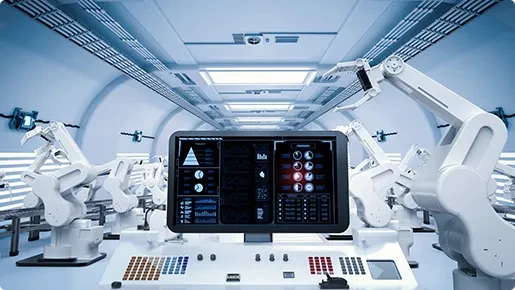
PA modules and RF front-end cooling - high-density pin-fin arrays in 6063 aluminum for low-profile designs.
Laser & optical systems:
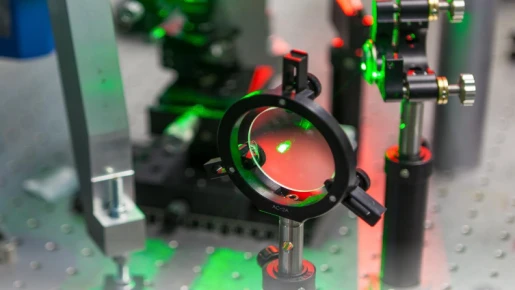
precise temperature control for laser diodes and optical modules - copper micro-channel structures with CTE-matched bases.
EV & automotive electronics:
on-board chargers (OBC), BMS, and power modules - vibration-resistant designs aligned with relevant automotive qualification standards.
Industrial automation & robotics:
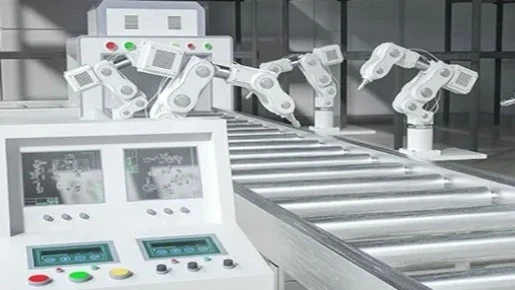
servo drives and industrial PCs - integrated heatsink-as-enclosure designs with IP-rated sealing grooves.

Medical & scientific instruments:
MRI gradient-coil cooling and precision diagnostic equipment - biocompatibility and cleanroom packaging available.
FAQ
Hot Tags: CNC milled heat sinks, China CNC milled heat sinks manufacturers, suppliers, factory, Aerospace Milled Parts, CNC Milled Prototypes, cnc milling services, Complex Milling Components, Delrin Machined Parts, precision cnc machining