
Why 6061 Is the Go-To Alloy for CNC Milling
6061 is a heat-treatable Al-Mg-Si alloy that strikes a practical balance between strength, machinability, corrosion resistance, and cost.
Typical mechanical properties (6061-T6):
|
Property |
Typical Value |
|
Tensile strength |
~310 MPa |
|
Yield strength |
~276 MPa |
|
Density |
2.70 g/cm³ |
|
Thermal conductivity |
~167 W/m·K |
|
Hardness |
~95 HB |
The strength-to-weight ratio works well for structural components that need to stay light. High thermal conductivity suits heat sinks and electronics housings. Weldability is good enough for TIG or MIG assembly after machining. Compared with 7075, 6061 costs less and machines more easily, which keeps both tooling expense and cycle times lower on most jobs.
How 6061 Behaves on the Mill
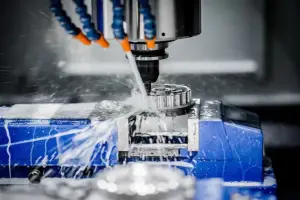
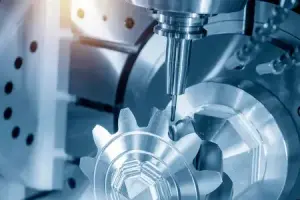
6061 cuts cleanly. Chips form and clear well, tool wear stays moderate, and the material handles high-speed milling on 3-, 4-, and 5-axis centers without drama. Common work includes face milling, contouring, drilling, tapping, thin-wall sections, and deeper cavities.
Tolerance capability (reference ISO 2768-m):
|
Grade |
Typical Tolerance |
|
Standard |
±0.05 mm |
|
Precision |
±0.01 mm |
Thin walls are where experience matters most. We control distortion through tool-path strategy, vacuum or soft-jaw fixturing, and careful stock selection. For larger flat parts we usually recommend 6061-T651 over standard T6-the stress-relieved condition moves less after heavy cutting. Our engineers flag these points during DFM review before any metal is cut. This custom 6061 aluminum milling service covers everything from single prototypes to low-volume production runs.
Corrosion Resistance of 6061 Milled Parts
6061 forms a natural oxide layer that offers decent protection in normal indoor and mild outdoor environments. It is not corrosion-proof. In high-chloride or marine settings the alloy can pit, so we recommend Type II or Type III anodizing, or a chromate conversion coating, when those conditions apply.
Among common alloys, 5052 generally resists corrosion better in the uncoated state, while 7075 is more vulnerable. For most industrial and consumer parts, properly finished 6061 remains a reliable everyday choice.
Surface Finishing Options for 6061 Aluminum
|
Process |
Typical Thickness / Effect |
Suitable Applications |
Notes |
|
As-milled |
Ra 1.6–3.2 μm |
Functional interiors, prototypes |
Lowest cost |
|
Bead blasting |
Uniform matte texture |
Cosmetic parts, glare reduction |
Hides minor tool marks |
|
Brushing |
Directional satin finish |
Visible panels, consumer products |
Aesthetic only |
|
Type II anodizing |
5–25 μm, dyeable |
Corrosion + color, moderate wear |
Dimension change must be allowed for |
|
Type III hard anodizing |
25–50 μm |
High-wear surfaces, sliding parts |
Harder, more dimensionally critical |
|
Chromate conversion / Alodine |
Thin conductive film |
Electrical contact + mild corrosion protection |
Preserves conductivity |
|
Powder coating |
40–80 μm typical |
Outdoor or high-visibility parts |
Excellent color range |
Anodizing both builds outward and consumes some base metal. When final dimensions are critical we leave stock during milling to compensate.
Applications
We regularly produce 6061 parts for robot and automation frames, electronics heat sinks and enclosures, precision fixtures and inspection jigs, automotive and new-energy brackets, and structural housings. The alloy's mix of machinability, moderate strength, and finishing flexibility makes it a frequent first choice for both functional and semi-cosmetic components.
Custom 6061 Aluminum Milling Services
The process is simple:
Upload drawings (STEP, IGES, or PDF)
Receive DFM notes and a quote
Approve and get prototypes or first articles
Scale to low-volume or production quantities
We operate as a China-based manufacturer supporting both prototype and wholesale quantities with no rigid MOQ. Most jobs ship in 5–12 working days; rush options exist when schedules are tight. Material test reports come standard. Full CMM reports are available on request. We only list certifications we actually hold and use in production.
FAQ
Q: Is 6061 aluminum good for CNC milling?
A: It ranks among the most commonly milled aluminum alloys. Chip formation is predictable, tool wear stays reasonable, and results stay consistent across a wide range of geometries and feeds.
Q: 6061-T6 vs 6061-T651: which should I order?
A: T6 delivers the classic heat-treated strength. T651 is stress-relieved afterward and is the better pick for larger plates or parts that lose a lot of material, where residual stress could cause warping after machining.
Q: Can 6061 aluminum be anodized after milling?
A: Both Type II (decorative) and Type III (hard) anodizing work well on 6061. Because anodizing changes dimensions, critical features often need a small pre-anodize stock allowance.
Q: Does 6061 aluminum corrode or rust?
A: It does not rust-there is no iron-but it can corrode in aggressive environments. The natural oxide layer helps in mild conditions. Anodizing or conversion coatings are the usual recommendation for marine or high-chloride exposure.
Q: What tolerances can you hold on 6061 milled parts?
A: Commercial tolerance is typically ±0.05 mm. With proper fixturing and process control we routinely hold ±0.01 mm on critical features.
Q: 6061 vs 7075 for CNC milling: which is better?
A: 6061 machines more easily, costs less, and offers better uncoated corrosion resistance. 7075 is stronger but more expensive and slightly harder on tools. The right choice depends on whether strength or manufacturability and cost matter more for the part.
Hot Tags: 6061 aluminum cnc milling, China 6061 aluminum cnc milling manufacturers, suppliers, factory, 5 axis machining, 5 axis milling services, aerospace precision machining, cnc machined components, cnc turning milling, PEEK Milling Services