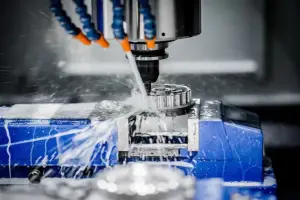
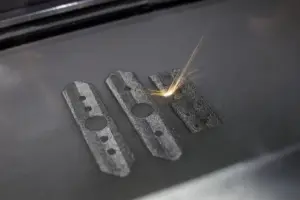

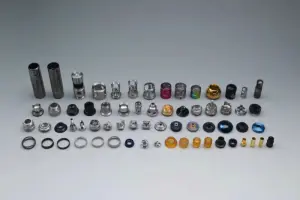


Why Choose 7075 Aluminum for CNC Machining
7075 offers one of the highest strength-to-weight ratios among commercial aluminum alloys. Density is approximately 2.81 g/cm³. In the T6 condition, typical tensile strength reaches 572 MPa and yield strength 503 MPa-comparable to or exceeding many mild steels at roughly one-third the weight.
What this means in production:
High static and fatigue strength while keeping mass low
Acceptable dimensional stability when roughing and finishing are separated and stock is left for final passes
Good response to Type II decorative anodizing and Type III hard anodizing
In practice we leave 0.5–1.0 mm stock after roughing, allow the part to stabilize, then finish. Fixturing is designed to avoid over-clamping thin sections. These steps reduce movement more reliably than relying on heat treatment alone, which can alter the T6 temper.
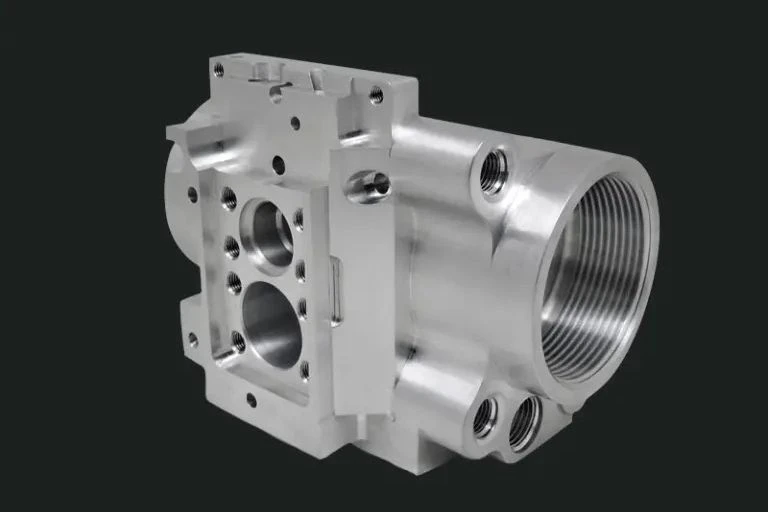
Applications of CNC Machined 7075 Aluminum Parts
7075-T6 and 7075-T651 are specified where strength and low weight matter most:
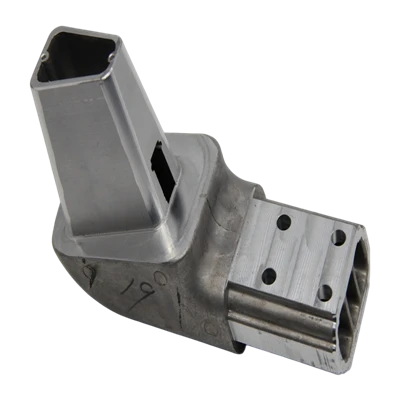
Aerospace brackets, fittings and structural components
UAV airframes and load-bearing drone parts
Robotic arms and high-stiffness end-effectors
Automation fixtures subjected to repeated loading
High-performance bicycle and climbing hardware
Optical mounts and precision instrument housings
Tooling and mold components that require rigidity
In each case the alloy's combination of strength and relatively low density lets designers cut mass without sacrificing structural performance.
Is 7075 Aluminum Suitable for Outdoor or Humid Environments?
7075 in the T6 temper has lower corrosion resistance than 6061 and is susceptible to stress-corrosion cracking (SCC), particularly in the short-transverse direction and in chloride environments. This is a real limitation that must be addressed at the design stage.
Practical options:
Switch to T73 or T7351 temper when sustained tensile stress and moisture are expected
Apply Type III hard anodizing (typically 25–50 µm) or chemical conversion coating plus paint
Prefer mechanical fastening or adhesive bonding over fusion welding
For continuous saltwater or high-humidity outdoor service, evaluate 6061-T6 with appropriate surface protection
We raise these points during DFM so the chosen temper and finish match actual operating conditions.
Custom 7075 Aluminum CNC Milling Services
Standard process for custom 7075 aluminum parts:
Upload your drawing or STEP file
Free DFM feedback within 24 hours (tool access, thin walls, residual-stress risk)
Material confirmation with mill test certificate
Rough milling → part stabilization → finish milling
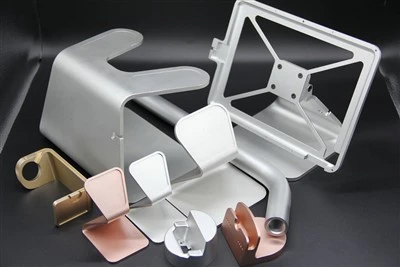
Surface treatment (anodizing, bead blast, chemical conversion coating)
CMM inspection and documentation
Packaging and shipment
We handle single-piece prototypes through volume OEM production. Both prototype and production orders are accepted. Typical lead times: 3–7 days for simple prototypes, 10–25 days for production runs depending on complexity and finish.
7075-T6 T651 Technical Specifications
Typical Material Properties (7075-T6)
|
Property |
Typical Value |
|
Density |
≈ 2.81 g/cm³ |
|
Ultimate Tensile Strength |
≈ 572 MPa |
|
Yield Strength |
≈ 503 MPa |
|
Elongation |
≈ 11% |
|
Hardness |
≈ 150 HB |
|
Modulus of Elasticity |
≈ 71.7 GPa |
|
Thermal Conductivity |
≈ 130 W/m·K |
|
Primary Alloying Elements |
Zn 5.1–6.1%, Mg 2.1–2.9%, Cu 1.2–2.0% |
|
Common Specifications |
ASTM B209, AMS 4045, AMS-QQ-A-250/12 |
|
Weldability |
Fusion welding not recommended |
7075 vs 6061 – Quick Comparison
|
Factor |
7075-T6 / T651 |
6061-T6 |
|
Strength |
Significantly higher |
Moderate |
|
Corrosion resistance |
Lower, SCC risk in T6 |
Better |
|
Weldability |
Poor |
Good |
|
Machinability |
Good with process control |
Easier, more forgiving |
|
Cost & availability |
Higher, fewer stock sizes |
Lower, widely available |
|
Typical use |
High-load structural parts |
General, outdoor, welded |
Our CNC Machining Capabilities for 7075 Aluminum
|
Capability |
Specification |
|
Axes |
3 / 4 / 5-axis |
|
Standard Tolerance |
±0.05 mm (tighter on request) |
|
Precision Tolerance |
±0.01 mm |
|
Surface Roughness |
Ra 0.8–3.2 µm |
|
Maximum Part Size |
Up to 1000 × 600 × 400 mm (machine-dependent) |
|
Surface Finishes |
Type II & Type III anodizing, bead blast, chem film |
|
Inspection |
CMM + material certificates |
|
Order Quantity |
From 1 piece |
|
Typical Lead Time |
Prototypes 3–7 days; production 10–25 days |
FAQ
Q: Is 7075 aluminum good for CNC milling?
A: Yes. It machines cleanly with sharp carbide tools and proper parameters. Chip control is generally better than with softer alloys such as 6061; the main challenges are residual stress and higher cutting forces.
Q: 7075 vs 6061: which one should I choose?
A: Select 7075 when strength and fatigue resistance are critical. Select 6061 when corrosion resistance, weldability or lower cost take priority. See the comparison table above for a side-by-side view.
Q: Does 7075 aluminum rust or corrode outdoors?
A: It does not rust like steel, but it is prone to pitting and stress-corrosion cracking in humid or chloride environments. T73 temper plus hard anodizing or conversion coating is the usual mitigation.
Q: Can 7075 aluminum parts be anodized?
A: Yes. Both Type II and Type III (hard) anodizing are routinely applied. Hard anodizing improves wear resistance; designers should note that thick hard-anodized layers can slightly reduce fatigue strength on highly stressed features.
Q: What tolerance can you hold on 7075 aluminum CNC milling?
A: Standard ±0.05 mm. Precision features down to ±0.01 mm are achievable with controlled fixturing and separate rough/finish operations.
Hot Tags: 7075 aluminum cnc milling, China 7075 aluminum cnc milling manufacturers, suppliers, factory, aerospace cnc milling, cnc lathe machining service, cnc machining milling turning, cnc turning and milling machine, cnc turning milling, high precision cnc milling