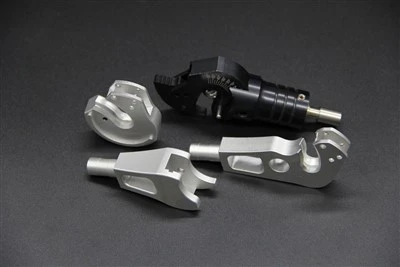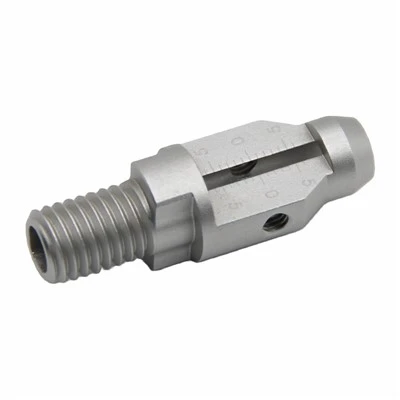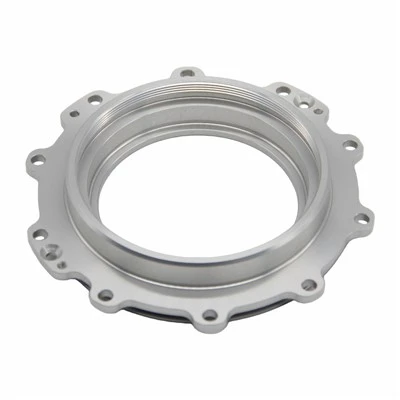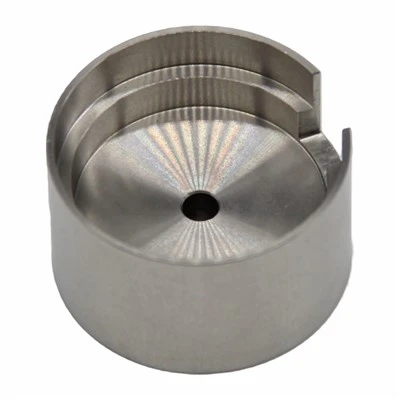

Core Advantages
Brass remains one of the most popular materials for CNC machining thanks to its excellent machinability, good electrical and thermal conductivity, natural corrosion resistance, and attractive surface finish. Compared with stainless steel, brass machines significantly faster and accepts polishing and plating more easily; compared with aluminum, brass offers higher strength and better resistance to dezincification in moist environments (with appropriate grade selection).
Key advantages of brass CNC milling:
Excellent machinability:
Free-cutting brass (e.g. C360) is among the most machinable metals available, with cutting speeds and tool-life advantages versus stainless steel and most steels.
Natural corrosion resistance:
Performs well in moist environments without additional coatings (with suitable grade selection).
Good dimensional stability:
Moderate thermal expansion and minimal distortion during machining.
Strong electrical & thermal conductivity:
Suitable for connectors, terminals, and thermal-management hardware.
Versatile surface finishing:
Readily accepts plating, polishing, and decorative finishes.
RoHS-compliant options:
Low-lead and lead-free grades available to meet environmental regulations.
Material Properties
We machine a wide range of brass alloys and provide engineering guidance to help you select the optimal grade for your application.
C360 Free-Machining Brass
The most popular free-cutting brass, with approximately 3% lead. Outstanding machinability makes it ideal for high-volume, high-precision components such as connectors, valve bodies, and threaded parts.
Typical properties (H02 half-hard): Tensile strength 340–400 MPa, hardness ~80–85 HRB, good thermal and electrical conductivity. Note: not RoHS-compliant by default.
C260 Cartridge Brass
Low-lead brass with excellent ductility and cold-forming behavior. Best suited for thin-walled parts, deep-drawn features, and complex geometries.
Typical properties: Tensile strength 300–370 MPa (annealed to half-hard), high elongation.
H59 / H62 - Common in Asia-Pacific Supply Chains
Widely used Chinese-standard grades. H62 has higher copper content and slightly better corrosion resistance than H59; H59 has higher zinc content and lower cost. They map approximately to international C272/C280-class grades and offer strong cost-performance for plumbing and structural parts.
Brass Grade Selection Guide
|
Grade |
Lead Content |
Machinability |
Strength |
Typical Applications |
RoHS-Compliant |
|
C360 |
~3% |
Excellent |
Medium-High |
Connectors, valves, threaded parts |
No (low-lead alternatives available) |
|
C260 |
Low |
Good |
Medium |
Thin-wall parts, fittings, decorative |
Yes |
|
H62 |
Low |
Good |
Medium-High |
Plumbing hardware, brackets |
Yes (with appropriate spec) |
|
H59 |
Medium |
Good |
Medium |
General hardware, structural parts |
Depends on lot specification |
Machining Capabilities
Equipment:
3-axis, 4-axis, and 5-axis CNC machining centers
Size capacity:
Up to 800 × 600 × 400 mm
Minimum feature size:
0.3 mm thin walls and Ø0.5 mm small holes (geometry-dependent, subject to DFM review)
Production range:
From 1-piece prototypes to 100,000+ production runs
Tolerances & Surface Finish
General tolerance:
±0.025–0.05 mm (ISO 2768-fH) on most features
01
Precision tolerance:
±0.01 mm achievable on critical dimensions with appropriate fixturing and inspection
02
Tight-tolerance features:
±0.005 mm on selected features when supported by post-machining grinding or lapping (quoted on request)
03
Surface roughness:
Ra 0.8 μm standard; Ra 0.2 μm achievable with mirror polishing
04
Inspection:
100% CMM inspection on critical dimensions with full reports
05
Tolerance ranges depend on part geometry, material lot, and feature accessibility. We confirm achievable tolerances during DFM review.
Supported Part Types
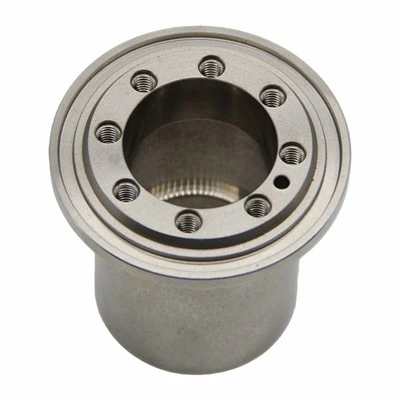
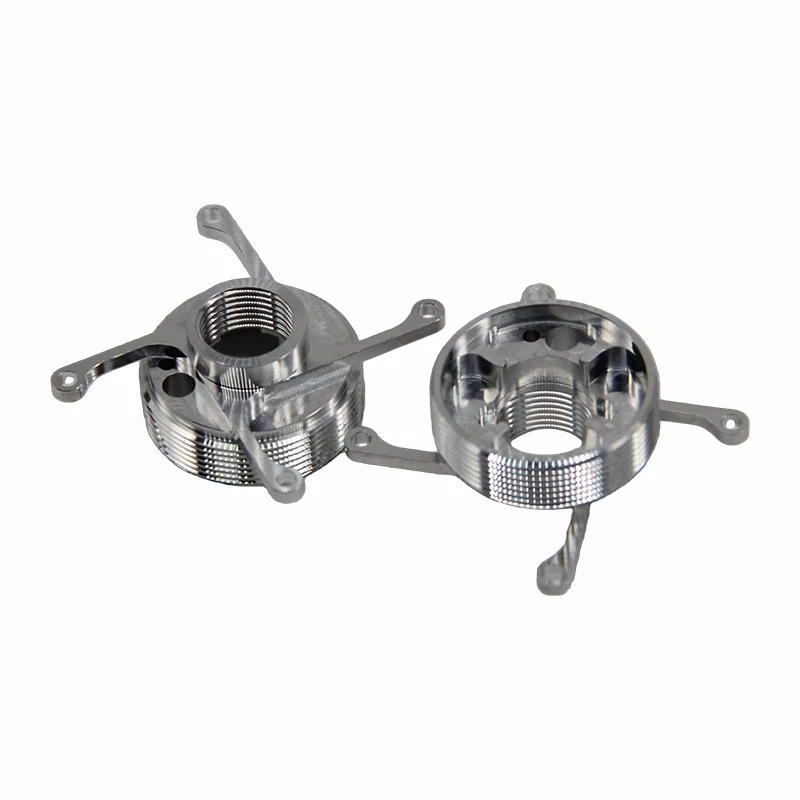
Electronic connectors: high-conductivity precision contact components
Valve bodies & fittings: pressure-tight fluid-control parts
Heat sinks: complex fin structures for thermal management
Electrical contacts: high-precision conductive elements
Decorative hardware: bathroom, furniture, and musical instrument parts
File Formats & DFM Support
Accepted formats: STEP, IGES, DXF, SolidWorks (.sldprt). We provide free DFM (Design for Manufacturability) feedback to optimize your design for cost, quality, and manufacturability.
Surface Finishing
One of brass's strengths is its excellent response to surface treatments. We offer:
- Electroplating: Nickel, chrome, gold, and silver plating - ideal for electronic connectors and high-end decorative parts. Brass typically provides better plating adhesion than aluminum.
- Polishing: Mirror polish and brushed finishes; surface roughness down to Ra 0.2 μm. Common for clocks, bathroom hardware, and musical instruments.
- Passivation & clear lacquer coating: Prevents oxidation and discoloration - well suited to parts requiring long-term storage or export shipment.
- Sandblasting & tumbling: Effective deburring and uniform matte finish. Cost-effective for high-volume parts.
Lead Time
Transparent and reliable delivery schedules:
- Quotation: within 24 hours
- DFM feedback: 24–48 hours
- Prototyping: 5–7 working days
- Small batch (<100 pcs): 7–10 working days
- Production (1,000+ pcs): 10–15 working days
- Note: Surface finishing typically adds 1–2 working days. Rush service is available for urgent projects (additional fees, quoted upfront).
FAQ
Hot Tags: brass CNC milling, China brass CNC milling manufacturers, suppliers, factory