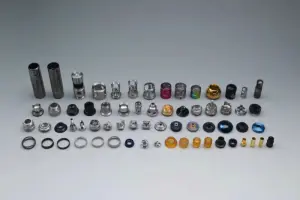

Polyurethane materials can be processed using die-casting techniques, though process parameters must be adjusted according to the specific type of polyurethane (thermoplastic/thermosetting). Thermoplastic polyurethane (TPU) offers higher process compatibility, while thermosetting polyurethane requires an auxiliary reaction injection molding process. Given the differences in molecular structure and curing mechanisms between the two, understanding their respective process pathways is essential for ensuring product quality, dimensional stability, and production efficiency.
I. Compatible Types and Process Matching
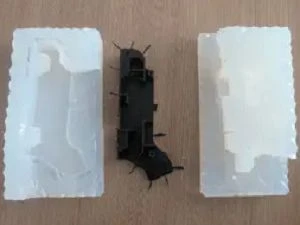
Thermoplastic Polyurethane (TPU)
TPU is the preferred material for conventional die-casting processes, with a melting temperature range of 160–220°C. After molding, it exhibits stable performance in terms of wear resistance and elasticity, making it well-suited for batch processing of small precision parts and wear-resistant components. Its thermoplastic nature also means scrap material and sprues can often be reground and reprocessed, improving material utilization.
It is compatible with standard thermoplastic die-casting machines, requiring only targeted adjustments to parameters such as temperature and pressure, without the need for additional auxiliary equipment-this significantly lowers the barrier to production line conversion and equipment investment.
Thermosetting Polyurethane (PU)
Thermosetting polyurethane cannot be directly processed using conventional die-casting techniques. Instead, it must be combined with a Reaction Injection Molding (RIM) process, in which polyol and isocyanate raw materials are mixed and then injected under high pressure into a closed mold, where the crosslinking reaction is completed to form the final part within the mold cavity.
This process places higher demands on mold temperature control precision, as it is necessary to prevent the raw materials from prematurely curing within the flow channels, which could otherwise lead to blockages, incomplete filling, or defective parts.
Core Process Parameters
Thermoplastic polyurethane die-casting: Barrel temperature is set in stages (rear section 170–190°C, middle section 190–210°C, front section 180–200°C), with injection pressure of 80–150 MPa, mold temperature of 40–80°C, and cooling time of 10–30 seconds. These parameters should be adjusted according to the specific TPU grade and the wall thickness of the finished part, since thinner-walled components generally require shorter cooling times and finer pressure control to avoid warping.
Thermosetting polyurethane reaction die-casting: Raw material mixing pressure is 10–20 MPa, mold clamping force must be ≥50 t/㎡, the molding cycle is 2–5 minutes, and the raw material mixing ratio error must be controlled to ≤1%. Precise metering equipment is typically required to maintain this ratio consistently across production runs, as deviations can directly affect the mechanical properties and dimensional accuracy of the final product.
Safety Operating Boundaries
Operations involving high temperature (die-cast component temperatures exceeding 150°C) and high pressure (injection pressure exceeding 100 MPa) must comply with the "Mechanical Safety – Die Casting Machines – Safety Requirements" (GB/T 30078-2013), with operators wearing heat-resistant and pressure-resistant protective equipment. Regular inspection of pressure-bearing components and safety interlocks is also recommended to prevent equipment failure during operation.
Thermosetting polyurethane raw materials contain isocyanates, and the resulting volatile compounds are toxic. Operations must be carried out in a ventilated, enclosed space, avoiding direct skin contact or inhalation. Appropriate personal protective equipment-such as respirators and protective gloves-should be worn at all times during handling and mixing.
Workers involved in these processes should also receive regular training on emergency response procedures, including spill containment and first-aid measures for isocyanate exposure, to further minimize occupational health risks associated with thermosetting polyurethane processing.