
An automotive engineer has six weeks until the next design review. The team needs 30–50 functional prototype parts-grille sections, interior retention clips, sensor housings-for fit checks and limited functional testing. Hard tooling will take months and cost far more than the current budget allows. Most 3D-printed parts arrive quickly but fail to hold the assembly tolerances or material behavior required for meaningful testing.
Vacuum casting offers a practical middle path. It produces urethane parts that behave closer to production plastics, in days rather than months, at a cost that makes sense for low-volume auto parts production. The accuracy of those parts depends heavily on the master model. That is where precision CNC milling, especially high tolerance milling of complex features, becomes critical.
Why Automotive Teams Are Turning to Vacuum Casting
The Cost Problem with Traditional Tooling
Injection-mold tooling remains the right choice for high-volume production. For early and mid-stage prototypes, however, the timeline and cost rarely justify it. Steel or aluminum molds require long design, machining, and try-out cycles. When quantities stay under a few hundred pieces, the cost per part rises sharply, and any design change after the tool is cut creates further delay and expense.
The Precision Gap in Standard 3D Printing
FDM and SLA deliver complex shapes fast. They often fall short on consistent wall thickness, positional accuracy across mating features, and material properties that approximate production plastics. Many automotive assemblies need ±0.1 mm or tighter on critical dimensions. Printed parts frequently require extra machining or simply do not pass fit checks.
Vacuum casting closes much of this gap. A well-made silicone mold, taken from a precision-machined master, can yield 20–50 parts with better dimensional consistency and more realistic material performance. Experienced vacuum casting manufacturers and rapid prototyping factories routinely pair the process with high tolerance milling to keep both schedule and cost under control.
How Vacuum Casting Works, in Plain English
From Master Model to Silicone Mold
Everything starts with an accurate master pattern. When tolerances matter, that master is almost always produced by precision CNC milling rather than additive methods. The master is placed in a mold box and liquid silicone is poured around it. After curing, the silicone is opened and the master removed, leaving a flexible cavity that copies the original geometry.
Casting Under Vacuum - Why It Matters for Auto Parts
Air bubbles and incomplete fills ruin dimensional accuracy and surface quality. Casting under vacuum removes trapped air so the resin can reach fine details and thin walls. The result is denser, more consistent parts-important for components that must later assemble with other parts or face vibration, thermal, or sealing tests.
Typical steps:
Design review focused on draft angles, wall thickness, and critical tolerances.
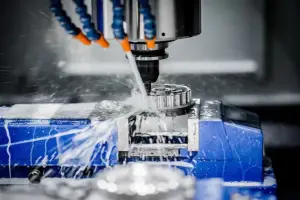
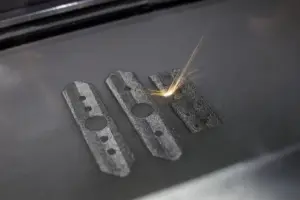
Precision CNC milling of the master model (or multiple masters for multi-cavity tools), often using high tolerance milling for complex milling components.
Silicone mold making around the master.
Vacuum casting of polyurethane resin.
Curing, demolding, and any secondary operations such as trimming or light machining.
Inspection against CAD and delivery.
Because the master comes from high-tolerance CNC work, the mold and the cast parts inherit that accuracy across the useful life of the silicone tool.
Where Precision CNC Milling Fits Into the Process
Building the Master Pattern with High Tolerance Milling
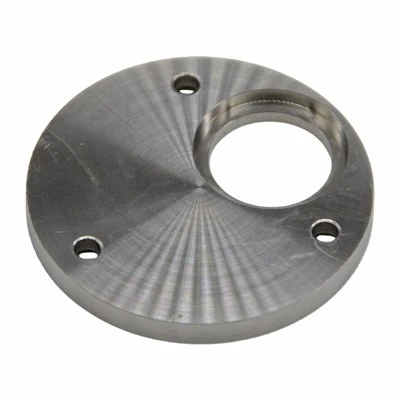
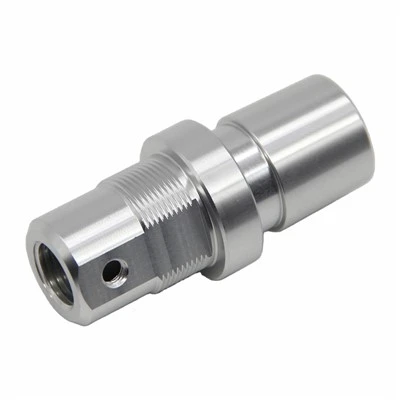
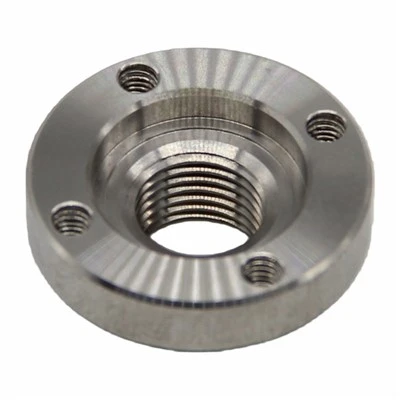
The master sets the accuracy ceiling for every subsequent part. High tolerance milling on a capable machine, with proper fixturing and measurement, can hold features that most additive processes struggle to match on the first attempt. Mounting bosses, snap fits, sealing surfaces, and locating pins all benefit. Many CNC milling manufacturers that serve the automotive sector focus specifically on these masters for silicone mold casting.
Handling Complex Milling Components for Multi-Cavity Molds
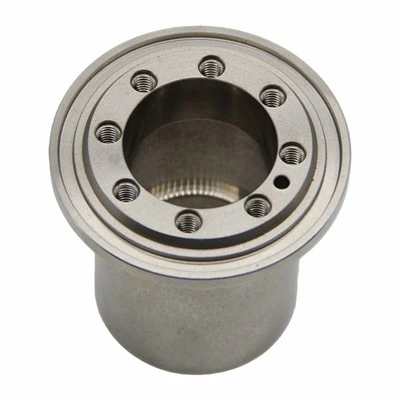
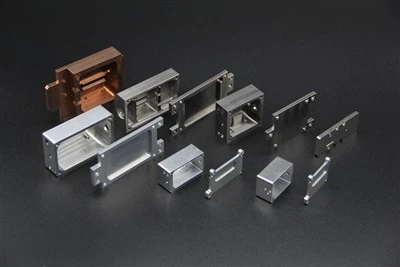
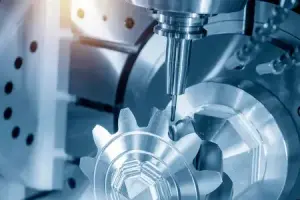
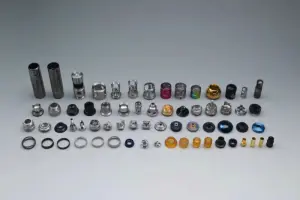
When more than a handful of identical parts are needed quickly, multi-cavity silicone molds become practical. Complex milling components-undercuts, thin walls, deep pockets, multi-sided geometry-are routinely machined as masters. The same capability also supports wholesale precision milled auto components when quantity or material requirements move the project beyond vacuum casting into direct CNC production.
Teams that treat master-model quality as non-negotiable usually see tighter part-to-part consistency and fewer iteration loops.
Vacuum Casting vs. Other Rapid Prototyping Methods
|
Criterion |
Vacuum Casting |
FDM / SLA 3D Printing |
Direct CNC Machining |
|
Typical lead time (first batch) |
5–12 days |
1–5 days |
3–10 days |
|
Cost for 20–50 parts |
Low–medium |
Low |
Medium–high |
|
Material realism |
Strong (wide range of PU resins) |
Moderate to good |
Excellent (true production materials) |
|
Achievable tolerance |
±0.1–0.3 mm (depends on master) |
±0.2–0.5 mm typical |
±0.05–0.1 mm or better |
|
Surface finish |
Close to production |
Often needs post-processing |
Machined, can be refined further |
|
Best quantity range |
10–100 parts per mold |
1–20 parts |
1–50+ (geometry dependent) |
|
Ideal for |
Functional prototypes, low-volume auto parts |
Early visual or concept models |
High-precision singles or metal parts |
Vacuum casting sits between pure additive and pure subtractive routes. It is faster and more economical than hard tooling or long CNC runs for small batches, while delivering better material match and tighter tolerances than most printed parts for functional automotive testing. Urethane casting versus CNC machining is often less an either-or choice and more a question of when to use each.
Real-World Application Example
A common request involves a family of interior clips or a sensor housing set that must be checked for fit, clip force, and basic environmental exposure before tooling release. The customer supplies CAD and specifies quantities in the 30–50 range with critical tolerances around ±0.15 mm.
Precision CNC milling produces the masters to those tolerances. Silicone molds are made from the masters, and the first vacuum-cast batch typically ships within 8–12 working days. Later batches from the same molds arrive faster. Part-to-part variation stays low enough for meaningful assembly and functional checks rather than "prototype-only" evaluation. If a design change appears, the master can be revised and new parts cast without the cost of new hard tooling. This combination-high-tolerance milled masters plus vacuum casting-has become a standard route for many low-volume auto parts development programs.
Quality Considerations
Suppliers serving automotive programs normally operate under established quality systems and can provide material traceability, dimensional reports, and process documentation. Buyers should confirm the specific certifications and measurement capability that match their program requirements rather than relying on general claims.
FAQ
Q: What is vacuum casting used for in the automotive industry?
A: Functional prototypes, appearance models, and low-volume runs of plastic-like components such as grille sections, interior clips, housings, and ducts-especially when quantities are too low for injection molding and tolerances or materials exceed typical 3D-printing results.
Q: How long does a vacuum casting prototyping cycle take?
A: From approved CAD to first parts, most projects fall in the 5–12 working-day range, depending on master complexity, cavity count, and finishing needs. Follow-on batches from an existing mold are quicker.
Q: Is vacuum casting accurate enough for functional automotive testing?
A: Yes, when the master is made by high tolerance milling and the process is controlled. Critical dimensions often hold ±0.1–0.2 mm, enough for many fit, assembly, and limited functional checks. Final production validation still requires production-intent tooling and materials.
Q: What's the difference between vacuum casting and CNC milling?
A: CNC milling creates the final part (or the master) by cutting solid stock. Vacuum casting multiplies a master into multiple polyurethane parts through a silicone mold. The two methods work well together: CNC supplies the accurate master; vacuum casting produces the volume efficiently.
Q: How many parts can one silicone mold produce?
A: Typically 20–50 good parts. Geometry, resin choice, and handling affect mold life. Aggressive undercuts reduce it; simpler shapes and careful process control extend it.