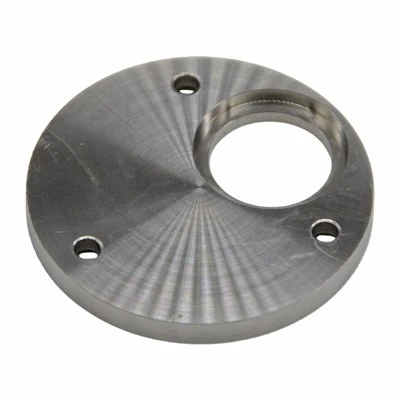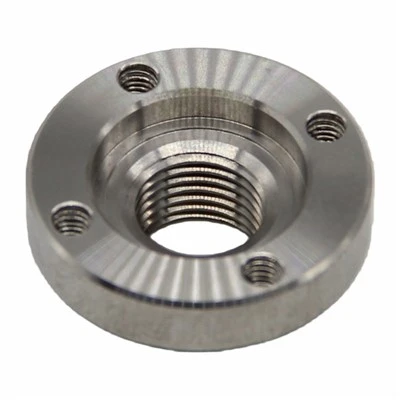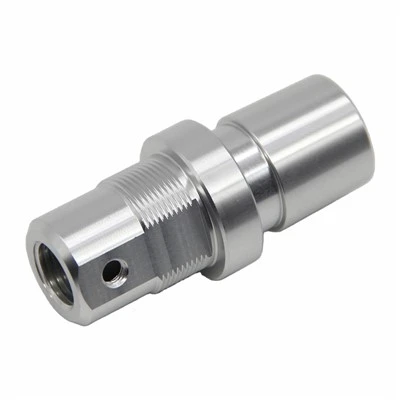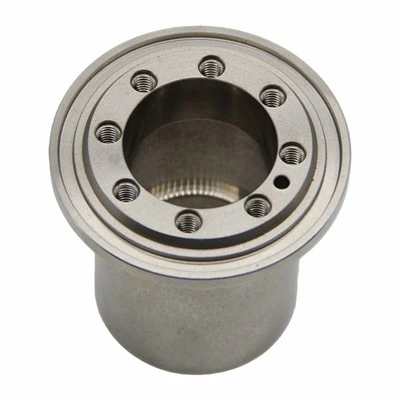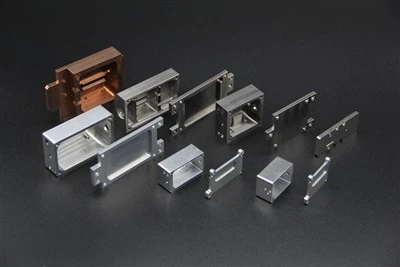
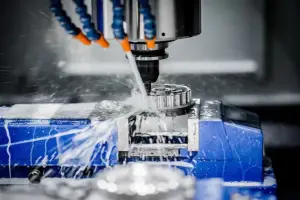
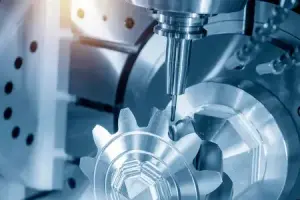

New energy vehicle makers and Tier-1 suppliers keep running into the same problems with aluminum parts. Tolerances drift out of spec. Batch consistency varies. Delivery dates slip. These issues show up most clearly when battery packs and motor housings reach the assembly line-sealing surfaces don't match, mounting points sit unevenly, or thermal interfaces fail to perform. Precision CNC milling is one of the most reliable ways to bring those variables under control.
Why NEV Production Puts Extra Pressure on Aluminum Components
Lightweighting remains one of the most practical ways to extend range and manage battery cost. Aluminum-optimized designs can reduce vehicle weight by 5–11% depending on the segment. A 10% mass reduction typically improves energy efficiency by 6–8%. Research also shows that every 100 kg of curb-weight reduction lowers energy demand by roughly 3 Wh/km across common drive cycles. Even a single kilogram saved can cut energy use by about 0.0051 kWh. These gains matter when every kilogram affects both range and battery size.
Battery enclosures and motor housings sit at the center of this trade-off. Enclosures must protect cells, manage crash loads, integrate cooling, and maintain seals under vibration and temperature swings. Motor housings need accurate mounting surfaces, effective heat dissipation, and structural stiffness. Both are increasingly made from aluminum because of its strength-to-weight ratio and thermal performance. The geometry and tolerances required at production volume push conventional processes hard.
Battery Enclosures and Motor Housings as Critical Components
Thin walls, internal cooling features, multi-face contours, and tight positional relationships are common. Small deviations quickly turn into assembly problems or reliability risks. This is where high-tolerance machining becomes essential rather than optional.
What Sets Precision CNC Milling Apart
Standard machining or light finishing after casting often leaves residual stress, dimensional scatter, or surface variation that becomes unacceptable once tolerances move into the tens of microns. Precision CNC milling relies on rigid multi-axis machines, stable shop conditions, optimized toolpaths, and closed-loop inspection to keep variation low.
The practical difference is repeatability. A well-controlled process produces parts that fit and function the same way across hundreds or thousands of pieces, without selective assembly or constant adjustment.
High Tolerance Milling - Why Microns Matter
Most production CNC work holds ±0.005 in (±0.127 mm). Precision work commonly targets ±0.001 in (±0.025 mm). Critical features on aluminum can reach ±0.0005 in (±0.013 mm) or tighter when machines, fixtures, and metrology are properly managed. Aluminum's machinability and thermal stability make these levels achievable. In battery and motor applications, those microns decide whether cooling channels seal, flanges sit flat, and clearances stay safe.
Handling Complex Milling Components
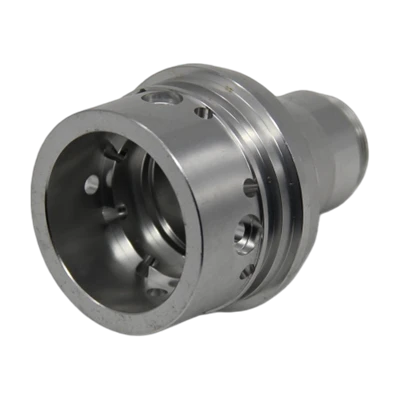
Five-axis simultaneous machining finishes complex contours, angled ports, and undercuts in fewer setups, reducing stack-up error. Thin-wall sections common in lightweight EV housings need careful fixturing, light finishing cuts, and vibration control to avoid distortion. Modern CAM strategies paired with in-process probing help keep these parts inside specification even when walls drop to a few millimeters.
Materials: Aluminum Alloys That Work for EV Parts
Alloy choice balances strength, corrosion resistance, thermal behavior, machinability, and cost.
|
Alloy / Temper |
Strengths |
Typical EV Uses |
Notes |
|
6061-T6 |
Good strength after heat treatment, excellent machinability, weldable |
Structural frames, battery trays, brackets |
Reliable all-rounder |
|
7075-T6 |
Very high strength-to-weight |
High-load brackets, performance structural parts |
Higher cost, limited weldability |
|
A380 (and similar Al-Si-Cu) |
Good castability, solid thermal conductivity |
Die-cast motor housings with complex geometry |
Often finish-milled on critical surfaces |
|
5052 / 5083 / 3003 |
Strong corrosion resistance, good formability |
Enclosure skins, cooling plates, side panels |
Lower strength; frequently paired with 6xxx frames |
Many battery packs use a mix-6061 or 6082 for structural elements, 5xxx series where corrosion resistance is critical, and cast alloys for complex housings that later receive precision milling. The machining step is what brings the critical dimensions and surface finishes into final specification.
Case Study: How One Manufacturer Approaches NEV Aluminum Machining
Sunhingstones has applied five-axis precision CNC milling to NEV aluminum components that previously struggled with tolerance stack-up and delivery consistency. On a motor-housing and enclosure program, the team focused on thin-wall stability through custom fixturing, reduced setups with simultaneous five-axis work, and tight in-process and final CMM checks. The result was a clear drop in dimensional scrap, more predictable first-pass yield, and shorter overall lead times once the process was locked in. Similar high-tolerance aluminum programs typically see meaningful yield gains and more stable schedules when these controls are in place. The same combination of capable equipment, controlled environment, and traceable inspection supports both prototype runs and wholesale production volumes.
Industry Recognition
Mentions in industry channels such as ESTA News serve as an external signal of capability and ongoing process discipline. For procurement and engineering teams evaluating precision CNC milling services for automotive parts, these references add a layer of third-party visibility.
How to Choose a Reliable CNC Milling Manufacturer or Factory
When sourcing precision CNC milling services for automotive or NEV aluminum parts, focus on practical capability:
Automotive-relevant quality systems (ISO 9001, preferably IATF 16949)
Multi-axis machines suited to aluminum, with stable temperature control
Proven experience on tight-tolerance work, including battery enclosure and motor housing machining
In-house metrology (CMM and surface measurement) plus process capability data
Capacity that covers both prototypes and wholesale volumes with realistic lead times
Material traceability and secondary operations when needed
Clear DFM feedback and transparent first-article reporting
A capable aluminum parts factory treats these points as baseline, not extras.
FAQ
Q: What is precision CNC milling and why does it matter for EV parts?
A: It is computer-controlled machining performed on high-accuracy multi-axis equipment under controlled conditions. For EV aluminum components it delivers the dimensional consistency and surface quality that battery enclosures and motor housings need to assemble and perform correctly.
Q: How tight can tolerances be in high tolerance milling?
A: Standard production often runs ±0.005 in (±0.127 mm). Precision work commonly reaches ±0.001 in (±0.025 mm). Critical aluminum features can hold ±0.0005 in (±0.013 mm) or better with the right equipment and process control.
Q: Can CNC milling handle complex geometries like battery enclosures?
A: Yes. Five-axis simultaneous machining, proper fixturing, and modern toolpath strategies routinely produce thin walls, cooling features, undercuts, and multi-face geometry found in current enclosures and housings.
Q: What's the difference between CNC milling and casting for aluminum EV parts?
A: Casting is efficient for complex near-net shapes. Critical surfaces, holes, and mating faces almost always need secondary machining. Precision CNC milling-either from billet or as a finishing operation-delivers the tightest control where it counts. Hybrid approaches are common.
Q: How do I choose a wholesale CNC milling supplier for NEV production?
A: Look for automotive certifications, demonstrated multi-axis capability on aluminum, solid quality systems with CMM data, scalable capacity, and clear communication on lead times and DFM. Review sample or first-article results before committing to volume.
Next Step
If inconsistent aluminum parts are causing assembly delays or quality issues on battery packs or motor housings, a focused discussion on your drawings and volume requirements can clarify what precision CNC milling can realistically deliver. Share the critical features and target volumes to receive a practical assessment of capability, timeline, and cost.