
Motor housings sit at the center of every NEV powertrain headache. They need to shed heat fast, hold a reliable seal under vibration and thermal cycling, and stay light. Those three demands pull against each other constantly. Tight prototype schedules and inconsistent supplier yields only make the problem worse.
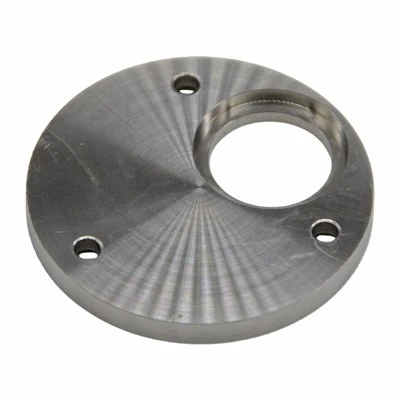
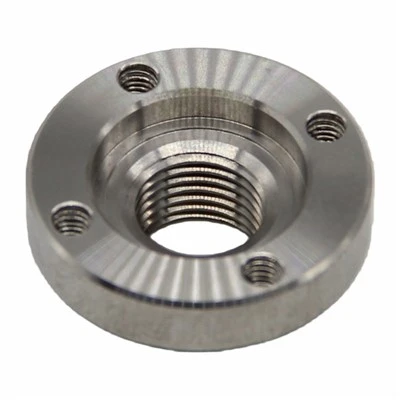
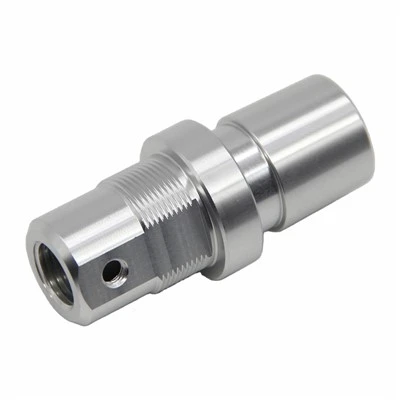
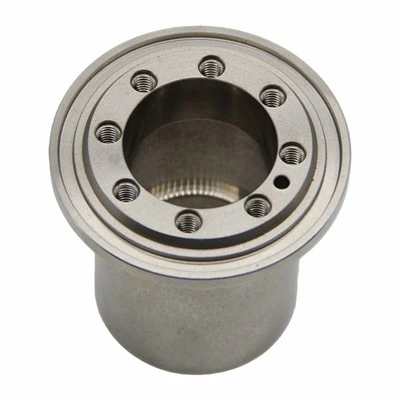
A well-executed 5 Axis Milling Part approach solves more of these conflicts than most other process choices. This guide is written for procurement and engineering leads who need practical answers, not theory.
Why NEV Motor Housings Are Notoriously Hard to Machine
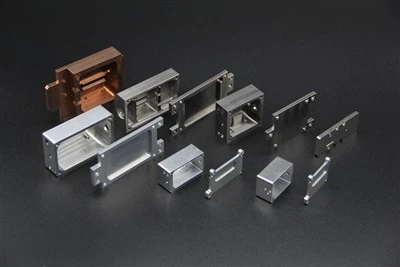
Thermal management vs. structural strength
EV motors dump several kilowatts of continuous heat while spinning past 15,000 rpm. The housing has to move that heat away-usually through cooling jackets or fins-while staying rigid enough to keep the stator and rotor aligned. Thin walls (3–5 mm) help with both heat and weight, but they also distort the moment you clamp them or apply cutting force.
Complex internal geometry
Cooling channels, mounting bosses, seal grooves, and cable exits create undercuts and angled surfaces that 3-axis machines struggle to reach without multiple setups.
Tight tolerances for bearing seats and shaft alignment
Typical production requirements look like this:
Stator/rotor bore concentricity ≤ 0.01 mm
Bearing seat roundness 0.005–0.008 mm
Bearing seat diameter ±0.005 mm
Front-to-rear bearing concentricity ≤ 0.02 mm
Industry data shows traditional multi-setup processes can push combined scrap rates for housings and shafts as high as 12%. Thin-wall springback alone often introduces 0.04–0.08 mm of error once the part leaves the fixture. Early production batches commonly show 5% leak rates from porosity or seal-surface issues; mature processes drive that below 1%.
These numbers explain why motor housings regularly become the highest-risk item on both cost and timeline.
Why 5-Axis Milling Is the Right Process for This Part
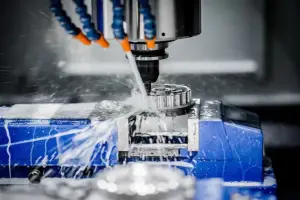
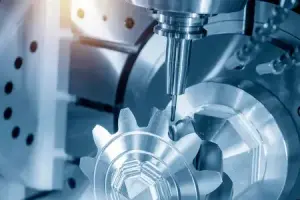
Every time a part is unclamped and moved, geometric relationships drift. 5-Axis CNC Machining Parts finish the critical bores, mounting faces, cooling features, and angled surfaces in a single setup. That single change removes the stack-up that routinely exceeds the 0.01 mm concentricity window.
The same machines handle curved cooling fins and angled mounting faces without special fixtures or secondary operations. Shorter tools, better chip flow, and continuous engagement improve surface finish on seal grooves and bearing seats while cutting cycle time.
When you specify a 5 Axis Milling Part from a capable 5-axis milling manufacturer, you are buying both geometric capability and process stability. First-pass yield rises, lead times become predictable, and late-stage engineering changes triggered by manufacturability problems drop sharply.
Material Selection for Motor Housings
Aluminum alloys (6061 / A380)
Still the default for most passenger-vehicle programs. 6061-T6 machines cleanly, resists corrosion well, and conducts heat effectively. A380 and similar die-casting grades work when the blank starts as a casting.
When magnesium makes sense-and when it does not
Magnesium alloys (AZ91D or higher-temperature grades such as AE42) cut mass by roughly 30–35%. That helps range-sensitive or premium vehicles. The trade-offs are real: lower thermal conductivity, higher material and processing cost, and mandatory corrosion protection. Most programs stay with aluminum unless the weight saving clearly improves vehicle-level targets.
|
Property |
Aluminum 6061-T6 |
Aluminum A380 |
Magnesium AZ91D |
|
Density (g/cm³) |
2.70 |
~2.74 |
~1.81 |
|
Thermal conductivity (W/m·K) |
~167 |
~96 |
~51–70 |
|
Relative material cost |
Baseline |
Low–moderate |
Higher |
|
Corrosion resistance |
Good |
Good |
Requires coating |
|
Typical use |
CNC prototypes & production |
High-volume cast + machine |
Ultra-lightweight programs |
From Prototype to Production: What to Expect
CNC milled prototypes for design validation
5-axis machining of billet or near-net cast blanks delivers functional parts in days to a couple of weeks. These prototypes support full thermal, NVH, and assembly checks before high-volume tooling is cut.
Moving into low-volume production
The same fixtures, programs, and inspection routines can run pilot and low-volume lots (tens to a few hundred pieces). Keeping prototype and production with one CNC milling factory removes the largest source of process variation.
Typical lead times and tolerance ranges
Prototypes: 7–20 days
Low-volume production: 3–8 weeks after process freeze
Achievable tolerances: ±0.005–0.01 mm on critical bores, concentricity ≤ 0.01 mm in single-setup 5-axis work
Search terms such as "wholesale CNC milled prototypes" often surface shops that already understand NEV volume ramps. Ask for both prototype and production pricing under the same quality system.
Case Study - Sunhingstones' Approach to EV Motor Housing Machining
A Tier-1 supplier came to Sunhingstones with a liquid-cooled aluminum housing that was running 8–10% scrap on bearing-bore concentricity and seal leakage. Multiple setups on 3- and 4-axis equipment were the clear root cause.
The team shifted the process to a single-setup 5-axis strategy with custom low-distortion fixturing and real-time thermal compensation. Stator bore, both bearing seats, cooling-channel exits, and mounting faces were finished in one clamping.
Results after qualification:
First-pass yield rose above 98%
Concentricity held consistently inside 0.008 mm
Lead time from order to first production lot dropped more than 30%
Leak rate after pressure testing fell below 1%
The same run also incorporated lightweighting recommendations that aligned with broader industry efforts around advanced lightweight manufacturing. The customer froze the design and moved into volume production without further process changes.
Common Mistakes Buyers Make When Sourcing Motor Housing Parts
Looking only at unit price and ignoring yield and scrap cost
Skipping or undervaluing Design for Manufacturability feedback
Using one supplier for prototypes and a different one for production
Accepting multi-setup processes on parts whose concentricity leaves no room for stack-up
Underestimating residual stress and thermal distortion in thin-wall aluminum
Failing to require full CMM reports and pressure-test data on first-article and ongoing lots
Most of these mistakes cost more time and money than any pure price negotiation ever saves.
FAQ
Q: What is 5-axis milling and why does it matter for EV parts?
A: 5-axis milling moves the tool or workpiece in five axes at once. Complex surfaces and undercuts finish in a single setup. For motor housings that means better concentricity, lower distortion risk, and shorter cycle times.
Q: How much does a CNC milled prototype cost for a motor housing?
A: Cost depends on size, material, and complexity. Typical 5-axis aluminum prototypes land in the mid-hundreds to low thousands of dollars for the first few pieces. Volume pricing falls quickly once process parameters are locked.
Q: Can one manufacturer handle both prototyping and mass production?
A: Yes-and it is strongly preferred. A single 5-axis milling manufacturer that owns both stages eliminates the biggest source of late-stage variation.
Q: What's the lead time for 5-axis CNC machining parts?
A: Prototypes usually ship in 1–3 weeks. Low-volume production lots typically take 3–8 weeks after design freeze and first-article approval.