
Complex Geometry Capabilities
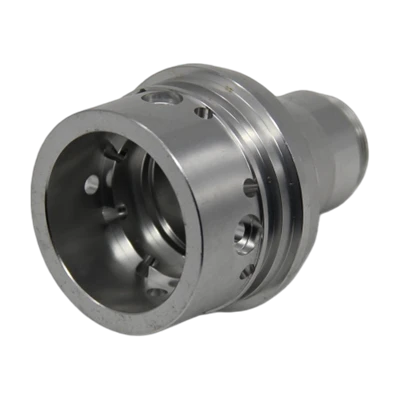
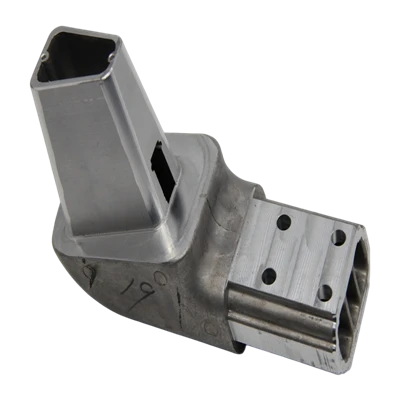
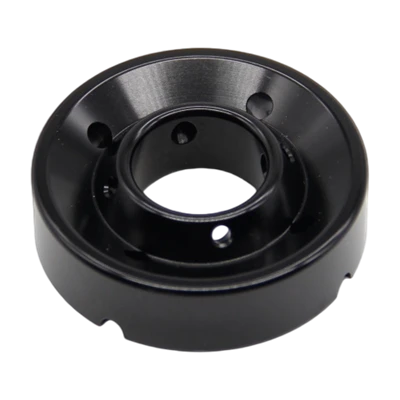
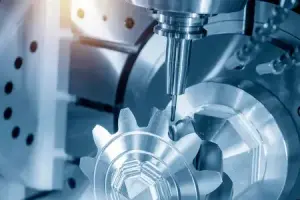
Five axis CNC machining parts are particularly adept at handling complex geometric problems that are difficult to handle with three axes. Three axis machining of complex workpieces usually requires 4-6 clamping operations, each of which introduces a positioning error of ± 0.005-0.015mm. After 4 clamping operations, the cumulative error may reach ± 0.060mm, far exceeding the tolerance requirements for fine parts. At the same time, multiple sets of specialized fixtures will significantly increase the cost of small-scale projects.
The geometric masking of five axis machining can include synchronous five axis linkage (Simultaneous 5-Axis, which can dynamically adjust tool posture in real time and mask arbitrary spatial surfaces), 3+2 positioning five axis (suitable for polyhedral construction), and five axis turning milling composite (completing rotation and milling in one go).
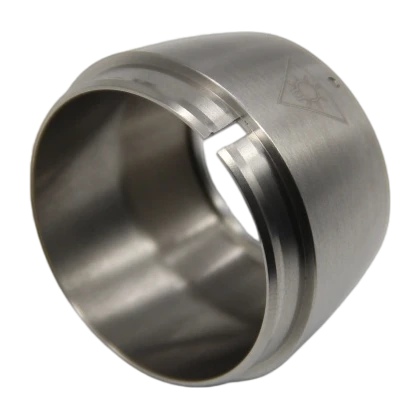
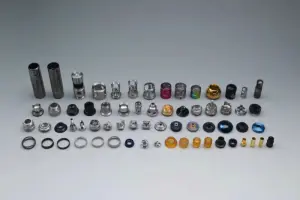
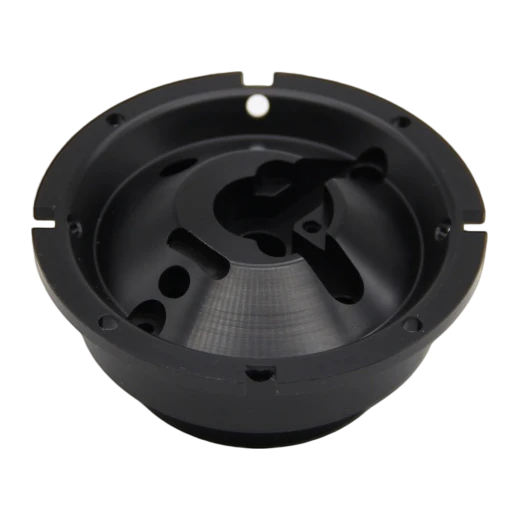
Typical complex features that we can process:
DFM design manufacturability analysis support: After uploading the drawings, our engineers will provide a free five axis manufacturability evaluation within 24 hours, including feature feasibility, tool accessibility, tolerance rationality, and cost optimization initiatives.
Complex construction processing case:
Case 1: Titanium alloy hydraulic manifold
- Features: 18 interlaced channels, 5 processing directions, positional accuracy ± 0.004mm. Challenge: Channel interlaced vibration and titanium alloy elastic rebound. Result: One clamping is completed, Cpk=1.89, All 100 FAIs have been processed.
Case 2: Tungsten Alloy Impeller
- Features: 13 inclined blades, with the thinnest thickness of 1.1mm and rounded corners of R0.3mm. Challenge: Vibration and surface accuracy of ultra-thin blades. Result: The profile deviation is ± 0.006mm, Ra is 0.4 μ m, and there is zero scrap.
Material capability
Five axis CNC machining of parts with material capability is commonly used for processing high difficulty materials. Due to the optimal tool posture, cutting force can be significantly reduced and tool life can be extended (titanium alloy side edge cutting vs end edge cutting, life can be increased by 3-5 times).
- Detailed description of the main processable materials:
Material specific process database: We have established a dedicated cutting parameter library for mainstream materials and equipped it with specialized cutting tools such as TiAlN, CBN, PCD, DLC, etc. Aluminum 7075, titanium Ti-6Al-4V, Inconel 718, 316L and other materials are kept in stock to ensure no shortage waiting.
Surface Quality
Five axis CNC machining parts have natural advantages in terms of appearance quality: the five axis rotation posture can always maintain the optimal cutting angle, prevent the low-speed area of the tool end from contacting, reduce the surface fatigue layer by 20-35%, and eliminate the tool marks caused by repeated clamping. The line spacing of surface machining can be optimized by 60%, and the surface waviness can be reduced by 80%.
The appearance quality levels we can provide (with reference pictures, Alt text proposal: "Comparison of different surface roughness levels for five axis CNC machined parts"):
- Functional level: Ra 1.6 μ m (direct milling), suitable for internal structural components, with the best economy.
- Fine functional level: Ra 0.8 μ m (precision milling+semi precision machining), meeting the needs of most mating and sealing surfaces.
- Appearance functional level: Ra 0.4 μ m (precision milling+optimized tool path), no visible tool lines, suitable for aviation exposed parts and consumer products.
- Mirror level: Ra 0.1 μ m (five axis precision milling+polishing/electrolytic polishing), suitable for optical components and medical implants.
- Post disposal appearance disposal method (with comparison diagram before and after disposal):
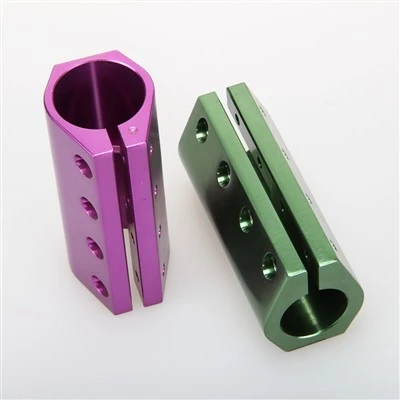
- Hard anodizing (type III): suitable for aluminum alloys to enhance wear resistance and insulation properties.
- Mirror polishing: stainless steel/cobalt chromium alloy, Ra<0.2μm, Strengthen corrosion resistance.
- Titanium alloy anodizing: achieving color recognition and wear resistance.

Sandblasting, PVD coating, electroless nickel plating, powder coating, etc. are selected based on data and requirements.
Appearance quality inspection and recording: Use a stylus roughness meter to stop Ra/Rz/Rmax full parameter testing, evaluate complex surfaces using optical scanning, provide testing reports for each batch, and conduct 100% testing on key components.
Lead Time & Delivery
Many customers think that 5-axis is more complex and has a longer lead time than 3-axis, but in practice, the opposite is true: one clamping replaces 4-6 clamping, reducing auxiliary time by 70%, eliminating the need to wait for multiple sets of tooling manufacturing, increasing FAI pass rate, and significantly reducing overall lead time (3-axis complex parts often take 3-5 weeks, while 5-axis usually takes 1-2 weeks).
Our delivery guarantee system:
- Basic equipment to ensure fast delivery: digital quotation system (upload STEP file, confirm quotation within 24 hours), mainstream data stock, 20% flexible production capacity, 12 five axis machining centers, and global DHL/FedEx/UPS logistics network.
- We provide real-time consumption tracking, proactive notification of key nodes, and a on-time delivery rate of 97.8% for standard items and 95.2% for urgent items.
Industry Applications
Five axis CNC machining parts are commonly used in multiple high demand industries:

Aerospace and Defense
Typical parts: engine impeller, hydraulic manifold, construction joint. Key request: Fine processing of titanium and Inconel, full traceability of FAI. Our plan: synchronous five axis+CMM full inspection+intact aviation document package.

Medicine and Life Sciences
Typical parts: orthopedic implants, surgical robot joints, endoscopic miniature components. Key requests: biocompatibility data, microfabrication, electrolytic polishing. Our plan: Ti ELI/PEEK five axis precision milling+clean room packaging.
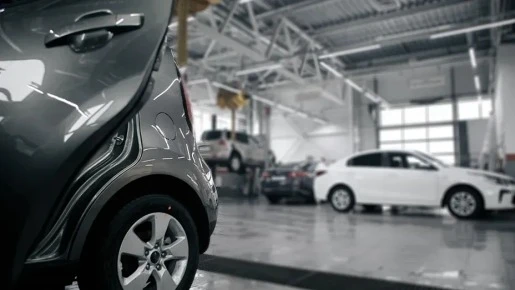
Automobile and Racing Sports
Typical parts: titanium alloy suspension components, turbocharger housing, lightweight wheels. Key request: High intensity, fast delivery time. Our plan: Aluminum/titanium high-speed five axis+anodizing+7-day prototype delivery.

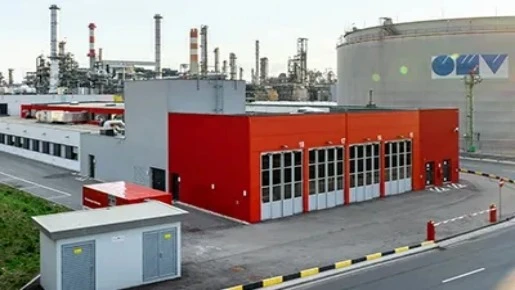
Oil, natural gas, and energy
Typical parts: high-pressure valve body, drill bit lead components. Key requirements: Inconel corrosion resistance and high pressure sealing accuracy. Our plan: Inconel five axis precision milling+strict sealing surface control.
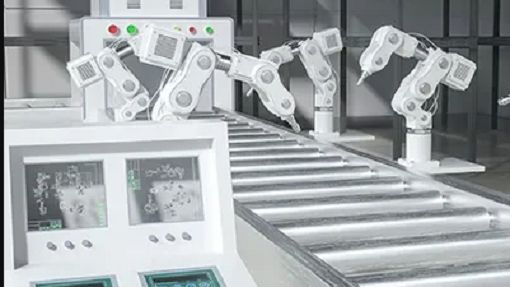
Robots and Semiconductors
Typical parts: robot articulated arm, vacuum chamber. Key requirements: high diversity, anti-static, ultra clean. Our plan: Aluminum/PEEK five axis+Hard anodizing+Ultrasonic cleaning.
Seminar and High Tech Prototype Manufacturing
Typical components: wind tunnel models, satellite structures, quantum computing frameworks. Key requests: rapid prototyping, extreme precision, NDA confidentiality. Our plan: 1 piece minimum order, 7-day lead time, engineer DFM support.
FAQ
Hot Tags: 5-axis CNC machining parts, China 5-axis CNC machining parts manufacturers, suppliers, factory