
Battery trays that must stay light yet survive crash tests. Motor housings that demand near-perfect concentricity at high RPM. Cooling plates with internal channels that casting simply cannot hold consistently. These are everyday headaches for electric vehicle programs. When tolerances keep tightening and designs grow more integrated, traditional casting or stamping often falls short-extra operations pile up, scrap rates climb, and delivery dates slip.
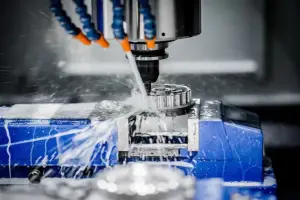
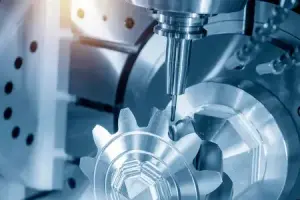
Precision CNC milling has become one of the most reliable ways to cut through those problems. It delivers the high tolerance milling and complex milling components that modern EV platforms need, frequently in a single setup, whether you are still iterating prototypes or moving into low-to-medium volume production.
Why EV Programs Push Machining Harder Than Ever
Electric vehicles put unusual pressure on structural and thermal parts. Every kilogram saved in the battery tray or motor housing helps range. At the same time, engineers want fewer separate pieces, better sealing surfaces, and cooling channels that actually perform as designed. Aluminum is the material of choice for most of these parts, but aluminum does not always behave kindly under conventional processes.
Die casting can leave porosity that shows up later in leak tests. Stamping struggles with deep pockets and undercuts. Secondary machining then becomes unavoidable, introducing more variation. High tolerance milling on modern CNC equipment sidesteps a lot of that by cutting directly from solid or near-net stock. The result is better control over flatness, positional accuracy, and surface integrity-especially on large-format trays and thin-walled housings where distortion is a constant risk.
What Precision CNC Milling Actually Delivers
Tight tolerances on the features that matter
Sealing faces on battery enclosures often need flatness around 0.05 mm. Cooling channels are typically held to ±0.02 mm on width and depth. Motor housing bores demand concentricity of 0.01 mm or better if you want quiet, efficient operation at high speed. Good 4- and 5-axis machines with probing and proper fixturing routinely hit these numbers. For the most critical EV features, shops that specialize in precision CNC milling can work in the ±0.005 mm to ±0.05 mm range, backed by full CMM reports.
Complex milling components finished in fewer setups
Many EV parts now combine mounting faces, cooling features, sealing grooves, and structural ribs in one piece. Running those in a single clamping reduces stack-up error and keeps large aluminum parts from moving between operations. This is where complex milling components really show their value-less handling, better consistency, shorter lead times.
The broader market is moving in the same direction. Demand for lightweight materials in electric vehicles continues to climb sharply; aluminum remains central to battery trays and structural enclosures because it offers meaningful weight reduction without sacrificing crash performance.
Materials That Work Best with Precision CNC Milling
Aluminum still dominates, but the specific alloy and the way it is machined make a real difference. Copper shows up where thermal or electrical conductivity is critical. Engineering plastics handle insulation and lighter covers.
|
Material |
Common EV Parts |
Why It Suits Precision CNC Milling |
Typical Critical Tolerances |
|
Aluminum 6061-T6 / 6063 |
Battery trays, motor housings, cooling plates |
Good machinability, solid strength-to-weight, decent thermal conductivity |
±0.02–0.05 mm (seals & channels) |
|
Higher-strength aluminum (7075 etc.) |
Structural brackets, load-bearing interfaces |
Better strength for crash and suspension loads |
±0.025–0.05 mm |
|
Copper (C110 and similar) |
Bus supports, high-performance cooling |
Excellent conductivity |
±0.02–0.05 mm |
|
Engineering plastics (PEEK etc.) |
Insulators, sensor housings, connectors |
Electrical isolation and weight savings |
±0.05 mm typical |
Aluminum CNC milling for automotive work, especially EV battery tray machining, benefits from careful fixture design and stress-relief strategies. Thin walls and large footprints like to move; experienced shops plan for that from the first toolpath.
Case Study: Reducing Defects on an EV Battery Tray and Motor Cover Program
A Tier-1 supplier was struggling with an aluminum battery tray and matching motor end covers. Casting porosity plus multiple setups produced sealing-surface variation that pushed the defect rate above 7–8 percent. Shipments were regularly slipping by 10 to 15 days.
The team switched the critical features to precision CNC milling, using dedicated fixtures and 5-axis strategies so the complex milling components could be finished with minimal re-clamping. Sealing faces and cooling channels were verified 100 percent on CMM.
After process stabilization the defect rate dropped below 2 percent. Average lead time improved by roughly 10–12 days, and first-article approval moved faster. The change did not eliminate every challenge-thin-wall distortion still needed active management-but it turned an unreliable process into one the customer could plan around.
How to Choose a CNC Milling Manufacturer for EV Work
Not every shop that owns a 5-axis machine is ready for EV structural or thermal parts. Look for evidence of high tolerance milling capability (actual CMM data and capability studies, not just machine claims). Experience with aluminum CNC milling for automotive applications and EV battery tray machining matters. The ability to move from prototype to small and medium production without reinventing the process is equally important.
Quality systems (IATF 16949 or equivalent), full material traceability, and support for PPAP documentation should be non-negotiable. In-house or tightly controlled secondary operations-cleaning, anodizing, leak testing-reduce the risk of quality surprises later.
A reliable CNC milling manufacturer or precision CNC milling factory that also offers custom CNC milling services can cover the full path from early design reviews through series production.
FAQ
Q: What is precision CNC milling used for in EV manufacturing?
A: It produces battery trays and enclosures, motor housings, cooling plates, inverter housings, structural brackets, and high-current connector components that need tight dimensional control, complex geometry, and reliable sealing or thermal performance.
Q: How tight can CNC milling tolerances be?
A: On critical EV features, capable shops regularly hold ±0.005 mm to ±0.05 mm depending on part size and feature type. Motor-housing concentricity around 0.01 mm and cooling-channel tolerances near ±0.02 mm are realistic production targets when the process is properly controlled.
Q: Why do EV makers choose CNC over casting for certain parts?
A: Precision CNC milling gives better dimensional accuracy, removes porosity risks that affect sealing and fatigue life, allows complex integrated features in fewer operations, and supports faster design changes. It is especially useful for prototypes, low-to-medium volumes, and any part where sealing integrity or thermal uniformity cannot be compromised.
Q: Can the same process support both prototypes and production?
A: Yes. With the right fixtures and process discipline, the same precision CNC milling approach can scale from single pieces to thousands while keeping quality consistent.
If your current EV project is limited by tight tolerances, complex geometry, or unpredictable lead times on aluminum structural or thermal components, it is worth reviewing the drawings with a shop experienced in precision CNC milling and high tolerance milling. Most capable partners can provide a practical feasibility review and sample quote relatively quickly, then support the move into production.