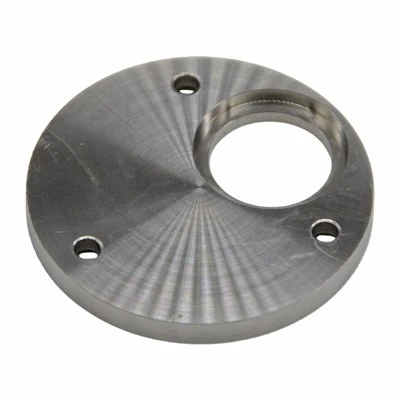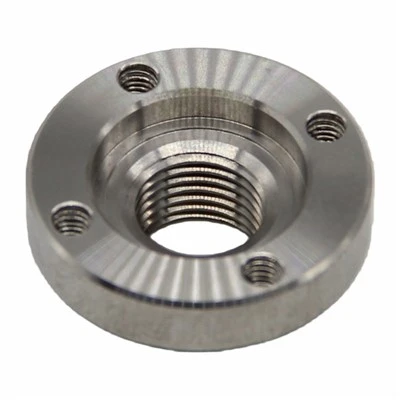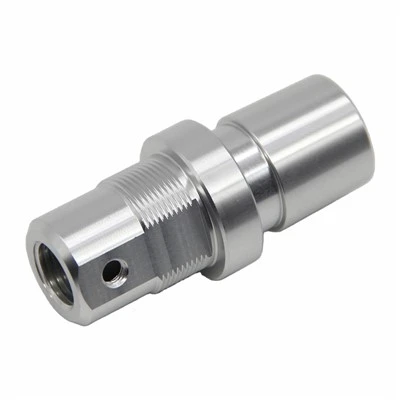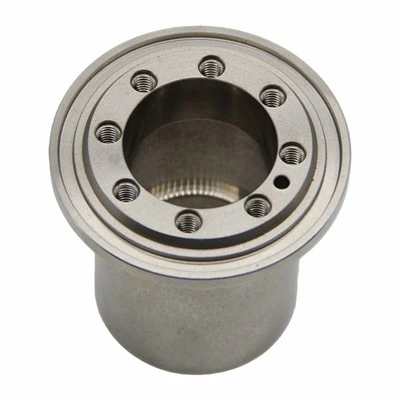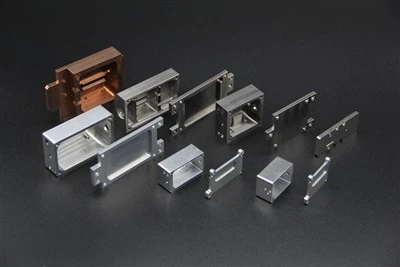
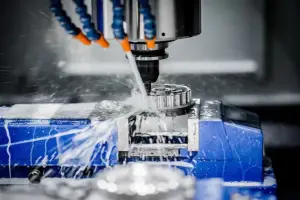
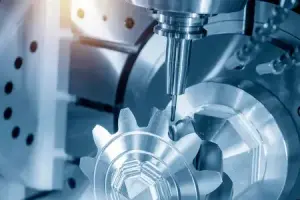
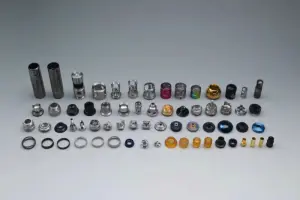

Five-axis CNC machining has become the go-to manufacturing method for parts with complex geometries that also demand high precision and tight tolerance control. It is especially well suited to specialized components used in aerospace, medical devices, and energy production, where a single dimensional error or a rough surface finish can compromise the safety or performance of the entire assembly. Below is a closer look at exactly why this technology has become indispensable across these industries, along with some additional context on how the process actually works and why it delivers the results it does.
Complex Geometries Made Simple
Five-axis machining allows the cutting tool and the workpiece to move in coordinated motion across five axes simultaneously - typically three linear axes (X, Y, Z) plus two rotational axes (A and B, or A and C, depending on the machine configuration). This simultaneous, coordinated movement makes it possible to machine complex curved surfaces, arcs, and compound angles that would be extremely difficult, or outright impossible, to produce on a conventional three-axis machine.
Take aerospace components as an example. Organic, freeform shapes, contoured edges, and compound curved surfaces are common in this industry - think turbine blades, structural brackets, and aerodynamic housings. Under traditional machining methods, producing these shapes would require multiple setups or custom-built fixtures, with the part being repositioned and re-clamped several times before it's finished. Every one of those repositioning steps introduces the possibility of misalignment. Five-axis technology, by contrast, can complete the same geometry in a single setup, which cuts down on cumulative positioning error and significantly improves overall efficiency. In practical terms, this also means shorter lead times between design finalization and finished part, something that matters a great deal when aerospace programs are working against tight qualification schedules.
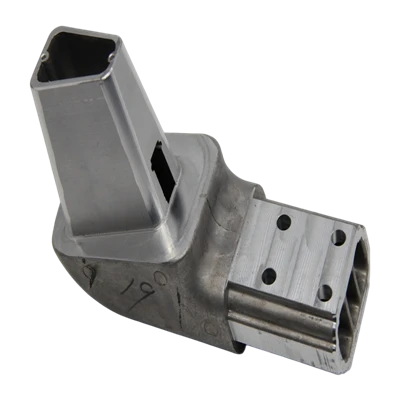
High Precision and Tight Tolerances
Because five-axis machining minimizes the number of times a part needs to be clamped and repositioned, it substantially reduces the human error that tends to creep in with repeated manual setups. Combined with the automation and repeatability of computer numerical control (CNC), this approach can achieve micron-level precision - a level of accuracy that simply isn't realistic with methods requiring frequent re-fixturing.
Medical implants are a good illustration of why this matters. Devices such as artificial joints must meet strict biocompatibility requirements as well as demanding dimensional tolerances, since even minor deviations can affect how well an implant integrates with surrounding bone and tissue, or how smoothly an articulating joint surface performs over years of use. Five-axis machining helps ensure the surface finish and geometric accuracy needed to meet these standards consistently, batch after batch. This consistency is particularly important for regulatory compliance, since medical device manufacturers typically need to demonstrate repeatable, validated processes as part of their quality management systems - something five-axis machining supports well thanks to its reduced reliance on manual intervention.
Multi-Sided and Contoured Parts
Traditional three-axis machining generally requires multiple setups to fully machine a part with features on several sides. Every additional setup adds time, cost, and risk of misalignment. Five-axis machine tools, on the other hand, can access and machine up to five faces of a part in a single operation, which dramatically simplifies the production process.
Energy-sector components are a strong example of where this capability pays off. Turbine blades, pump housings, and similar parts often feature intricate contours and internal flow channels that need to be machined as a single, continuous form to guarantee proper fluid dynamic performance. Any inconsistency between machined sections - even a slight step or misalignment where two setups meet - can disrupt flow characteristics and reduce efficiency. Producing these features in one continuous five-axis operation ensures the geometry stays true to the design intent from one end of the part to the other, which is critical for components that need to perform reliably under high pressure, high temperature, or high rotational speed conditions over long operational lifespans.
Parts Requiring Tight Surface Contour Tolerances
Because the cutting tool can be positioned tangent to the surface being cut, five-axis machining allows the use of shorter cutting tools than would otherwise be needed on more complex geometries. Shorter tools flex less during cutting, which reduces vibration and chatter and results in a noticeably better surface finish.
This benefit is especially valuable for parts like optical molds and precision electronic scanning equipment, where smooth surfaces are a functional requirement rather than a cosmetic preference. By minimizing chatter marks on the surface, five-axis machining also reduces the amount of secondary finishing - polishing, grinding, or hand-finishing - that would otherwise be needed to bring the part up to spec. That translates directly into lower post-processing costs and shorter overall production timelines, which is a meaningful advantage for manufacturers working with optical-grade tolerances where every additional finishing step adds cost and introduces new opportunities for error.
Lightweight, Integrated Structures
Five-axis machining is also well suited to producing thin-walled, lightweight designs - a good example being integrally bladed rotors (blisks) used in aerospace turbine engines. Under conventional manufacturing approaches, a part like this would typically require welding together multiple individually machined components. Welded joints, however, introduce potential weak points and add weight from joining hardware and weld material, both of which run counter to the goals of aerospace design.
Five-axis technology makes it possible to machine this kind of integrated structure from a single billet of material in one continuous process. The result is a part that is both lighter and structurally stronger than its welded-assembly counterpart, since there are no joints to act as stress concentration points or failure initiation sites. This "machine it as one piece" approach has become increasingly important as aerospace manufacturers push toward more fuel-efficient, weight-optimized engine designs, and it's a trend that is likely to keep expanding as five-axis machine capabilities and tooling continue to improve.
Typical Industries That Rely on 5-Axis Machining
Aerospace: Used to machine turbine blades, engine casings, and other geometrically complex, performance-critical components where weight savings, structural integrity, and dimensional accuracy all matter simultaneously.
Medical devices: Used to produce precision implants such as artificial joints and dental implants, where biocompatibility, tight tolerances, and consistent surface finish are all non-negotiable requirements.
Energy production: Used to manufacture components for solar power systems as well as precision parts for nuclear power plants, many of which must perform reliably under extreme operating conditions for decades at a time.
Beyond these three core industries, five-axis machining is also increasingly used in high-end automotive manufacturing (particularly for motorsport and prototype components), in the production of precision molds and tooling, and in industrial robotics, where complex end-effector and joint components benefit from the same single-setup accuracy advantages described above.
Summary of the Advantages
By reducing the number of setups, improving precision, and optimizing cutting toolpaths, five-axis machining significantly shortens manufacturing cycles for complex parts while lowering overall production costs. It is particularly well suited to applications with demanding requirements around geometry, tolerance, and surface quality - the exact combination of factors that define so much of aerospace, medical device, and energy-sector manufacturing today. As part designs continue to trend toward more integrated, lightweight, and geometrically complex forms, five-axis capability is likely to move from being a competitive advantage to a baseline expectation across these industries.