
When a complex brass part with fine internal threads, cross-drilled ports, and a specified surface finish leaves the drawing stage, the real friction often starts in communication. One shop interprets the thread class differently, another treats the finish note as a generic polish, and tolerance stack-up on interrelated features only becomes visible after the first samples arrive. The result is extra rounds of clarification, unexpected cost, or parts that assemble inconsistently. These gaps are why buyers increasingly look for partners who can manage custom brass CNC milled components as a connected process-from threading strategy through final surface condition-rather than handing each step to separate assumptions.
Threading and Hole Features
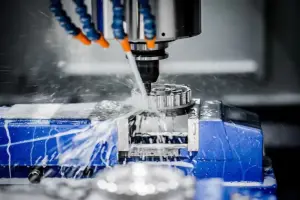
Threaded brass CNC parts show up constantly in valves, fittings, connectors, and instrumentation housings. The right process depends on diameter, depth, production volume, and the required class of fit. Thread milling is usually the stronger choice for larger internal diameters or deeper holes because it gives better chip control and maintains form accuracy. Single-point threading remains efficient for many external threads on free-cutting grades such as C36000. Conventional tapping still works well for smaller internal threads in higher volumes, provided hole preparation and chip evacuation are under control.
A common misconception is that "brass threads easily, so any method will be fine." Free-cutting brass does machine cleanly, yet deep blind holes, fine pitches, or interrupted cuts still punish poor tool paths and inadequate chip breaking. Another frequent issue is assuming the thread class written on the drawing will appear automatically. Calibrated gauges and, when needed, optical checks of flank form remain necessary-especially on sealing or load-bearing threads.
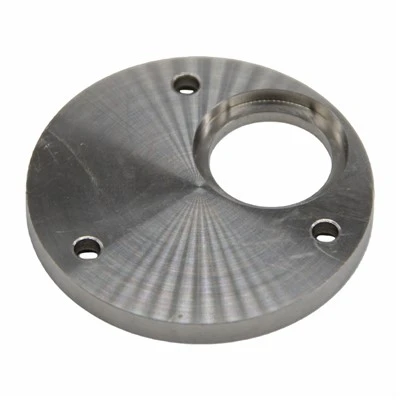
Hole-making follows the same practical logic. Through holes, blind holes, and cross-drilled features are routinely combined with threads in one setup on multi-axis machines. Positional accuracy and perpendicularity often matter as much as the diameter itself. When custom brass CNC milled components contain several interrelated holes and threads, completing them in a single clamping reduces the cumulative error that appears when features are produced across separate operations.
Limits still exist. Extremely deep, small-diameter blind holes with fine threads can challenge chip evacuation even in free-cutting brass. In those situations, early discussion of depth-to-diameter ratio, alternative thread forms, or staged operations prevents larger problems later. Treating every threaded feature as routine is one of the faster ways to create scrap or assembly issues.
Surface Finishing
Surface condition on brass CNC milling parts affects corrosion resistance, sealing behavior, electrical contact quality, and how the part ages once it leaves the factory.
Typical options include mechanical polishing, bright dipping or passivation, nickel plating, tin plating, and silver plating. Nickel is frequently specified for outdoor or industrial environments because it slows tarnish and adds wear resistance. Tin and silver are chosen when low and stable contact resistance is required. Passivation or bright dipping removes residual machining films and improves appearance without adding significant thickness.
In outdoor equipment or fluid-handling systems the finishing decision has direct consequences. Unfinished brass will tarnish and can develop surface films that affect both appearance and, in some cases, sealing or contact performance. A properly applied nickel finish generally maintains better appearance and corrosion resistance in humid or mildly corrosive conditions. The practical risk lies in mismatch: over-specifying a heavy plating can create dimensional stack-up on tight features, while under-specifying leaves the part vulnerable in the real environment. Thickness, masking of sealing faces or threads, and post-plate inspection criteria therefore need to be clear before production begins.
Deburring is equally consequential. Automated tumbling handles many edges efficiently, but critical sealing surfaces and fine threads on threaded brass CNC parts often need selective attention. Burrs left in these areas are a reliable source of assembly or sealing complaints later.
Case Example
A customer needed custom brass valve bodies and related internal parts that combined internal and external threads, intersecting ports, and defined sealing surfaces. Previous parts had shown inconsistent thread quality and variable surface condition, which appeared as assembly variation and early corrosion concerns during field testing.
The work started with a design-for-manufacturability review focused on thread depths, port intersections, and finish requirements, including which surfaces needed masking. C36000 was confirmed for machinability and the expected service environment. Critical internal threads were produced by thread milling; other features used conventional methods where geometry and volume allowed. After primary machining, external surfaces received a controlled nickel finish while sealing faces were masked and held to the specified roughness.
First-article inspection covered both dimensions and surface condition. One deep internal feature initially showed imperfect chip evacuation, requiring a tool-path and coolant adjustment before the process stabilized. Once corrected, production maintained the same sequence with in-process checks on threads and critical diameters. Assembly consistency improved and corrosion performance in the intended environment became more predictable. The project still required a short iteration loop on that deep feature and a clear agreement on plating thickness versus tolerance, but the final process supported reliable ongoing supply of the custom brass CNC milled components.
Industry Context
Precision brass components remain common in valves, fittings, and fluid-control systems because the material machines cleanly, accepts widely used protective finishes, and offers practical corrosion resistance for many industrial and outdoor applications. The same characteristics that support its use in connectors also make it suitable for fluid-handling parts where thread integrity and surface condition directly influence sealing and service life.
FAQ
Q: What surface finishes are available for custom brass parts?
A: Common options include mechanical polishing, bright dipping or passivation, nickel plating, tin plating, and silver plating. Selection depends on corrosion exposure, electrical needs, appearance, and dimensional constraints. Nickel is often used for outdoor or industrial protection; tin or silver is preferred when stable low contact resistance is required.
Q: How is thread quality controlled on custom brass CNC milled components?
A: The threading method is chosen according to size, depth, and volume-thread milling, single-point threading, or tapping. Quality is verified with calibrated gauges and, when necessary, optical inspection of form. Process capability is established at first article and monitored during production.
Q: What information helps prevent tolerance and communication problems on complex parts?
A: Clear thread specifications (including class of fit), critical-to-function tolerances, surface-finish requirements with masking notes, and the expected service environment. Early discussion of deep holes, fine pitches, or tight positional relationships also reduces later surprises.
Q: Can complex threaded and multi-port geometries be finished in one setup?
A: Many can, especially on multi-axis equipment. Single-setup machining improves positional relationships between features. Extremely deep or high-aspect-ratio internal features may still need process adjustments or design discussion.
Q: What does a typical process look like for a new custom brass valve or fitting project?
A: Design and material review, process planning (threading strategy plus finishing approach), first-article production and inspection, feedback and any required adjustments, then production with ongoing checks. The sequence is intended to catch geometry and finish issues before volume begins.
As a supplier focused on brass CNC milling parts and custom brass CNC milled components, we treat threading strategy and surface finishing as connected decisions rather than separate afterthoughts. If you are developing complex brass parts and want clearer process feedback-especially on threads, interrelated holes, and finish requirements-sharing the drawing and application conditions is the most direct way to start.