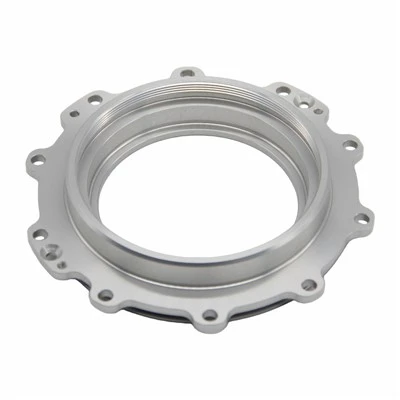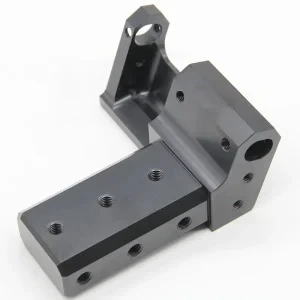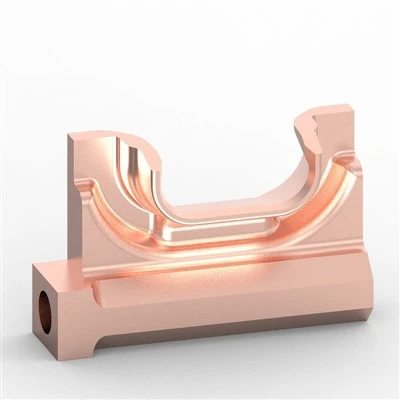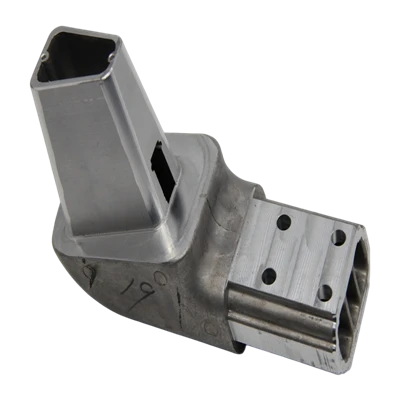


Aerospace parts face relentless demands for high strength-to-weight ratios and long fatigue life. Many general machine shops struggle to hold consistent tolerances on titanium, resulting in higher scrap rates, missed delivery windows, and parts that fall short of performance expectations. Specialized Titanium CNC Milling Services address these issues directly through rigid process control, titanium-specific tooling strategies, and aerospace-qualified quality systems-delivering components that perform as designed.
Why Titanium Alloys Remain the First Choice for Aerospace Structures
Titanium alloys, especially Ti-6Al-4V (Grade 5), continue to dominate critical airframe and engine applications for clear engineering reasons.
Ti-6Al-4V delivers tensile strengths in the 950–1,200 MPa range at a density of only 4.43 g/cm³. That combination yields a strength-to-weight ratio roughly 45% better than many steels while remaining significantly lighter. The alloy also retains useful mechanical properties up to approximately 400°C, well beyond the temperature limits of most aluminum alloys. In addition, its naturally forming oxide layer provides excellent resistance to corrosion from jet fuel, hydraulic fluid, and marine environments, and its fatigue performance under cyclic loading is well documented in aerospace design allowables.
The table below highlights how Ti-6Al-4V compares with common alternative materials used in aerospace:
|
Property |
Ti-6Al-4V (Grade 5) |
Aluminum 7075-T6 |
Stainless Steel 304 |
|
Density (g/cm³) |
4.43 |
2.81 |
8.00 |
|
Tensile Strength (MPa) |
950–1,200 |
~570 |
~500–700 |
|
Strength-to-Weight Ratio |
Excellent |
Good |
Moderate |
|
Max Service Temperature |
~400°C |
~120–150°C |
~800°C* |
|
Corrosion Resistance |
Excellent |
Good |
Good |
|
Fatigue Performance |
Excellent |
Moderate |
Good |
*Note: Stainless steel retains strength at high temperature but at a significant weight penalty.
These properties explain why designers specify aerospace grade titanium milling for structural brackets, landing-gear components, engine mounts, and fasteners where both weight and durability matter.
The Real Challenges of Machining Titanium
Titanium is not inherently "hard," but it is difficult to machine efficiently and consistently. Three factors create the bulk of the difficulty:
Poor thermal conductivity (around 6.7 W/m·K) means cutting heat stays concentrated at the tool edge instead of leaving with the chip. Temperatures rise quickly, accelerating tool wear. The material also work-hardens readily and shows a strong tendency to gall or chemically react with cutting tools at elevated temperatures. Finally, its relatively low elastic modulus combined with high strength produces spring-back and deflection, making tight tolerances harder to maintain on thin walls or complex geometries.
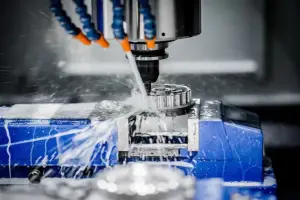
Successful titanium 6Al-4V CNC machining therefore depends on more than standard CNC capability. It requires rigid machine platforms, sharp positive-rake carbide tools (often with specialized coatings), controlled cutting speeds typically in the 30–70 m/min range, high-pressure coolant directed precisely at the cutting zone, and toolpaths designed to keep chip load consistent and avoid rubbing. Shops that treat titanium like stainless steel or aluminum usually see rapid tool failure, surface damage, and dimensional drift.
Sunhingstones Case: Tight Tolerances and On-Time Delivery for a Flight-Critical Bracket
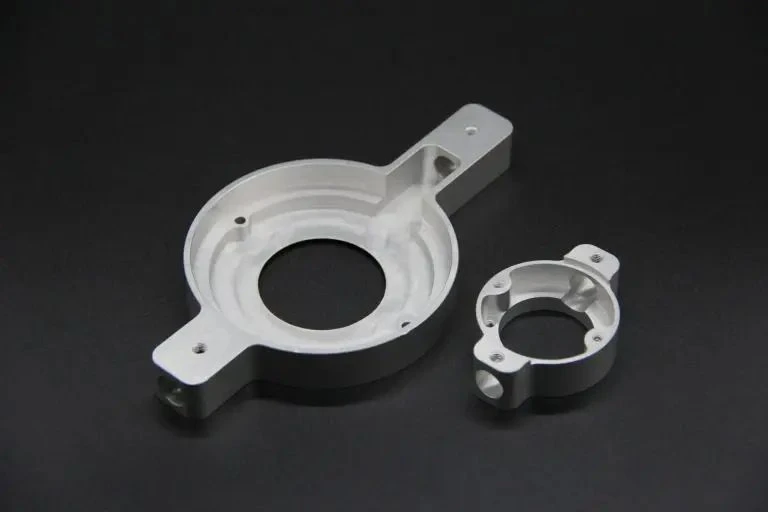
A recent aerospace customer needed a complex Ti-6Al-4V structural bracket with critical bore tolerances of ±0.01 mm, surface finish requirements of Ra 0.8 µm or better, and full AS9100 traceability. Previous suppliers had experienced tool-life problems and schedule slippage.
Sunhingstones approached the job with a process built specifically around Titanium CNC Milling Services for aerospace work:
Five-axis machining with high-rigidity fixturing and minimal tool overhang to control deflection
High-pressure coolant and titanium-optimized toolpaths that maintained steady engagement
In-process checks plus final CMM verification against the full GD&T callouts
Complete material certification and process documentation for lot traceability
Results were clear. First-article inspection passed on the initial submission. Across the production lot, scrap stayed under 1%, critical dimensions remained inside tolerance, and the parts shipped on the agreed schedule-allowing the customer to meet their assembly window without expediting costs or redesign.
Industry Context: Sustained Demand and Supply Realities
Aerospace titanium demand remains supported by large commercial aircraft backlogs and ongoing defense programs that prioritize lighter, more durable structures. At the same time, manufacturers continue to diversify supply chains and place greater emphasis on qualified machining partners who can deliver consistent quality rather than simply competing on price. Advances in process monitoring, high-pressure coolant application, and dedicated titanium tooling have improved both productivity and reliability for shops that invest in the right methods. In this environment, proven capability in aerospace grade titanium milling has become a practical differentiator.
FAQ
Q: Why is titanium preferred over aluminum in many aerospace parts?
A: Titanium offers a better strength-to-weight ratio under higher loads, maintains strength at temperatures where aluminum softens, provides superior fatigue performance under repeated cyclic stress, and resists corrosion without additional protective coatings. Aluminum remains the right choice for many lower-stress, lower-temperature structures, but titanium is specified when those extra performance margins are required.
Q: What makes Ti-6Al-4V the most widely used aerospace titanium alloy?
A: It provides the best overall balance of strength, toughness, availability in certified forms, and extensive design data. Roughly half of the titanium used in aerospace applications is Ti-6Al-4V.
Q: How do specialized Titanium CNC Milling Services actually improve component performance?
A: They control heat, residual stress, tool wear, and surface integrity so the finished part fully retains the material's inherent strength, fatigue life, and corrosion resistance instead of degrading those properties through improper machining.
Next Step
When your program needs reliable titanium 6Al-4V CNC machining that meets both engineering and schedule requirements, work with a team that treats titanium as a specialized process rather than a general machining job. Contact Sunhingstones to review your drawings, discuss material and tolerance requirements, or request a quote for precision aerospace components.