

Validate Complex Geometries Before Tooling
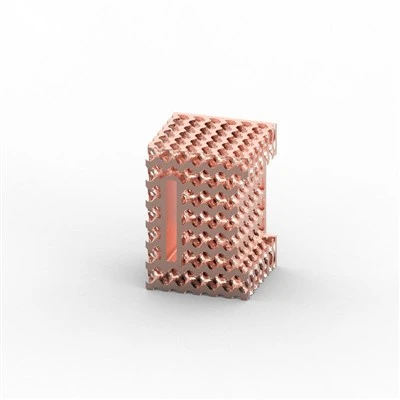
Additive manufacturing is most valuable when the design contains features that are difficult or impossible to machine or cast at the prototype stage:
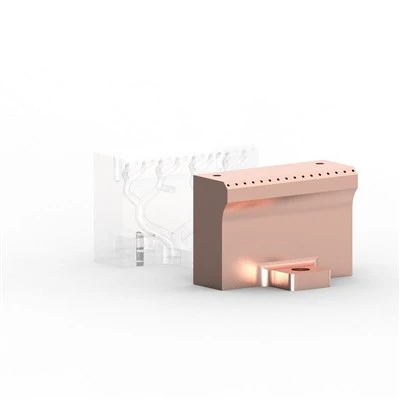
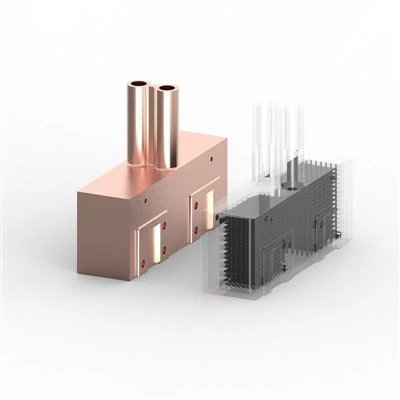
Internal conformal cooling channels or fluid passages
Lightweight lattice or topology-optimized structures
Multi-part assemblies reduced to a single component
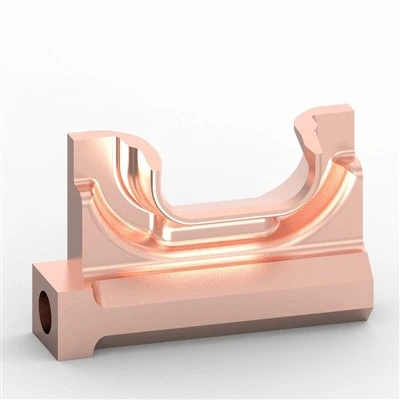
Deep cavities, undercuts, and organic shapes
These features often force teams into compromises or multi-piece constructions when using traditional methods. With custom metal 3D printed prototype parts, the same geometry that will later be considered for production can be tested for fit, function, thermal behavior, and assembly. A frequent result is the replacement of a welded or bolted multi-piece assembly with one printed part, removing joints and cumulative tolerance error.
Faster Design Iteration
|
Factor |
Casting or Complex CNC |
Metal 3D Printing |
|
Tooling / fixture investment |
High |
None or minimal |
|
Lead time for first parts |
Weeks to months |
Typically several business days to 2 weeks |
|
Cost of a design change |
High |
Low - update the file and reprint |
|
Geometric freedom |
Limited |
High |
|
Best-suited volume |
Medium to high |
Prototype to low-volume production |
Most straightforward prototypes are delivered within a predictable window once the order is confirmed. Exact timing depends on part size, material, and the amount of post-processing required. Many teams run two or three additive iterations in the time previously needed for a single cast or heavily fixtured CNC version, then decide whether to move into production tooling.
Materials Available for Metal Prototypes
|
Material |
Characteristics |
Common Prototype Applications |
|
AlSi10Mg |
Lightweight, good thermal conductivity |
Housings, heat exchangers, brackets, ducts |
|
316L |
Corrosion resistance, good ductility |
Fluid-handling parts, marine, chemical contact |
|
17-4PH |
High strength after heat treatment |
Structural brackets, fixtures, load-bearing parts |
|
Ti6Al4V |
High strength-to-weight, biocompatible |
Aerospace, medical, high-performance lightweight |
|
Inconel 718 |
High-temperature strength and corrosion resistance |
Exhaust, turbine, high-heat environments |
|
Tool steels |
Hardness and wear resistance |
Mold inserts with conformal cooling, fixtures |
If you are unsure which alloy matches the mechanical, thermal, or environmental demands of the project, we will recommend one based on the operating conditions you provide.
Process and Post-Processing
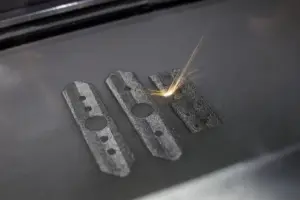
We use laser powder bed fusion (LPBF, also commonly called SLM or DMLS). A laser selectively melts metal powder layer by layer to build the part.
A typical sequence includes:
Design-for-additive review (wall thickness, supports, powder-removal paths, critical surfaces)
Build preparation and printing
Stress-relief heat treatment (usually while the part is still attached to the build plate)
Part removal and support removal
Optional HIP for maximum density, plus any additional heat treatment required for mechanical properties
CNC machining of sealing faces, mounting features, or tight-tolerance dimensions
Surface finishing (blasting, polishing, or other treatments as specified)
Dimensional inspection and reporting
As-built accuracy on many features typically falls in the ±0.1–0.2 mm range; tighter tolerances on critical surfaces are achieved by secondary machining. As-built surface roughness is higher than machined surfaces and is improved by the finishing steps above. This full workflow is what turns a printed shape into a usable functional prototype.
Why Teams Choose Us for Metal Prototype WorkProducts Description
We focus on functional metal prototypes rather than visual models. Material certificates, heat-treatment records, and inspection data (CMM or 3D scanning) are available when required. The same process used for one-off prototypes also supports small batches and low-volume production, so teams can move from validation into early production without changing suppliers.
Industries we regularly support include robotics, automotive development, medical devices, aerospace components, and industrial equipment.
FAQ
Q: How much does a metal 3D printed prototype cost?
A: Cost is driven by part volume, material, support requirements, heat treatment, CNC finishing, and quantity. Geometries that would need multiple CNC setups or custom tooling are often more economical in additive manufacturing at low volume. Upload the file for a specific quotation.
Q: How long does metal 3D printing take?
A: Most projects are completed in several business days to about two weeks after confirmation, depending on size, material, and post-processing. Expedited schedules can be discussed when the timeline is critical.
Q: Are metal 3D printed prototypes strong enough for functional testing?
A: Yes. With controlled density and appropriate heat treatment, alloys such as AlSi10Mg, 316L, 17-4PH, and Ti6Al4V are routinely used for fit, pressure, thermal, and load testing.
Q: Which metal should I choose?
A: Selection depends on strength, weight, corrosion resistance, temperature, and budget. Aluminum is common for lightweight thermal and structural parts; stainless and titanium for corrosion or biocompatibility needs; nickel alloys for high-temperature service. We can recommend an alloy once the operating conditions are known.
Q: Can you support small batches after the prototype stage?
A: Yes. The same process scales to low-volume production. Some customers also use us for bridge quantities while production tooling is being prepared.
Q: What do you need for a quote?
A: A 3D model (STEP preferred), any drawings that show critical tolerances, target material or performance requirements, quantity, and desired timeline. Information about temperature, fluid, or load conditions helps us recommend the right alloy and post-processing.
Hot Tags: metal 3d printed prototypes, China metal 3d printed prototypes manufacturers, suppliers, factory, 3d printer za metal, 3d printing casting, metal printing at home, metal sls, printing with metal, sls aluminium printing