

What Are Cast Urethane Parts?
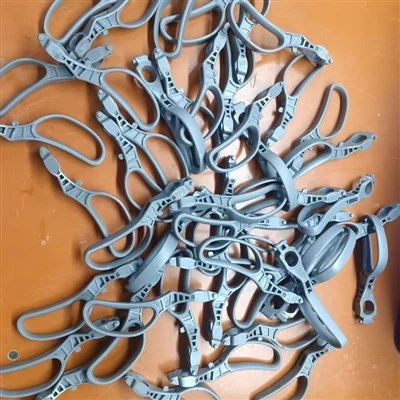
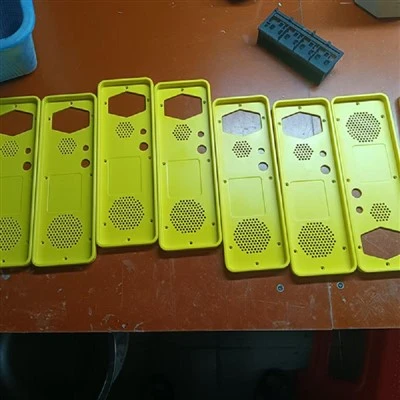
Cast urethane is a rapid manufacturing process that replicates plastic or rubber components by pouring polyurethane resin into a silicone mold under vacuum.
Typical steps:
Make a master pattern (SLA/SLS 3D printing or CNC)
Pour silicone around the master pattern under vacuum to form the mold
Mix, degas and pour the two-component resin into the mold under vacuum to eliminate air bubbles
Cure the resin (room temperature or heat-assisted)
Demold, trim gates and flash, then apply any required finishing (sanding, painting, plating or light assembly)
The process yields better surface finish and material consistency than most 3D-printed parts while avoiding the cost and lead time of hard tooling. It is widely used as a urethane casting service for both cast urethane prototypes and short production runs.
Cast Urethane Materials We Offer
We keep more than 50 polyurethane formulations in stock. The most frequently requested families are:
|
Material Family |
Typical Properties |
Common Uses |
|
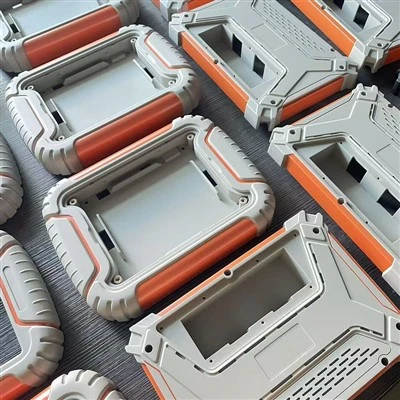
ABS-like |
Rigid, good impact, easy to paint |
Housings, covers, functional prototypes |
|
PP-like |
Semi-flexible, chemical resistant |
Living hinges, snap-fits, fluid parts |
|
PC-like |
High strength, clear grades available |
Structural components, transparent covers |
|
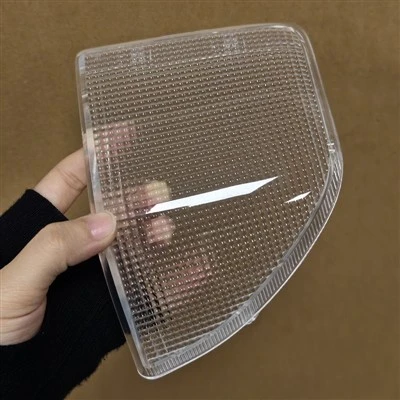
Clear (PMMA-like) |
High optical clarity |
Lenses, light guides, display windows |
|
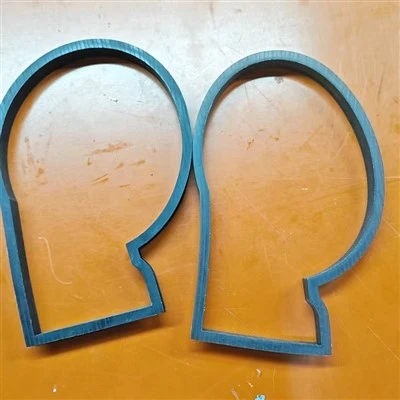
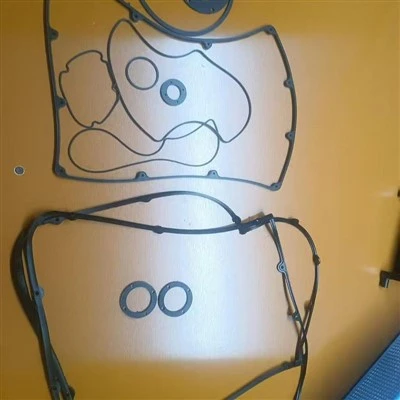
Elastomer (Shore A 30–90) |
Soft to medium hardness |
Gaskets, seals, soft-touch grips, overmolds |
|
Rigid engineering grades |
Shore D 70–85, high stiffness |
Fixtures, mechanical parts |
|
Flame-retardant grades |
Formulated to UL 94 V-0 rating |
Electronics enclosures |
|
High-temperature grades |
HDT typically 90–120 °C |
Under-hood or elevated-temperature applications |
Custom colors, textures and filled versions are available. Exact hardness, tensile data and heat-deflection values depend on the chosen resin; material data sheets are supplied with every quote. Flame-retardant grades can be provided with supporting documentation when required.
Performance of Cast Urethane Parts
Mechanical properties of cast urethane parts track those of many injection-molded plastics and elastomers closely enough for most prototype and low-volume needs. Typical ranges (resin-dependent) include:
Hardness: Shore A 30–90 or Shore D 40–85
Tensile strength: 20–60 MPa
Elongation at break: 5–600%
Tear strength (elastomers): up to ~100 kN/m
Impact resistance: good to excellent depending on grade
Heat deflection temperature: 50–120 °C (higher grades available)
Chemical resistance: moderate to good against oils, fuels and many common solvents (PP-like and selected elastomer grades perform best)
Parts accept standard secondary processes such as painting, EMI coatings, selective plating and soft-touch overmolding. As-cast surface finish is typically smooth enough for visual prototypes; additional polishing or texturing is available when higher cosmetic standards are required.
Dimensional Accuracy and Tolerance
Standard process capability for cast urethane parts is ±0.2 mm on critical dimensions for parts under 100 mm. Larger parts or non-critical features typically hold ±0.3–0.5 mm. Shrinkage is compensated during mold design for each resin family.
Recommended wall thickness is generally 1.5–4 mm for most rigid grades; thinner walls are possible with process adjustments but increase risk of incomplete fill or warpage. Undercuts, deep holes and large flat surfaces benefit from early DFM review. We check critical dimensions with calipers or CMM and can supply first-article inspection reports or 3D scan comparisons when needed. Tighter tolerances on selected features are possible with extra process control and inspection; discuss requirements at the quoting stage.
Maximum part size is limited by mold and vacuum-chamber capacity (typically up to approximately 500 × 400 × 200 mm or equivalent volume; confirm for larger parts).
Prototype Validation and Low-Volume Manufacturing
Teams use cast urethane parts for visual review, fit-and-assembly checks, early functional testing and limited customer trials. Once the design is locked, the same geometry and material family transfer into injection-mold tooling with minimal redesign.
A single silicone mold normally yields 15–25 good parts before wear becomes noticeable (increased flash and surface degradation). Multiple molds can be made in parallel if higher volume is required. Lead time for the first parts is typically 7–10 days after design approval.
Unit cost falls as quantity increases within one mold's life because the mold cost is amortized. When volume exceeds the practical life of a single mold, additional molds are needed and the cost curve steps up. For most geometries the practical sweet spot for this process is therefore 10–100 pieces; beyond that range a hybrid approach (multiple molds or transition to hard tooling) is usually evaluated. Compared with CNC machining or 3D printing, vacuum casting becomes advantageous once quantities move past roughly 5–10 pieces for medium-complexity parts. Compared with injection molding, the tooling investment remains far lower while total volume stays in the low hundreds.
Why Choose Us for Cast Urethane Parts
Our vacuum-casting cell operates several vacuum chambers and temperature-controlled curing ovens under an ISO 9001 quality management system. The same team that builds the silicone molds also handles finishing and inspection, which shortens hand-offs and reduces variation between prototype and small-batch production.
We regularly support projects in electronics, medical devices and industrial equipment where surface quality and dimensional consistency matter. One recent medical-device project required 80 ABS-like housings with a painted Class-A surface. First articles were approved in 9 days; the full batch shipped with no dimensional rejects on the critical sealing faces (verified by CMM). Current capacity and typical turnaround can be confirmed when you send files.
How to Get a Quote
Send:
3D CAD (STEP or IGES preferred)
Target quantity
Material preference or required properties
Color/finish requirements
Any critical tolerances or secondary operations
We review manufacturability, note any DFM concerns (wall thickness, undercuts, deep holes, etc.) and return a firm quote within 24 hours. Production starts after written approval.
FAQ
Q: What tolerances can urethane casting achieve?
A: Standard capability is ±0.2 mm on critical dimensions for parts under 100 mm. Larger features or non-critical dimensions usually hold ±0.3–0.5 mm. Tighter control on selected features is possible with additional process and inspection steps.
Q: How many parts can one silicone mold produce?
A: Typically 15–25 good parts. Beyond that, mold wear increases flash and surface degradation, so additional molds are made if higher volume is needed.
Q: What is the practical minimum and economic quantity?
A: As few as 1–5 pieces can be run for early prototypes. The most economical window for most geometries is usually 10–100 pieces; higher volumes require multiple molds and are evaluated case by case.
Q: How does urethane casting compare with 3D printing and injection molding?
A: 3D printing is fastest for one-offs and highly complex internal features. Vacuum casting gives better surface finish, wider elastomer options and lower unit cost once quantity exceeds roughly 5–10 pieces. Injection molding offers the lowest unit cost once annual volume justifies steel tooling.
Q: Can you supply UL 94 V-0 or high-temperature grades?
A: Yes. Several flame-retardant and elevated-HDT resins are available. Supporting documentation is supplied only for the specific grade chosen; confirm requirements when requesting a quote.
Hot Tags: cast urethane parts, China cast urethane parts manufacturers, suppliers, factory, ABS Like Plastic Casting, castable urethane, polyurethane casting, polyurethane molding material, pu casting, Rubber Like Cast Parts