
Mechanical Properties
Typical mechanical properties of our flexible cast urethanes (values vary with Shore hardness and resin grade - measured per the relevant ASTM or ISO methods):
Tear strength:
Shore A40 grades typically 15–25 kN/m; Shore A70–80 grades typically 30–45 kN/m (ASTM D624 Die C). Significantly higher than typical SLA flexible resins, supporting functional tests with repeated stretching, twisting, and compression.
Rebound resilience:
typical 40–55% depending on durometer (ISO 4662 / DIN 53512). Parts return promptly to original shape after deformation.
Compression set:
typically ≤20% for medium-hard grades after 22 h at 70 °C (ASTM D395 Method B), supporting sealing and gasket validation.
Service-temperature range:
stable from approximately −40 °C to +80 °C (resin-dependent) without embrittlement or excessive softening.
Numerical values above are typical for representative resin grades. We provide the specific resin data sheet for your project so test conditions, hardness, and relevant standards are explicit.
Surface Finish Options
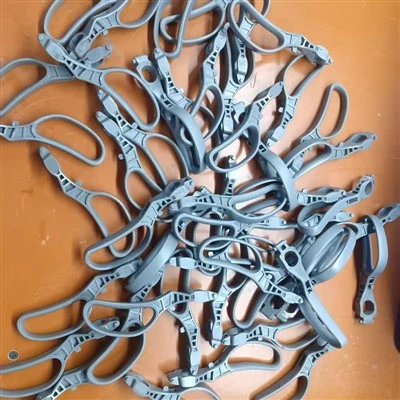
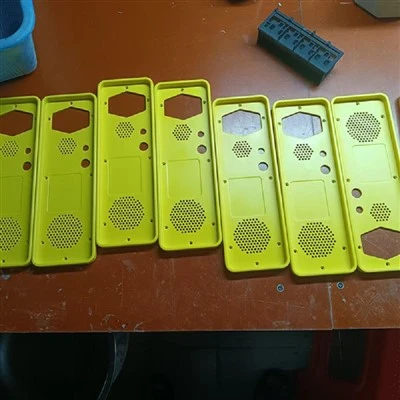
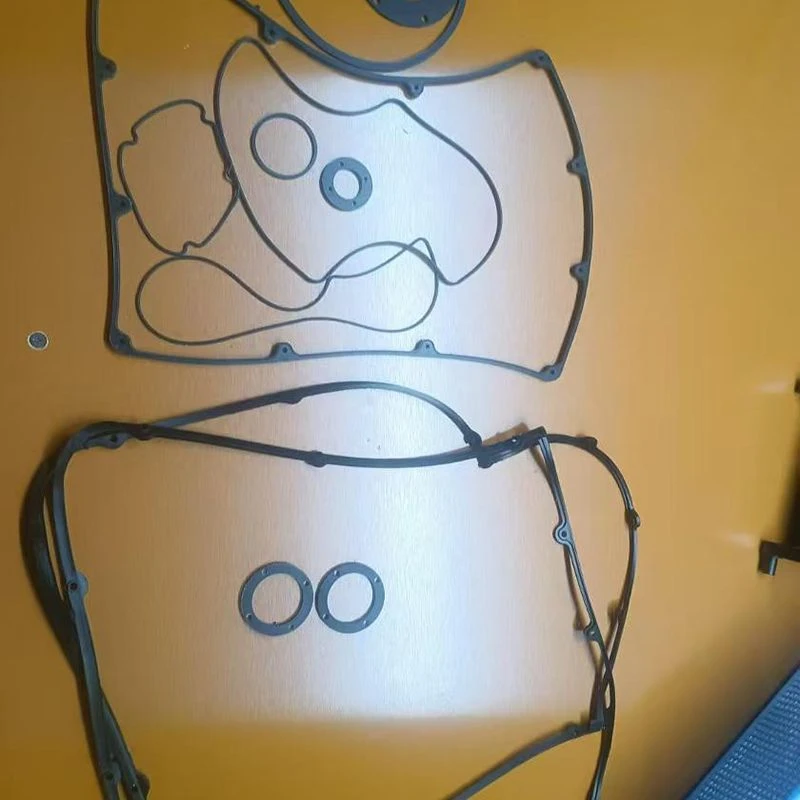
We deliver surface finishes close to injection-molded components, supporting production-quality aesthetics on rubber-like cast parts:
- Texture & grain replication: SPI A1–D3 finishes and standard mold textures (e.g. VDI 3400 series) replicated directly from the master pattern.
- Soft-touch coatings: premium velvet-like feel for consumer electronics and medical-device interfaces.
- Color matching: Pantone (PMS) and RAL color systems supported, with typical color deviation ΔE ≤ 1.5 against the reference.
- Advanced options: optically clear flexible parts, translucent tints, and dual-material overmolding for soft-grip handles.
Dimensional Accuracy & Geometric Capability
The flexibility of silicone molds lets the casting process handle geometries that are difficult for traditional machining:
|
Specification |
Capability |
|
Standard tolerance |
±0.3 mm per 100 mm (or ±0.3% of nominal, whichever is larger) |
|
Precision tolerance |
±0.15 mm achievable on selected features (geometry- and hardness-dependent) |
|
Minimum feature size |
≥0.8 mm |
|
Minimum wall thickness |
≥1.2 mm to support full cavity filling |
|
Maximum part size |
Up to 600 × 500 × 300 mm (larger on request) |
|
Special capabilities |
Deep undercuts, thin-walled sections, integrated metal inserts |
Lead Times
Time-to-market is critical. Our optimized rapid urethane casting workflow supports:
Standard single-mold projects:
5–8 working days from approved master pattern to final castings.
Complex / multi-cavity molds:
8–12 working days.
Expedited service:
as fast as 4 working days available for urgent validation needs (subject to capacity).
The advantage:
compared with the typical 8–14 week lead time for TPE/TPU injection molding tooling, vacuum casting lets you start functional testing months earlier.
Process Comparison
For engineering transparency, here is how urethane casting compares with other common flexible-part processes:
|
Feature |
Urethane Casting |
Injection Molding (TPE/TPU) |
SLA / DLP Flexible Resin |
FDM TPU (3D Print) |
|
Tooling cost |
Low (silicone) |
High (steel) |
None |
None |
|
Durability |
Strong (industrial use) |
Best |
Limited (can be brittle / age) |
Moderate (delamination risk) |
|
Hardness range |
Shore A20–A90, D70–85 |
Shore A0–D90 |
Limited options |
Limited options |
|
Surface quality |
Production grade |
Best |
Layer lines visible |
Rough |
|
Functional test suitability |
Highly recommended |
Best |
Aesthetic only |
Basic fit-check |
Why Choose Us
- Free DFM review: within 24 hours of inquiry, our engineers provide a manufacturability analysis covering wall thickness, undercut design, and gating.
- Mold life: high-grade addition-cure platinum silicones typically support 20–25 castings per mold while maintaining part-to-part consistency.
- Quality management: ISO 9001 certified process, with traceability for every seal, gasket, or button.
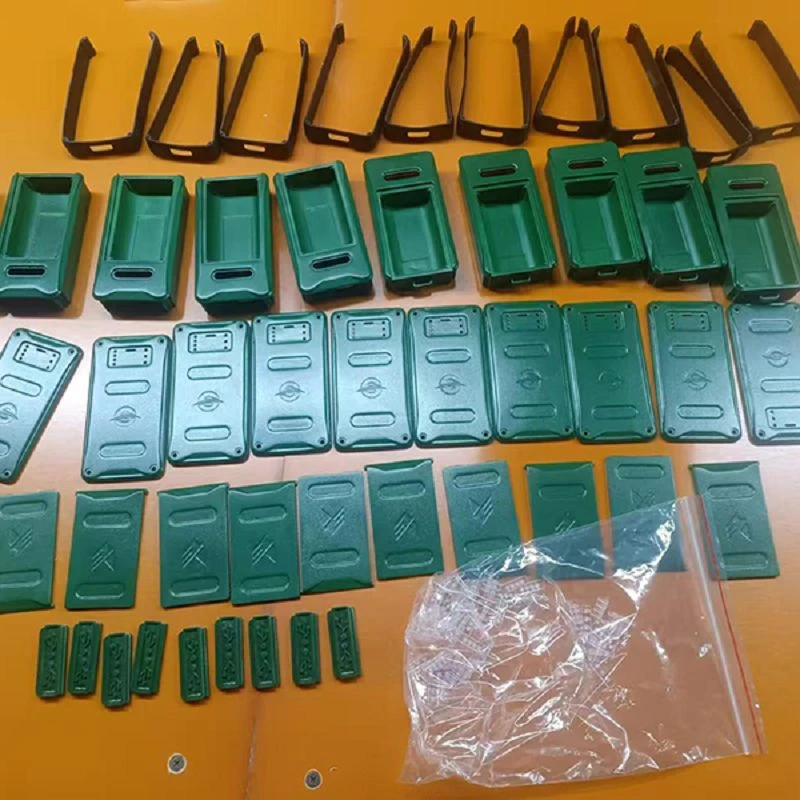
- Industry experience: delivered programs in automotive (seals, bushings), medical (catheter prototypes), and consumer electronics (ruggedized cases).
FAQ
Hot Tags: rubber-like cast parts, China rubber-like cast parts manufacturers, suppliers, factory, Clear Resin Vacuum Casting, Low Volume Plastic Production, Polyurethane Cast Prototypes, Rubber Like Cast Parts, Urethane Molding Parts, vacuum casting services