
Material Performance
Material selection is the most important decision in any vacuum casting project. We offer a full range of high-performance polyurethane (PU) resins formulated to simulate the behavior of common engineering plastics. The table below summarizes our standard material options:
|
Resin Type |
Simulates |
Key Properties |
Hardness |
Heat Resistance |
Typical Use |
|
ABS-like |
ABS |
Good strength and impact resistance |
80–85 Shore D |
80–90 °C |
Structural prototypes, enclosures |
|
PC-like (clear) |
Polycarbonate |
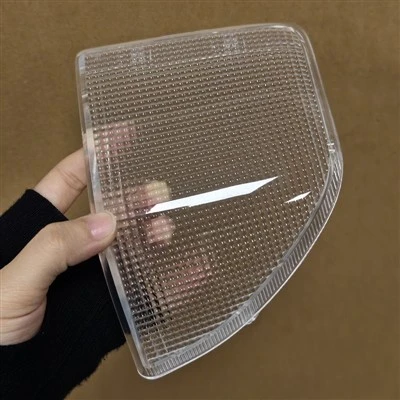
Tough, optically clear when cast in transparent grade |
80–82 Shore D |
110–120 °C |
Transparent covers, lenses, light pipes |
|
PP-like |
Polypropylene |
Flexible, good chemical resistance |
75–80 Shore D |
70–80 °C |
Living hinges, flexible parts |
|
Rubber-like |
TPU / silicone rubber |
Soft and elastic, multiple durometers available |
30–90 Shore A |
60–70 °C |
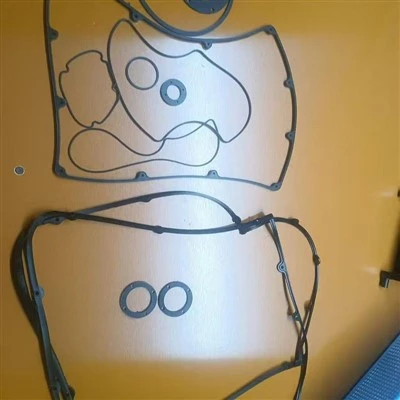
Gaskets, overmolds, soft-touch grips |
|
High-Temp |
High-temp engineering plastics |
Heat resistant with stable dimensions |
~85 Shore D |
150–180 °C |
Automotive under-hood components |
|
Flame Retardant |
UL94 V-0 grade plastics |
Self-extinguishing, suitable for safety-critical parts |
~80 Shore D |
90–100 °C |
Electronic housings, medical device shells |
Resins can be selected based on your priorities - strength, heat resistance, impact resistance, transparency, flame retardancy, or cost - so you can validate real-world performance at the prototype stage.
Surface Finish and Appearance
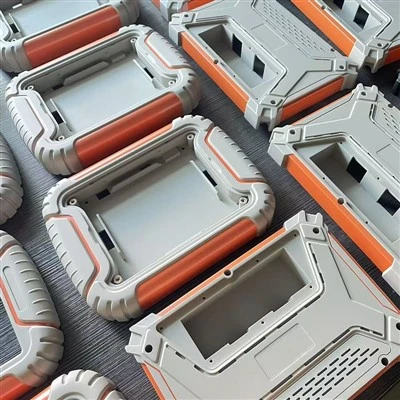
A near-injection-molded surface finish is one of the strongest advantages of vacuum casting. We deliver smooth surfaces of Ra 0.8 μm or better, free of bubbles, layer lines, or visible parting lines.
Standard finishing options include:
High-gloss or mirror polishing
Matte or textured finishes
Spray painting in any Pantone color, including pearl and metallic effects
Silk-screen printing and laser engraving
Soft-touch coatings
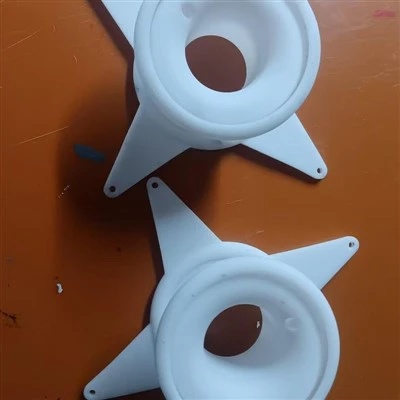
With professional post-processing, our vacuum-cast prototypes can be used directly for product launches, marketing photography, exhibitions, and user testing - significantly accelerating the design review cycle.
When to Choose Vacuum Casting
Vacuum casting is the right choice for concept validation, appearance review, and small-batch trial production. Compared to 3D printing, parts have a smoother surface and material behavior closer to the final product. Compared to CNC machining, complex geometry and multiple color or material variants can be produced more economically.
Our typical process flow:
Master pattern fabrication by 3D printing or CNC machining
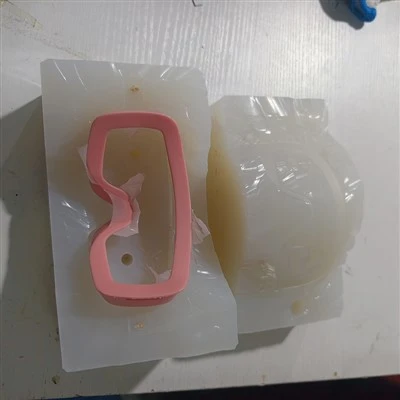
Silicone mold making (15–20 part lifespan per mold)
Vacuum degassing and casting of polyurethane resin
Curing and demolding
Post-processing and finishing
The full workflow is efficient and flexible, and well suited to low-volume prototype programs.
Small-Batch Production Capability
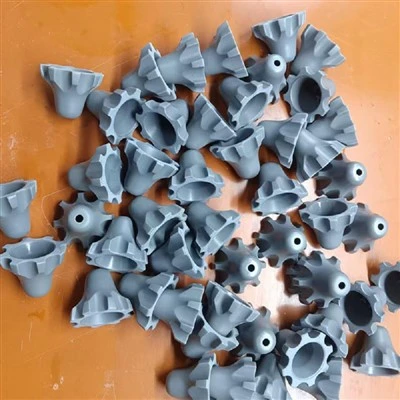
We are set up to deliver vacuum casting prototypes in small batches: 5 to 100 pieces per program is typical, and runs of up to 500 pieces are possible by combining multiple molds. Multi-cavity tooling allows us to reduce per-piece cost significantly while still preserving the flexibility to switch materials and colors quickly between batches.
Compared with the tooling cost of injection molding - typically tens of thousands of U.S. dollars for steel tools - vacuum casting saves more than 70 percent of project cost at the small-batch stage. This makes it well suited to new product development, crowdfunding pre-launch runs, and market testing.
Precision and Detail Replication
- Vacuum casting accuracy is typically held within ±0.1 mm to ±0.3 mm, in line with ISO 2768-c (Coarse). Tighter tolerances are available for critical dimensions on request. We accurately replicate fine textures, thin-wall structures (minimum wall thickness 0.75 mm), small text, and complex geometric features.
- Every part is visually inspected, with CMM measurement applied to critical dimensions to confirm that precision parts meet your assembly and functional requirements. Complex geometry - including undercuts - is handled through modular mold design.
Quality Standards
Our facility operates under an ISO 9001 quality management system. We can supply material data sheets, RoHS and REACH declarations, and on request, ISO 13485 or USP Class VI grade polyurethane resins for medical and life-science applications.
FAQ
Hot Tags: vacuum casting prototypes, China vacuum casting prototypes manufacturers, suppliers, factory, Clear Resin Vacuum Casting, Overmolded Cast Prototypes, Polyurethane Cast Prototypes, polyurethane casting, Rubber Like Cast Parts, Silicone Mold Prototyping