

Material Performance & Consistency
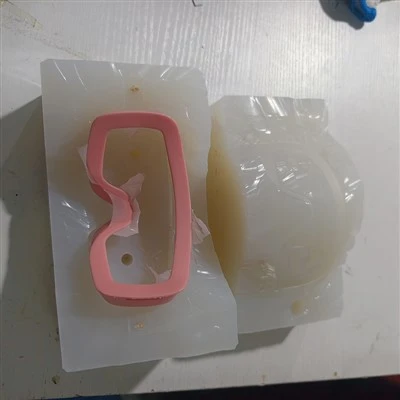
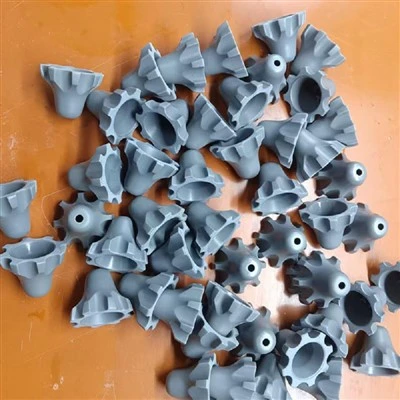
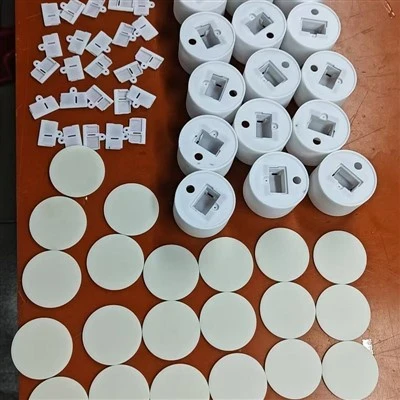
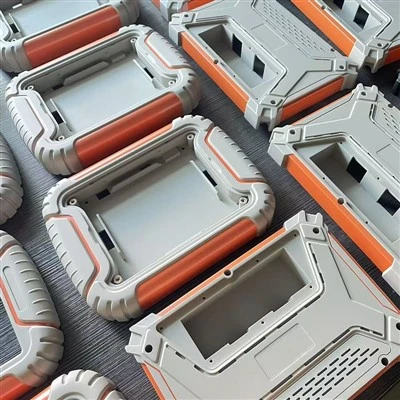
Clear resin vacuum casting produces optically transparent prototypes and short-run parts using premium polyurethane resins poured under vacuum into silicone molds. The process supports lenses, light pipes, fluid-flow models, transparent housings, and clear short-run end-use parts - without the tooling cost or lead time of injection molding.
Core advantages:
- High optical clarity: premium clear polyurethane resins typically achieve light transmittance of 85–92% on polished cast parts.
- Tight tolerances: standard tolerance of ±0.2 mm per 100 mm, supporting accurate fit in complex assemblies.
- Rapid turnaround: first samples typically delivered in 7–10 working days from approved master pattern.
- Cost-effective for low volumes: well-suited to 1–500 piece programs, avoiding the high upfront cost of clear-resin injection tooling.

Geometric Capabilities
The flexibility of silicone molds lets vacuum casting achieve features that are difficult or expensive for CNC machining or injection molding:
Integrated inserts:
metal threaded inserts and other components can be over-molded directly into the clear part.
Undercuts & deep cavities:
easily handled - no sliding actions or lifters required, since silicone tooling flexes during demolding.
Thin walls:
thin sections down to 0.8 mm achievable while maintaining structural integrity (geometry-dependent).
Optical surfaces:
streamlined curves and lens surfaces produced with uniform refractive quality, supported by polished masters and selective post-polishing.
Technical Specifications
|
Parameter |
Specification |
|
Maximum part size |
Up to 800 × 600 × 400 mm (larger on request, subject to mold-frame size) |
|
Standard tolerance |
±0.2 mm or ±0.2% per 100 mm (whichever larger) |
|
Minimum wall thickness |
0.8 mm |
|
Light transmittance |
85–92% (polished, resin- and finish-dependent) |
|
Refractive index |
~1.49–1.51 (typical for clear urethane) |
|
HDT |
70–90 °C (resin-dependent, @1.82 MPa) |
|
Hardness range |
Shore D70–90 standard; soft transparent grades (Shore A70–A90) available |
|
Color options |
Optically clear, tinted, or translucent (custom color matching) |
|
Surface finishing |
Hand polishing, vapor polishing, UV-resistant coating, silk-screening |
Light transmittance values are typical for premium clear urethane resins after polishing; specific values depend on the resin grade and finishing process. Detailed resin data sheets are provided per project.
Material Options
We support a range of clear polyurethane casting resins matched to functional requirements:
Standard clear PU:
balances transparency and rigidity - ideal for most consumer-electronics housings and visual prototypes.
Heat-resistant clear PU:
higher heat-deflection temperature for automotive lamp covers and components seeing elevated service temperatures.
ABS-equivalent clear resin:
improved toughness and impact resistance for functional-assembly testing.
Flexible clear (TPU-equivalent):
adjustable Shore hardness for clear gaskets, seals, or flexible prototypes.
Applications




FAQ
Hot Tags: clear resin vacuum casting, China clear resin vacuum casting manufacturers, suppliers, factory, Clear Resin Vacuum Casting, Low Volume Plastic Production, Overmolded Cast Prototypes, Polyurethane Cast Prototypes, polyurethane casting, Urethane Casting Parts