
Core Advantages
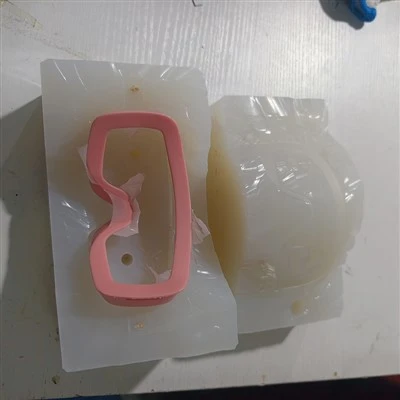
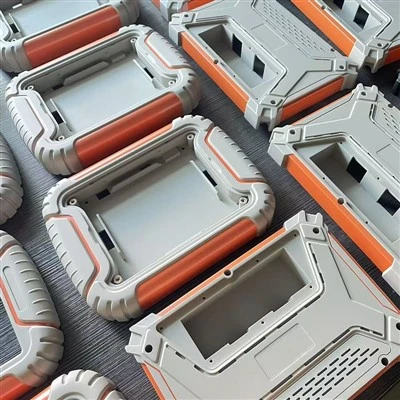
For functional testing and market validation, overmolded prototypes produced via vacuum casting offer key benefits:
Cost efficiency:
avoid the high upfront cost of permanent steel 2K tooling. Silicone tooling provides a low-entry-barrier path for highly complex multi-material parts.
01
Rapid iteration:
typical lead times of 2–3 weeks (including master pattern creation) take you from CAD to a physical, multi-material prototype in days rather than months.
02
Material flexibility:
combine rigid substrates (Shore D70–85) with flexible overmolds (Shore A30–90). Custom colors, transparency, and properties such as UV resistance or flame retardancy are supported on a project basis.
03
Production-relevant feel:
high-performance polyurethanes provide tactile feedback close to production-grade TPE, TPU, or silicone.
04
Risk mitigation:
validate fit, finish, and ergonomic grip before committing to mass-production tooling - a final safeguard against costly design changes later in development.
05
Material Combinations & Bonding
The reliability of cast urethane overmolding depends on the compatibility and bond strength between substrate and overmold.
Common Substrate Materials
- ABS / PC-equivalent polyurethane: high strength and impact resistance - the standard for rigid structural components.
- PA / POM-equivalent polyurethane: for functional parts requiring higher wear resistance or stiffness.
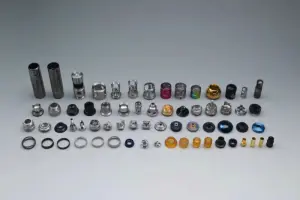
- Real metal or machined inserts: we support overmolding on metal inserts (aluminum, stainless steel) or CNC-machined components.
Overmold Materials
- Flexible elastomers: Shore A30–A90, simulating natural rubber, TPE, TPU, and silicone.
- Clear / translucent flexible resins: for backlit overmolded buttons or sealed viewing windows.
Material Compatibility Reference
|
Combination |
Substrate Hardness |
Overmold Hardness |
Typical Applications |
Bond Mechanism |
|
Rigid PU + Flexible PU |
Shore D80–90 |
Shore A40–70 |
Handheld grips, anti-slip covers |
Strong (chemical interaction + mechanical interlock) |
|
Flexible + Flexible (different durometer) |
Shore A70–80 |
Shore A30–40 |
Vibration dampers, precision seals |
Good (chemical interaction + mechanical interlock) |
|
PU on Metal Insert |
Metal (aluminum / stainless steel) |
Shore A30–90 or D70–85 |
Metal-cored handles, EMI-shielded housings |
Mechanical interlock (undercuts / surface preparation) |
|
Multi-Color (same hardness) |
Same resin |
Same hardness, different color |
Brand logos, multi-functional keys |
Identical resin - fully co-cast |
Bond strength between PU substrate and PU overmold benefits from chemical interaction during cure plus mechanical interlock features. Bonding to metal inserts is mechanical only, supported by surface preparation (e.g. degreasing, primer, undercut features). Overall bond quality is verified against the duty cycle during DFM.
Appearance & Tactile Quality
Overmolded cast prototypes must do more than function - they must feel right to the end user.
Surface finishing:
complex textures replicated directly from the silicone mold, including VDI textures, SPI mirror polishes, leather-like grains, and soft-touch finishes.
Soft-touch tuning:
fine-tuned overmold thickness and Shore hardness to replicate the warm grip of a medical handle or the rugged, non-slip feel of a professional power tool.
Color matching:
Pantone (PMS) and RAL color systems followed strictly so prototypes align with your brand's visual identity.
Process Comparison
|
Dimension |
Overmolded Cast Prototypes |
2K / Two-Shot Injection Molding |
Multi-Material 3D Printing |
|
Initial tooling cost |
Low |
Very high |
None (pay per part) |
|
Lead time |
10–15 working days |
8–14 weeks |
1–3 days |
|
Material properties |
Near production-grade |
Production grade |
Limited; often brittle interfaces |
|
Bond strength |
Strong (chemical + mechanical) |
Very strong (true 2K bond or interlock) |
Limited; delamination risk between materials |
|
Surface quality |
Excellent (smooth, paintable) |
Best |
Layer lines visible without finishing |
|
Ideal batch size |
1–100 units |
10,000+ units |
1–5 units |
Application Scenarios
Our multi-material cast prototypes serve high-demand industries worldwide:

Consumer electronics:
smartphone cases, wearable watch straps, handheld gaming grips, waterproof earbud housings.

Automotive & transportation:
gear shift knobs, interior door handles, steering-wheel buttons, weatherstrip prototypes.
FAQ
Hot Tags: overmolded cast prototypes, China overmolded cast prototypes manufacturers, suppliers, factory