

Core Advantages
- Cost-effective for low volumes: typically 1–500 units per program
- First samples in 5–8 working days after master pattern is approved
- Wide hardness range: Shore A20 (soft elastomer) to Shore D85 (rigid plastic)
- ISO 9001 certified quality management system with full traceability
Core Advantages
Based on years of vacuum casting experience, urethane molding offers the best balance of cost and performance for prototyping and bridge production:
Significant cost savings:
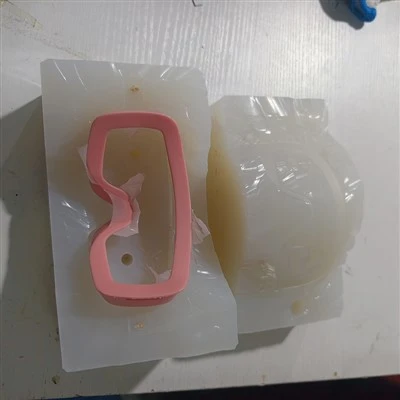
compared with the high upfront investment of steel injection tooling, silicone molds carry a much lower entry cost. For volumes of 1–500 units, the cost-per-part is highly competitive without front-loaded tooling fees.
01
Rapid turnaround:
silicone mold creation typically takes 1–3 working days. For urgent R&D, the full cycle from CAD approval to delivery of urethane casting parts can be completed in under one week for simpler geometries.
02
High-fidelity material simulation:
we formulate resins to approximate the hardness, elongation, and heat resistance of common engineering plastics - covering rigid housings, flexible seals, and clear optical parts.
03
Design freedom:
the flexibility of silicone molds supports complex geometries, deep undercuts, and integrated metal inserts without the sliders, lifters, or side actions required in hard tooling.
04
Functional reliability:
vacuum-cast urethane parts are dense and substantially bubble-free (vacuum-degassed), making them suitable for drop testing, environmental-chamber validation, and assembly fit checks.
05
Precision & Quality Stability
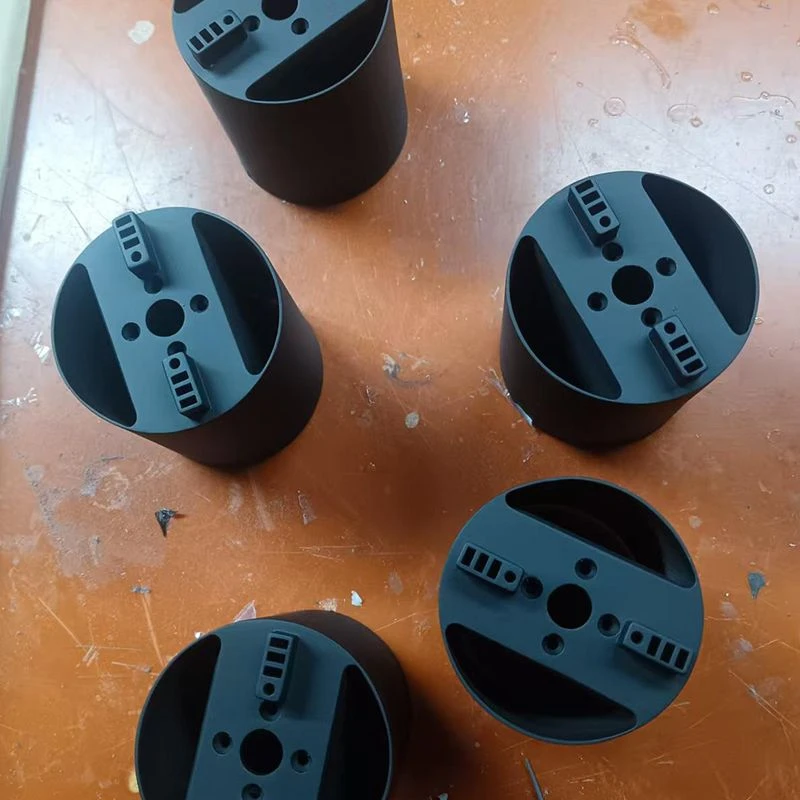
Precision is fundamental to the urethane casting process. Strict process controls support batch-to-batch consistency for every project.
Typical Tolerances
Measured in a controlled 23 °C environment, our parts typically meet:
Linear tolerance:
±0.3 mm per 100 mm (or ±0.3% of the nominal dimension, whichever is larger). Tighter tolerances of ±0.15 mm per 100 mm achievable on selected features after DFM review.
Repeatability:
consistent dimensional and visual quality across the typical 20–25 cast parts produced from a single silicone mold.
Wall thickness:
minimum 1.0–1.5 mm recommended for reliable resin flow and complete cavity filling.
These tolerances reflect typical urethane-casting practice and account for inherent resin shrinkage. Tighter tolerances on selected features may be achievable through pattern compensation, post-machining, or split-cavity strategies.
Engineering Control Measures
To address the natural shrinkage of polyurethane during curing, we apply systematic process controls:
- Master pattern compensation: patterns are scaled per resin-specific shrinkage data drawn from our internal process database.
- Vacuum degassing: both resin mixing and pouring take place in a vacuum chamber, supporting substantially bubble-free internal structures.
- Standardized curing: molds are cured in temperature-controlled ovens for 4–8 hours to achieve uniform stress distribution and dimensional stability.
|
Factors Affecting Precision |
Our Control Measures |
|
Resin shrinkage |
Pattern scaling using a resin-specific shrinkage database, calibrated by process trials |
|
Mold deformation |
High-tear-strength, addition-cure platinum silicones to limit distortion across the mold's life |
|
Environmental variation |
Climate-controlled facility (23 ± 2 °C) to limit thermal expansion / contraction effects |
Products Description
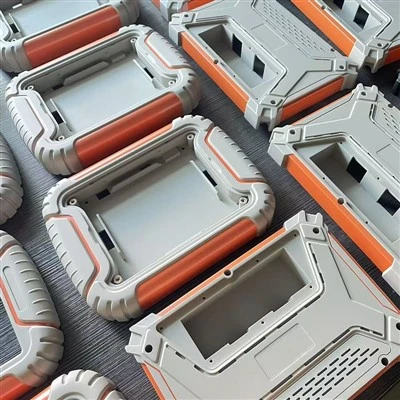
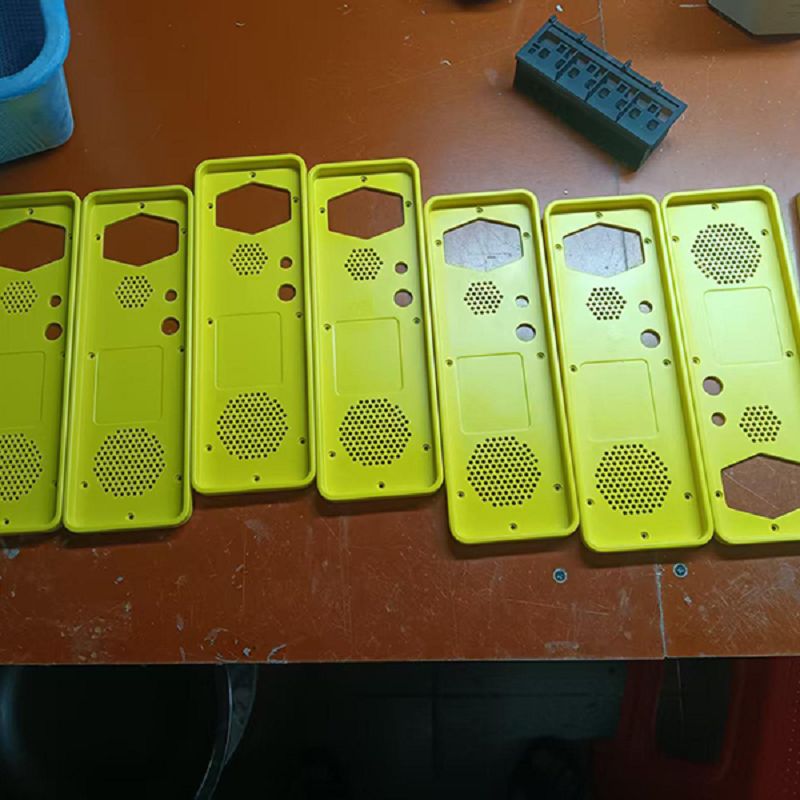
Urethane molding faithfully replicates the surface of the master pattern, providing presentation-grade aesthetic quality on the first cast.
Texture replication:
matte, high-gloss, leather-grain, and standard mold textures (e.g. VDI 3400 series) are reproduced from the silicone mold.
Color matching:
Pantone (PMS) and RAL color systems supported. Cast parts are pigmented through the full thickness, so colors do not chip or wear off the surface.
Post-processing:
high-polish finishing for optical clarity, painting, EMI/RFI shielding paints, and silk-screen printing.
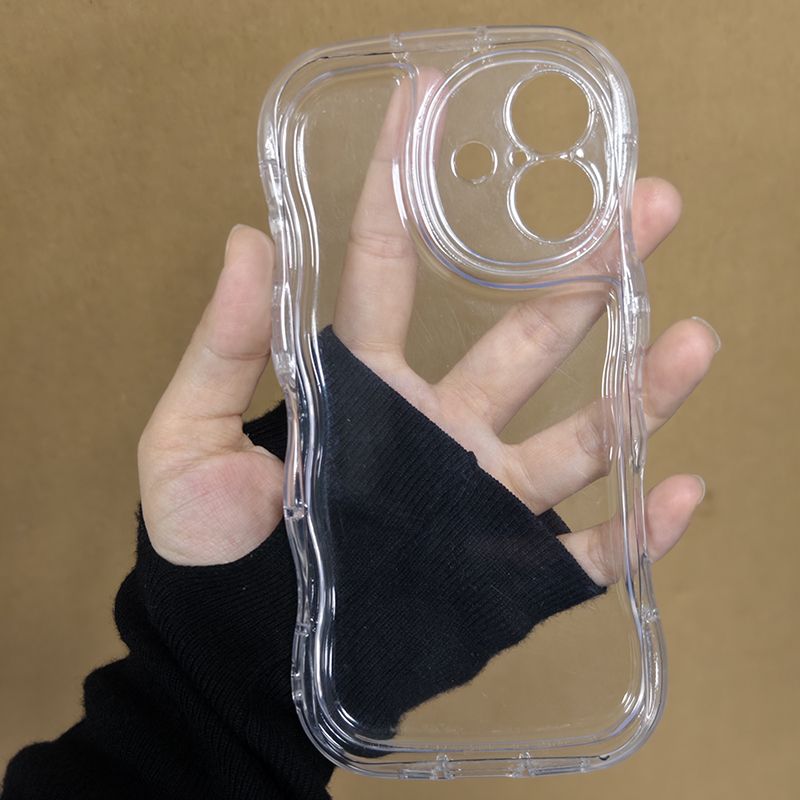
Optical clarity:
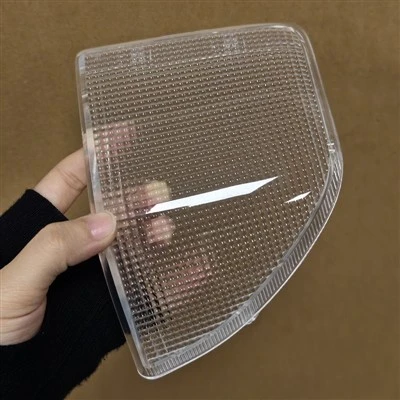
water-clear or tinted transparent parts with light transmittance typically 85–92% (resin- and finish-dependent).
Material Categories
We offer a wide spectrum of urethane molding materials categorized by hardness and target performance:
|
Category |
Hardness Range |
Simulates |
Typical Applications |
|
Rigid |
Shore 70–85 D |
ABS, PC, Nylon |
Handheld device housings, structural frames |
|
Flexible / Elastomer |
Shore 30–90 A |
TPE, TPU, EPDM, soft rubber |
Seals, gaskets, soft-touch grips, dampers |
|
High-Temperature |
Shore 80–85 D |
High-temp ABS / heat-resistant engineering plastic |
Under-hood prototypes, oven-environment parts (HDT typically up to ~120 °C at 0.45 MPa) |
|
Optically Clear |
Shore 80 D |
PMMA, PC (visually) |
Lens prototypes, light pipes, flow visualization |
High-temperature urethane resins approximate the look and short-term thermal behavior of high-temperature engineering plastics, but do not match the continuous-service temperature of true thermoplastics like PPS or PEEK. We confirm the suitable resin during DFM review.
Application Scenarios
Urethane molding parts are widely used across product-development industries:





FAQ
Hot Tags: urethane molding parts, China urethane molding parts manufacturers, suppliers, factory, ABS Like Plastic Casting, Overmolded Cast Prototypes, Polyurethane Cast Prototypes, Rubber Like Cast Parts, Urethane Casting Parts, vacuum casting services