
Cost Comparison vs. Injection Molding
For low-volume projects, silicone mold prototyping is the most economical route to a production-quality part. Compared to traditional steel injection molds, silicone tooling costs are only a small fraction - typically a few thousand U.S. dollars instead of tens of thousands.
The table below shows representative tooling and production costs for small-batch projects:
|
Production Quantity |
Injection Mold Tooling Cost |
Silicone Mold Total Cost |
Cost Saving |
|
5–20 pcs |
$5,000 – $10,000 |
$1,000 – $2,000 |
70 – 85% |
|
20–100 pcs |
$8,000 – $15,000 |
$1,500 – $3,500 |
65 – 80% |
|
100–200 pcs |
$12,000 – $20,000 |
$2,500 – $5,000 |
60 – 75% |
With silicone mold prototyping, you can validate your design and reach the market-testing stage without committing to expensive hard tooling upfront.
Precision and Detail Replication
Silicone mold prototyping delivers excellent detail replication. We hold a stable tolerance of ±0.1 mm to ±0.3 mm, with minimum feature sizes down to 0.5 mm. Fine textures, embossed text, logos, and undercut features are reproduced accurately.
Compared to 3D printing, silicone molds reproduce smooth surfaces and complex geometries far more faithfully. Compared to CNC machining, they are more economical for thin-walled parts and multi-surface geometries. This makes the process particularly well suited to appearance verification and assembly testing.
Mold Life
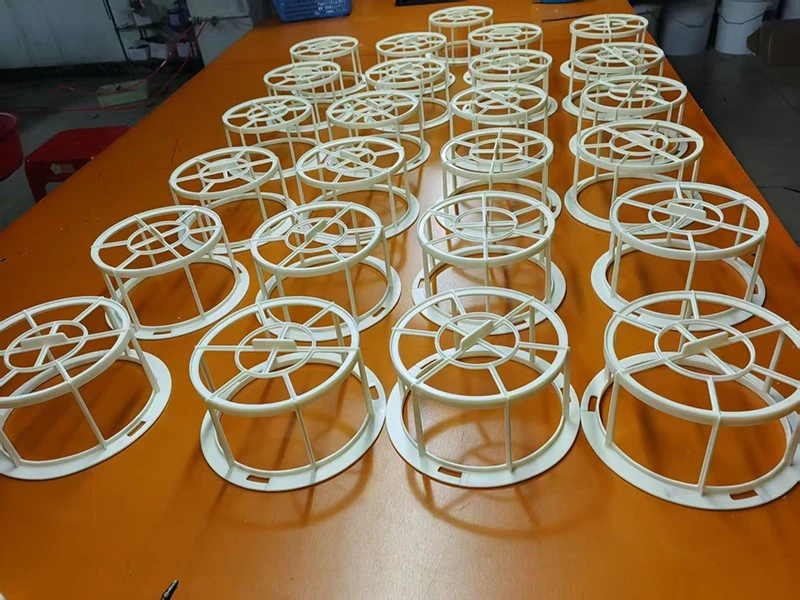
A standard silicone mold delivers 15 to 20 parts per cavity, depending on resin type and demolding technique. With softer resins or lower-hardness materials, mold life can reach 25 to 30 parts. Through optimized silicone formulation, surface treatment, and demolding processes, we consistently achieve mold life at the upper end of the industry range.
This predictable mold life keeps small-batch production both economical and efficient, with minimal disruption from re-tooling.
Process Overview
Silicone mold prototyping is the right choice for concept validation, appearance review, and small-batch trial production. The typical process flow is:
- Master pattern manufacturing (3D printing or CNC machining)
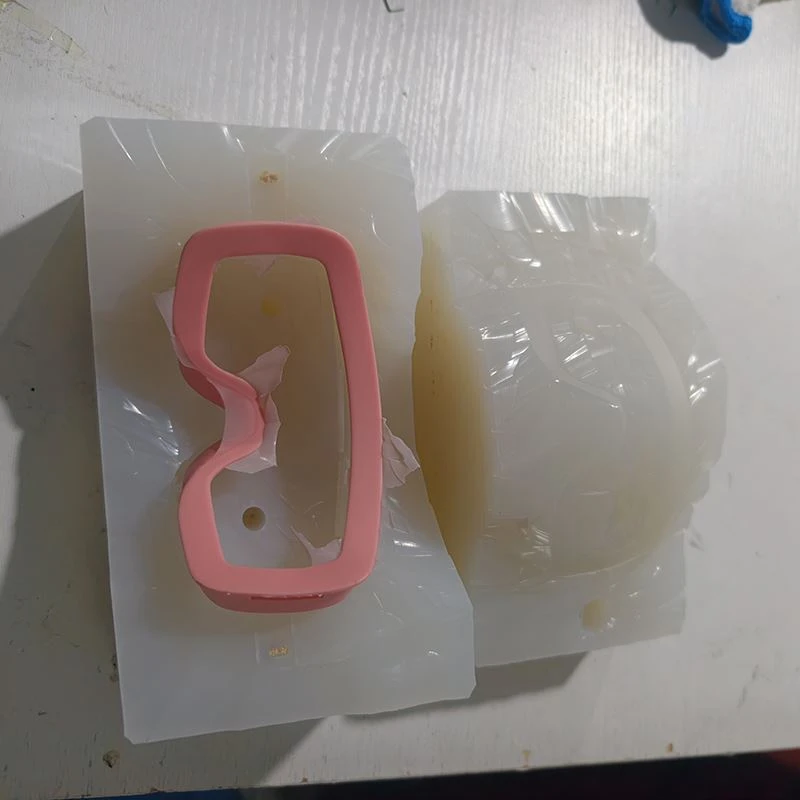
- Silicone mold casting around the master
- Vacuum degassing of the casting resin
- Resin mixing and casting under vacuum
- Curing and demolding
- Post-processing and finishing
Note: vacuum casting and silicone mold prototyping are not competing processes - vacuum casting is the technique used to pour resin into a silicone mold. Compared to injection molding, silicone tooling avoids the cost and lead time of hard steel molds, making it ideal for fast iteration. Our engineers will help you confirm whether silicone mold prototyping is the right fit during the DFM stage.
Customization Options
We offer a comprehensive range of customization options for silicone mold prototyping:
- Color matching to the Pantone system
- Two-color and multi-color casting
- Soft-and-hard overmolding
- Specialty resins (flame-retardant, high-temperature, chemical-resistant)
Surface finishes including spray painting, texturing, silk-screen printing, and laser engraving
Our engineering team is involved from material selection to final surface finish, applying DFM optimization to ensure your project achieves the best possible result.
Industry Applications
Silicone mold prototyping is widely used across industries that demand high-quality, low-volume parts:



In each of these areas, silicone mold prototyping helps customers iterate designs quickly and shorten time-to-market.
FAQ
Hot Tags: silicone mold prototyping, China silicone mold prototyping manufacturers, suppliers, factory, Low Volume Plastic Production, Overmolded Cast Prototypes, polyurethane casting, Silicone Mold Prototyping, Urethane Molding Parts, Vacuum Casting Prototypes