
A bracket that looks correct on the drawing can still fail a stress test, refuse to line up during assembly, or get rejected by quality control because one hole is 0.02 mm out of position. In aerospace those small errors carry heavy costs: rework, delayed ship-sets, grounded programs, and the risk of failing an AS9100 audit.
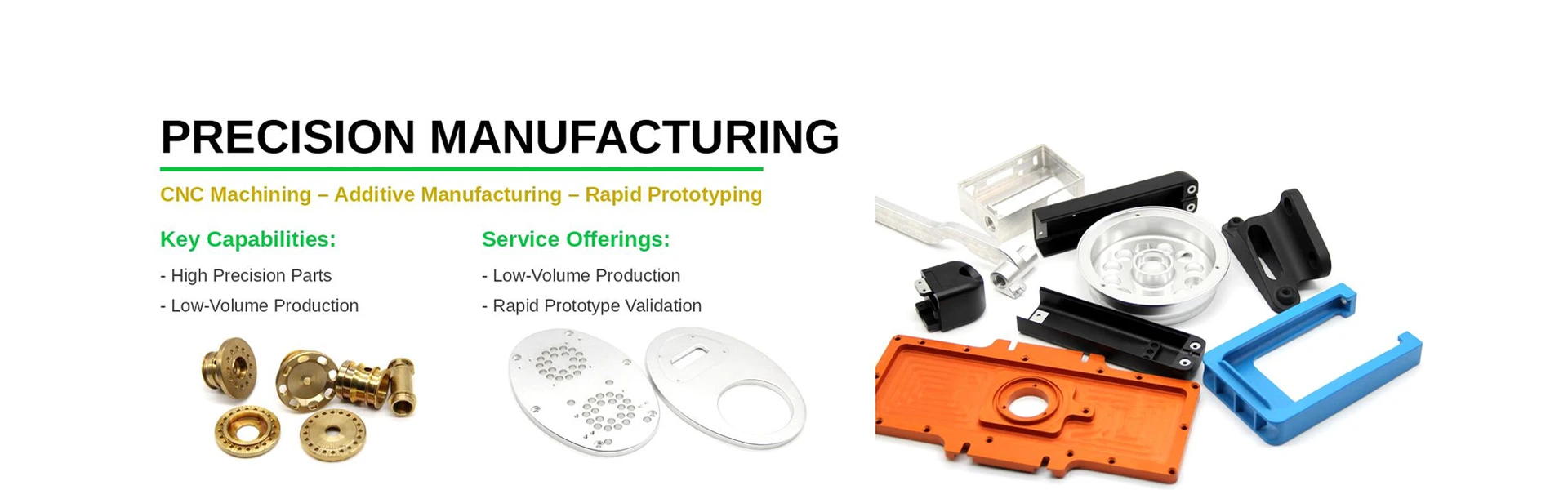
Precision Milled Components are what keep aerospace brackets and structural parts reliable under real flight loads. When geometry, material integrity, and fastener alignment all have to stay exact at altitude, high-tolerance CNC milling is the process that consistently delivers.
What Makes Aerospace Brackets Different From Ordinary Metal Parts
Aerospace brackets are not simple fittings. They carry structural loads, endure continuous vibration and fatigue, and must do so at the lowest possible weight. Designers therefore specify high-strength aluminum alloys such as 7075-T6 and 6061-T6 for most brackets, and titanium 6Al-4V where strength, temperature resistance, or corrosion performance is more critical. Stainless grades appear in selected locations that face aggressive environments.
Commercial tolerances of ±0.1 mm are nowhere near enough. Critical hole patterns, mounting faces, and datum features commonly need to stay within ±0.01–0.02 mm so that fasteners seat properly and load paths remain as analyzed.
Surface finish must also be controlled to avoid stress concentrations. Full material certification and lot traceability are required on nearly every job. These demands are why Aerospace Milled Parts are almost always produced by CNC rather than casting or conventional machining.
Why CNC Milling Is the Standard Process for These Parts
Tolerance & Repeatability
When a hole pattern must stay inside ±0.015 mm across a production batch, only a rigid CNC process with proper fixturing, probing, and thermal control delivers consistent results, from the first piece to the last.
Complex Geometry in One Setup
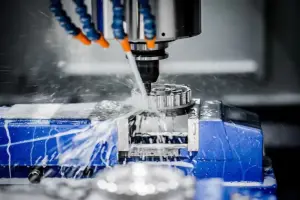
Undercuts, compound angles, deep pockets, and angled faces often need multiple 3-axis setups and accumulate error. A capable multi-axis process completes most geometry in a single clamping.
Material Integrity & Strength
Milling from solid billet keeps continuous grain flow. Castings can contain porosity or inclusions that become fatigue initiation sites under cyclic loading.
Loose location on fastener interfaces is one of the most common reasons brackets fail incoming inspection or create assembly problems downstream. Precision Milled Components avoid that risk by keeping critical features accurate across the batch.
For primary structural brackets, the extra material cost of billet is routinely accepted because the resulting parts show more predictable fatigue life and fewer internal defects. Surface integrity after milling can be further controlled through appropriate tooling, feeds, and finishing passes.
The Real Risks of Skipping Precision Milling
- Misalignment during final assembly that forces rework or non-standard fasteners
- Local stress concentrations around poorly located holes that reduce fatigue life
- Vibration-related fretting or cracking that appears only after extended service
- Rejection during customer or regulatory review because dimensions or documentation fall outside AS9100 expectations
A single non-conforming bracket can delay an entire ship-set. Process discipline and proper inspection are what prevent those outcomes.
Case Study - How Sunhingstones Delivered Aerospace-Grade Milled Brackets
Case Study
A Tier-1 supplier needed a family of complex 7075-T6 structural brackets for an airframe program. The drawings required positional tolerances of ±0.015 mm on critical hole patterns, full material traceability, and a delivery window that left little margin for error. The previous supplier had struggled with both dimensional consistency and on-time performance.
We programmed the parts for multi-axis milling, used in-process probing to verify key datums, and performed final CMM inspection on every critical feature. The finished Precision Milled Components passed the customer's incoming inspection and AS9100-aligned quality checks on the first submission. All brackets shipped on the agreed date, and the program continued without the rework delays that had occurred earlier.
How to Choose the Right Manufacturing Partner for Aerospace Milled Parts
When you evaluate a supplier for custom aerospace brackets or structural components, look for these capabilities:
Experience with both aluminum and titanium matters, because the two materials behave very differently under the cutter. A partner that understands the practical differences in tooling, speeds, and fixturing will protect both quality and schedule.
FAQ
Q: Why can't aerospace brackets be cast or 3D printed instead of milled?
A: Castings risk internal porosity that shortens fatigue life. Most additive processes still cannot match the material properties and surface integrity of wrought billet for primary structural parts. CNC milling from solid stock remains the preferred method for critical load-bearing brackets.
Q: What tolerance is typical for CNC milled aerospace structural parts?
A: Critical features commonly need to hold ±0.01–0.02 mm, with some interfaces held tighter. Exact requirements are set by the drawing and the aircraft manufacturer's standards.
Q: What materials are best for aerospace milling - aluminum or titanium?
A: Aluminum 7075 and 6061 are used for most weight-critical brackets. Titanium 6Al-4V is selected when higher strength, temperature capability, or corrosion resistance is required. The choice follows the structural analysis.
Q: How long does it take to get a quote for custom aerospace milled components?
A: Most established manufacturers can return a quotation within a few working days once a complete drawing package and material specification are provided.
Q: Does the manufacturer need AS9100 certification?
A: For production aerospace work, AS9100 is effectively required. It demonstrates the quality system, traceability, and process controls that airframe manufacturers expect.
Get a Free DFM Review
If you are developing or sourcing aerospace brackets and structural parts, send your drawing for a free design-for-manufacturability review. We will confirm manufacturability, highlight any tolerance or material risks, and provide a clear quotation for Precision Milled Components that meet the required accuracy and documentation standards.