

A drawing arrives marked only "Aluminum." The immediate question is which alloy to quote-6061 or 7075. Pick the lower-cost grade and the part may lack the strength needed under flight loads. Pick the high-strength grade and material cost, machining time, and process risk all rise. Either error can push a program over budget or past its delivery date.
This comparison explains when to use each alloy for Precision Milled Components so you can balance strength, weight, cost, and manufacturability on Aerospace Milled Parts.
Why Aluminum Alloy Selection Matters in Aerospace Milling
Aerospace brackets and fittings must deliver high strength-to-weight performance, reliable fatigue life, and adequate corrosion resistance. The alloy choice directly determines whether those requirements can be met while still allowing High Tolerance Milling at a realistic cost and lead time. Both 6061 and 7075 are widely accepted in airframe work when ordered to the proper temper and specification. The practical difference lies in how much strength is actually required and how easily the material can be machined to print.
What Makes an Alloy "Aerospace Grade"
An alloy is considered suitable for aerospace use when it provides:
Both alloys can meet these conditions. The decision then becomes which one fits the specific load case and production constraints.
6061 vs 7075: The Two Options
6061 - Strength, Versatility, Cost-Efficiency
The practical choice for many secondary structures: moderate strength, good corrosion resistance, excellent weldability, and relatively straightforward machining. Typical uses: equipment mounts, non-primary brackets, housings, interior supports, tooling fixtures.
- Lower material cost, ready availability
- Better inherent corrosion resistance in T6
- Easier machining, consistent tight tolerances
- Good weldability when joints are required
- Sufficient strength for a wide range of secondary structures
7075 - Maximum Strength for Critical Parts
Selected when the design requires substantially higher strength - tensile and yield values approach certain steels while keeping weight low. Typical uses: primary structural brackets, high-stress linkages, selected landing-gear-related fittings.
- Significantly higher tensile and yield strength
- Strong fatigue resistance under cyclic loads
- Higher material and machining cost
- More demanding chip control and thermal management
- Usually requires protective finishing for corrosion protection
The trade-offs for 7075 appear in the machine shop. It work-hardens more readily, conducts heat poorly, and tends to generate higher cutting temperatures. Tool wear increases, and residual stress can affect final dimensions if roughing and finishing strategies are not carefully managed.
Side-by-Side Comparison
|
Property |
6061 (Typical T6) |
7075 (Typical T6) |
|
Tensile strength |
≈ 310 MPa |
≈ 570 MPa |
|
Yield strength |
≈ 276 MPa |
≈ 500 MPa |
|
Strength-to-weight |
Good |
Clearly superior for max load capacity |
|
Machinability |
More forgiving |
Needs tighter control of speeds, feeds, tool paths |
|
Corrosion resistance |
Better in most environments |
Lower - often needs protective finishing |
|
Relative cost |
Lower |
Consistent premium |
|
Typical use |
Secondary structures, equipment supports |
Primary or highly loaded parts |
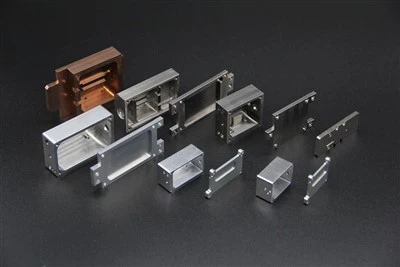
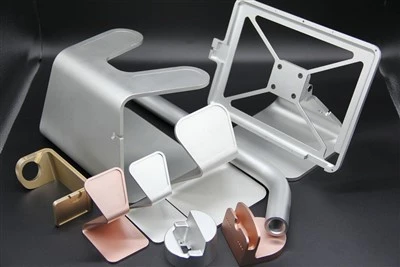
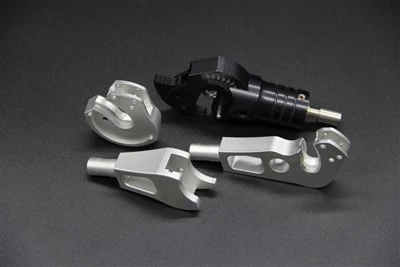
A customer submitted a set of aircraft structural brackets with the material listed only as aluminum. The first preference was 6061 for cost reasons. After reviewing the load cases, we recommended 7075-T6 for the highest-stressed members and kept 6061 for the lower-loaded components.
The parts were produced with High Tolerance Milling, critical features verified by CMM, and full material certification supplied. The mixed-alloy approach met every structural requirement while avoiding the unnecessary cost of making the entire set from 7075. All brackets passed incoming inspection on the first submission and shipped on the agreed date, keeping the customer's assembly schedule intact.
Common Mistakes When Choosing Between 6061 and 7075
Most of these issues can be avoided with an early technical discussion.
FAQ
Q: Is 7075 always stronger than 6061?
A: In the common T6 tempers, yes. 7075 provides substantially higher tensile and yield strength.
Q: Can 6061 be used for aerospace structural parts?
A: Yes, for many secondary structures, equipment mounts, and lightly loaded brackets. Highly stressed primary structures more often require 7075 or similar high-strength alloys.
Q: Which alloy is easier to machine to tight tolerances?
A: 6061 is generally easier. It offers better chip control and lower tool wear, making High Tolerance Milling more predictable. 7075 can reach the same tolerances but needs more careful process settings.
Q: Do you machine both 6061 and 7075 for aircraft parts?
A: Yes. We regularly produce Precision Milled Components in both alloys and can advise on the practical trade-offs for your geometry and quantity.
Q: How do I know which alloy fits my application?
A: Share the drawing, load information, and any governing specifications. We will review the requirements and recommend the alloy that best balances performance, manufacturability, and cost.
Get a Free Material Recommendation
If you are choosing between 6061 and 7075 for an upcoming project, upload your drawing for a free material recommendation and quotation. We will evaluate the design, confirm the appropriate alloy, and provide pricing for Precision Milled Components - whether you need prototypes or production quantities of aerospace aluminum parts.