
If you've sat through a design review arguing over whether to commit to an injection mold before the enclosure design was even final, you know the problem. Medical device housings almost never get approved on the first try - surgeons need to hold it, it has to survive a drop test, it has to fit the internal PCB without binding on the latch. And all of that usually has to happen before anyone signs off on a mold that costs tens of thousands of dollars and takes six weeks to cut. That gap between "we think this works" and "we can prove it works" is where vacuum casting prototypes earn their keep.
For medtech teams, getting this decision wrong isn't cheap. Committing to hard tooling before a design is locked can cost a program months of rework and a real chunk of the development budget. Vacuum casting gives engineers a way to build parts in the actual shape, texture, and feel of the final product without betting the budget on a design that hasn't been fully validated.
Why Medical Device Housings Are a Tricky Prototyping Problem
Medical enclosures carry a different burden than most consumer housings. They need to look market-ready for regulatory submissions and investor demos, they need to hold up to repeated wipe-down or sterilization cycles, and they usually need to pass a fit-check against sensitive internal electronics long before anyone talks about mass production.
A cost-model study published by the U.S. Department of Health and Human Services (ASPE) on complex therapeutic medical device development found that non-clinical development - the design, engineering, and prototyping phase - accounts for roughly 85% of total capitalized development cost once failed iterations and cost of capital are factored in. In other words, most of the money and risk in a device program sits well before FDA submission, in exactly the phase where housing design gets locked down. That's a strong argument for validating a design cheaply before committing to production tooling.
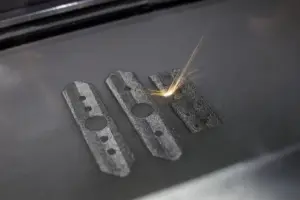
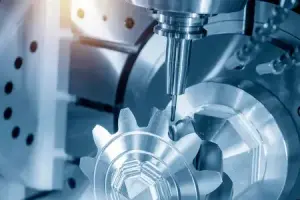
This is where precision CNC machining for medical devices and vacuum casting work together rather than compete. CNC gives you a master pattern with tight, medical-grade tolerances; vacuum casting takes that pattern and turns it into a small run of parts that look and handle close to production units. For teams weighing medical grade CNC machining tolerances against softer prototyping routes, vacuum casting is usually the step that bridges "one good part" and "twenty parts we can actually test."
How Vacuum Casting Prototypes Actually Work
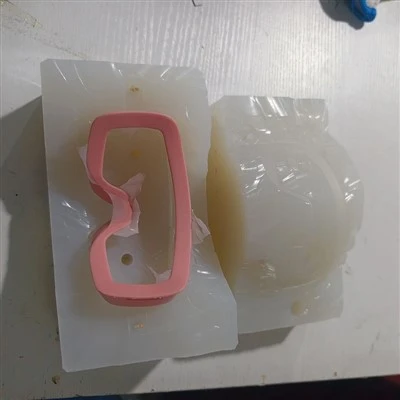
The process is simpler than most engineers expect once they've seen it once. It starts with a CNC-machined or SLA-printed master model, finished to the exact surface quality you want in the final part - textures, logos, and fine details included. That master gets suspended in liquid silicone inside a vacuum chamber, which pulls out trapped air so the mold captures every surface detail without bubbles or voids. Once the silicone cures, the mold is cut open and the master comes out.
From there, a two-part polyurethane resin is mixed, degassed under vacuum, and poured into the cavity - the vacuum step here matters just as much as it did for the mold itself, since it's what keeps the finished part free of pinholes and weak spots. Once the part cures, it's trimmed and the mold gets reused for the next casting. A single silicone mold typically holds up for 15 to 25 castings before detail starts to degrade, which covers most pilot runs, clinical evaluation batches, or demo units without needing a second mold.
Because each cycle takes hours rather than weeks, a design team can run two or three rounds of housing revisions in the time it would otherwise take to cut a single steel mold - which is really the whole point of using polyurethane cast prototypes at this stage instead of jumping straight to production tooling.
Getting Material Selection Right
The reason vacuum casting holds up so well for pre-production validation is that today's casting resins are formulated to behave like real engineering plastics, not just look like them. Depending on what you're trying to simulate, a supplier can typically match ABS-like toughness for a general-purpose housing, PC-like clarity and heat resistance for a window or indicator cover, or a softer PP- or rubber-like formulation where the design needs snap-fits or a soft-touch grip. Flame-retardant formulations are also available where the housing sits close to powered electronics.
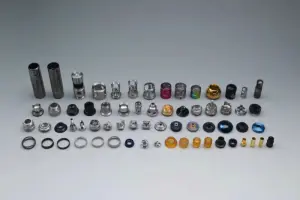
For devices that will eventually need biocompatibility documentation, it's worth asking early which resins have supporting test data on file, since not every casting shop stocks the same material library. This is also where urethane molding parts becomes useful shorthand in sourcing conversations - it signals to a supplier that you're not asking about production-grade injection molding yet, but you do need parts that behave close enough to the real thing to survive a functional test.
Vacuum Casting vs. Injection Molding - When Each Makes Sense
Neither process is universally better; they solve different stages of the same problem. A vacuum casting mold typically costs a fraction of what a steel injection tool runs, and cast parts can usually be in hand within five to ten days of a finished master model, compared to four to eight weeks for cut steel tooling. Vacuum casting comfortably covers everything from a single unit up to a few hundred parts, and because there's no hardened tool to modify, design tweaks between batches are simple and cheap. Where injection molding still wins is at high volume and on very cosmetic-critical parts, where mold-to-mold consistency matters more than flexibility.
One project handled through Sunhingstones shows how this plays out in practice. A medical device startup developing a handheld diagnostic unit needed 80 enclosure housings for a multi-site clinical usability study - enough for real-world testing, but nowhere near injection-molding volume. Using a CNC-machined master and an ABS-like polyurethane resin, the full batch was delivered in under three weeks, at roughly a tenth of the cost of cutting a production tool for a design that was still likely to change after the study. When the housing geometry was later adjusted based on clinician feedback, the mold was simply recast rather than re-cut - a change that would have meant scrapping a steel tool entirely.
What to Look for in a Vacuum Casting Manufacturer
Not every vacuum casting factory is set up to handle medical-adjacent work, so it's worth asking a few pointed questions before sending a design over. Find out whether the master model is CNC-machined or SLA-printed and what tolerance it holds, since every casting inherits the master's accuracy. Ask what resins they actually stock, not just what's on a catalog page, especially if you need flame-retardant or biocompatibility-tested materials. Confirm they can handle finishing in-house - painting, pad printing, screen printing, and assembly of threaded inserts - and whether they'll provide dimensional inspection reports alongside the parts. And before any drawings go out, a signed NDA should be standard practice, especially for an unreleased medical product.
Teams sourcing overseas often look for a vacuum casting manufacturer that can also scale into low-volume CNC or bridge tooling once the design is locked, since it saves a second supplier qualification cycle down the line. For procurement, it's also worth asking for wholesale polyurethane cast parts pricing at a few different batch sizes - 25, 50, 100 units - since per-unit cost usually drops meaningfully once mold amortization spreads across more parts.
FAQ
Q: How does the cost actually compare to injection molding?
A: The tooling is where the savings show up. A silicone mold costs a small fraction of a steel injection tool, so even though the per-part cost is higher than mass-production injection molding, the total project cost usually comes out lower with casting for anything under a few hundred units.
Q: How fast can I actually get parts?
A: Once you've got a finished master model, most shops can turn around a first batch in about five to ten business days, and repeat batches from the same mold move even faster.
Q: Is it okay to use cast parts for clinical testing, or just for demos?
A: With the right resin, cast parts can handle drop testing, fit checks, and even limited clinical usability studies. They're generally not used for long-term sterilization cycle testing, though, since production-grade materials age differently over repeated cycles.
Q: What if I need something that behaves like injection-molded plastic?
A: Polyurethane resins formulated to mimic ABS, PC, PP, and rubber-like TPE cover most cases, and quite a few suppliers also carry flame-retardant or biocompatible-tested options for medical work.
Q: How many parts can one mold actually produce?
A: Most molds hold detail well for 15 to 25 castings - plenty for a pilot build, a demo run, or an early clinical evaluation batch.
Validate Your Housing Design Before You Commit to Tooling
If your medical device housing is still moving through revisions, there's no need to gamble on hard tooling before the design is settled. Send over your 3D files and we'll walk you through a manufacturability review, recommend the right polyurethane resin for your application, and give you a straight quote for your target batch size - whether that's five units or five hundred. Whether you need a single vacuum casting prototype to show investors or a full pilot batch for a clinical study, we can help you get there without betting the budget on tooling too early.