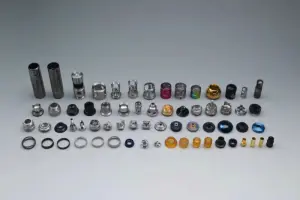
Medical device engineers know the drill. You need a prototype that holds ±0.005 mm on critical features, made from implant-grade titanium, PEEK, or 316L, delivered fast enough to keep the design cycle moving-and still clean enough to survive biocompatibility review and regulatory scrutiny. Most job shops will quote the job. Far fewer can actually deliver the part, the documentation, and the consistency you need. Precision CNC turning is often the right process for the cylindrical and near-cylindrical components that dominate many medical devices: catheter hubs, implant stems, bone screws, valve bodies, and similar parts. Getting it right starts with understanding where the real risks sit.
Why Medical Device Prototypes Demand a Different Level of Precision
Industrial prototypes can live with ±0.05 mm and a quick visual check. Medical prototypes cannot. A few microns off on a sealing surface, a mating bore, or an implant interface can change clinical performance, create sterilization issues, or trigger a non-conformance that slows everything down. Typical requirements for critical features fall in the ±0.01 mm to ±0.002 mm range, with roundness and concentricity often held to 0.005 mm or tighter. Surface finishes of Ra 0.2–0.8 µm are common on patient-contact or articulating areas.
The cost of getting this wrong is rarely just the scrap part. Rework forces schedule slips, extra inspection, and sometimes a full documentation reset under ISO 13485. Shops that treat medical work like general industrial machining usually discover the gap only after the first article fails CMM. That is why medical-grade CNC machining tolerances matter early-not as a line item on a quote, but as a filter for who you even send the drawing to.
Precision CNC Turning vs. Ultra-Precision CNC Milling - Which Process Fits Your Part
Both processes can hit tight numbers. The geometry decides which one should lead.
When turning is the right call
Precision CNC turning (including Swiss-type for small diameters) shines on rotationally symmetric parts: catheter connectors, orthopedic stems and rods, bone screws, pins, cannulas, and cylindrical instrument handles. On a well-maintained lathe with good process control, ±0.005 mm on diameters is realistic; Swiss machines can push closer to ±0.002 mm on micro features. Concentricity is naturally strong when everything is cut in one setup. Surface finishes of Ra 0.4 µm and better are achievable with the right tooling and finishing steps.
When milling takes over
Complex freeform surfaces, multi-sided housings, surgical instrument bodies with intricate contours, acetabular cups, or spinal cages with porous features usually need multi-axis milling-especially 5-axis. Critical features can still be held to ±0.005 mm, but the real advantage is maintaining positional relationships across multiple planes without repeated setups.
A quick practical comparison:
Geometry – Turning for diameters, threads, and concentric features; milling for complex 3D contours and multi-face work.
Tolerance strength – Turning often tighter and more consistent on diameters and runout; milling stronger on true position across faces.
Surface finish – Both reach medical-grade Ra values after secondary operations.
Setup efficiency – Turning keeps setups low for turned features; 5-axis milling reduces setups for prismatic complexity.
Hybrid reality – Many medical parts end up as mill-turn or sequential turning + milling jobs. The better manufacturers run both under the same quality system.
In practice, the shops that claim "±0.005 mm on everything" without showing CMM data or process capability numbers are usually overstating. Ask for recent medical first-article reports before you commit.

Materials That Matter in Medical CNC Prototyping
Material choice drives both function and how difficult the part is to machine cleanly.
316L stainless steel – Solid corrosion resistance and strength at a lower cost. Common for surgical instruments, temporary fixation, and non-implant housings. Machines reasonably well but work-hardens if feeds and speeds are wrong.
Titanium (Ti-6Al-4V / Grade 5 and ELI Grade 23) – High strength-to-weight, excellent biocompatibility and osseointegration. Preferred for permanent implants. Low thermal conductivity means heat stays at the tool edge-expect higher tool wear and the need for rigid setups plus high-pressure coolant.
Medical-grade PEEK – Radiolucent, modulus closer to bone (helps reduce stress shielding), strong chemical resistance and sterilizability. Good for spinal cages and certain imaging-critical components. Machines faster than titanium but can smear if heat is not managed.
Aluminum (e.g., 6061-T6) – Useful for non-implant prototypes, fixtures, or housings where weight and cost matter and tissue contact is limited.
Approximate comparison points engineers actually use:
Density: PEEK ~1.3 g/cm³ | Ti-6Al-4V ~4.4 g/cm³ | 316L ~8.0 g/cm³
Modulus: PEEK ~3–4 GPa (nearer bone) | Titanium ~110 GPa | 316L ~190–200 GPa
Relative machinability (easiest to hardest among these): aluminum > PEEK > 316L > titanium
Full mill certificates and heat-number traceability are non-negotiable. If a shop cannot provide them with the first prototype lot, keep looking.
From Prototype to Production - Why Speed and Repeatability Both Matter
Fast prototypes are useful only if the same process can repeat the numbers when you need ten, fifty, or a few hundred pieces for verification. Prototype CNC work that uses production-intent machines, materials, and inspection methods shortens the later transition. Typical functional prototypes of moderately complex medical components ship in 5–14 days when material is in stock and the design is stable. First-article pass rates above 95 % and consistent CMM results on critical features are realistic targets from a capable shop.
What often gets overlooked is the documentation trail. ISO 13485-aligned manufacturers generate the material certs, inspection records, and lot history that support design control and later process validation. A shop that delivers a beautiful first article but cannot show how it will hold the same tolerances across a small production run forces you to re-qualify later-usually at higher cost and under tighter schedule pressure.
What to Look for in a CNC Machining Manufacturer for Medical Devices
When you are ready to choose a CNC machining manufacturer, focus on evidence rather than claims:
Equipment that matches the work – Multi-axis turning (including Swiss capability where needed), 5-axis milling, and preferably mill-turn centers. Temperature control and high-resolution feedback systems help hold the tighter tolerances.
Quality system that actually covers machining – ISO 13485 with CNC operations in scope, not just assembly or design. FDA registration is a plus for U.S. components.
Material experience and traceability – Proven work with implant-grade titanium, medical PEEK, and 316L, plus full heat-number documentation with every lot.
Metrology and records – CMM capability, first-article inspection reports, and the ability to generate device history records. Ask for recent examples.
Process validation readiness – Experience supporting IQ/OQ/PQ when volumes grow.
Practical working style – Clear NDA process, fast and honest DFM feedback, and straightforward communication on risk and lead time.
Secondary operations – Passivation, polishing, cleaning, and packaging that meet medical expectations.
High-volume or production-intent precision CNC machined parts only make sense after the prototype process has already proven both dimensional capability and documentation discipline. Jumping straight to volume without that foundation is a common and expensive mistake.
FAQ
Q: What tolerance can precision CNC turning achieve for medical parts?
A: ±0.005 mm on critical diameters is routine on a capable machine with good process control. Swiss-type work can reach ±0.002 mm on smaller features. Always confirm against the specific geometry and ask for recent CMM data-brochure numbers are not process capability.
Q: How long does a medical device CNC prototype typically take?
A: Most moderately complex parts ship in 5–14 days once material is available and the drawing is frozen. Complex 5-axis or heavily finished parts take longer. Current shop load matters more than generic promises.
Q: Can CNC machining handle biocompatible materials like PEEK and titanium?
A: Yes. Both are machined to medical tolerances every day by shops that know the materials. Titanium needs specialized tooling and cooling; PEEK needs heat management. Material certification and controlled processes are the real requirements.
Q: What's the difference between prototype and production-grade CNC machining?
A: Prototype work prioritizes speed and iteration while still aiming for production-intent accuracy and materials. Production adds validated processes, tighter process capability targets, and fuller lot documentation. The better manufacturers run both on the same equipment and quality system so the hand-off is clean.
Q: Do I need ISO 13485 certification from my CNC manufacturer?
A: For any part that will enter a regulated medical device, yes. The certificate must cover the machining operations. It is the baseline for the risk management, traceability, and records that regulators and downstream partners expect.
Next Step
Tight tolerances, biocompatible materials, compressed timelines, and clean documentation are the normal conditions of medical device prototyping-not exceptions. Precision CNC turning, backed by solid milling capability and a medical-grade quality system, addresses these constraints directly when the manufacturer has the evidence to match the claims.
Send your drawings for a free DFM review and quotation. A capable shop will tell you what is realistic on tolerance, material, lead time, and risk before you place the order-so the next prototype cycle moves forward with fewer surprises.