
Aluminum cut-to-size (also known as "aluminum zero-cutting" or custom aluminum cutting) refers to the process or outsourced service of performing small-batch, customized cutting on raw aluminum materials - including coils, sheets, bars, and profiles - according to a customer's specified dimensions, shapes, and tolerance requirements. Unlike mass-production cutting lines run inside large fabrication plants, this service is built around flexibility: it exists precisely to fill the gap between bulk mill output and the highly specific, often one-off, dimensional needs of downstream manufacturers and contractors. As aluminum continues to replace steel and other heavier metals across industries - from construction curtain walls to electric vehicle battery enclosures - the demand for precise, small-quantity cutting services has grown steadily, making this niche an increasingly important link in the aluminum supply chain.
Core Business Scope
Aluminum cut-to-size processing is fundamentally different from the large-scale material-opening (kaiLiao) procedures used in mass-production factories. Where a mill or major fabricator might process tens of thousands of identical pieces on a single production run, cut-to-size services are built around small-batch, customized demand. A single order can range from as few as one piece to several hundred pieces, and turnaround times are often measured in days rather than weeks, since customers typically need material quickly to keep their own downstream production schedules on track.
The primary customer base for this service includes hardware fabrication shops, equipment and machinery manufacturers, and decorative engineering and interior-fitout contractors. These end users generally do not have the capital or floor space to invest in their own large-scale cutting equipment, nor do their order volumes justify such an investment. Instead, they rely on specialized cut-to-size providers to supply aluminum stock already cut to near-final dimensions, which significantly reduces their own secondary processing burden, shortens their production cycle, and lowers material waste on their end. Because of this, cut-to-size providers often function as a critical extension of their customers' own manufacturing capability, effectively acting as an outsourced first-stage workshop.

Common Processing Methods
Sheet Metal Cut-to-Size
Standard rectangular sheets are typically processed using shearing machines (guillotine shears), which offer high efficiency and low cost for straight-line cuts on flat sheet stock. This method remains the workhorse for the majority of everyday orders because of its speed and minimal setup time.
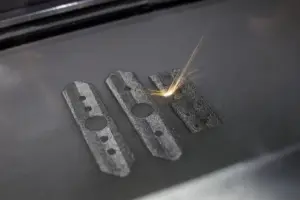
For irregularly shaped sheets or sheets requiring holes, where dimensional precision is more critical, processors turn to laser cutting machines, water-jet cutting machines, or CNC punch-and-cut integrated machines to complete both the cutting and the subsequent finishing operations in a single workflow. Laser cutting in particular has become increasingly popular for complex geometries because it minimizes mechanical stress on the material and produces clean, burr-free edges.
Coiled aluminum sheet must first pass through a leveling (decoiling/flattening) machine to remove the natural curvature imparted by coiling before it can be accurately cut. Skipping this step would result in warped or inconsistent finished pieces, so leveling is treated as a mandatory pre-processing stage rather than an optional one.
Bar and Profile Cut-to-Size
Round bars, aluminum tubes, and similar bar stock are most commonly cut to specified lengths using band saws or circular (disc) saws, both of which provide clean, perpendicular cuts with minimal thermal distortion.
Industrial aluminum profiles, such as angle aluminum and square/rectangular tubing, are typically cut to fixed lengths as a baseline operation. In more complex scenarios, laser cutting can be used to simultaneously perform slotting and hole-punching on the profile in the same pass, which is particularly valuable for structural framing components that require multiple mounting or assembly features.
Precision Cut-to-Size
For customers in highly demanding fields such as aerospace and medical device manufacturing, wire-cut EDM and precision fiber laser cutting equipment are employed. These methods allow processing tolerances to be controlled within ±0.05mm, meeting the exacting dimensional and surface-quality standards that such industries require. Precision cutting jobs typically also involve more rigorous quality inspection protocols, including coordinate measuring machine (CMM) verification, to confirm that every piece meets the customer's engineering drawings before shipment.
Key Control Points
Surface protection: Most orders require that the aluminum's original protective surface film be preserved throughout processing. Tooling and fixtures must avoid direct contact with the oxide layer during cutting to prevent scratching the surface. In practice, this means operators must select clamping methods and cutting fixtures carefully, often using soft padding or non-marring supports, since even minor surface blemishes can cause a batch to be rejected by quality-sensitive customers such as those in the decorative or architectural sectors.
Parameter adaptation: Different aluminum alloy grades have distinct mechanical properties, which means cutting parameters cannot be applied uniformly across all materials. For example, 6061 high-strength aluminum alloy has relatively high hardness and requires adjustments to sawing speed and feed rate to avoid excessive tool wear or heat buildup. In contrast, 5052 anti-corrosion (marine-grade) aluminum alloy requires enhanced chip evacuation during cutting, since its higher ductility tends to produce longer, stringier chips that can clog cutting paths if not properly managed. Operators typically maintain a reference table of alloy-specific parameters and adjust settings before each new job to ensure consistent quality.
Waste and scrap management: Aluminum shavings and offcuts generated during cutting must be collected and recycled in a centralized manner. Accumulated aluminum dust and fine shavings pose a genuine fire risk, particularly in dry environments or near heat sources, so regular clearing and proper storage of scrap is essential. In addition, operations must comply with local environmental regulations governing emissions and waste disposal, including proper handling of any cutting fluids or lubricants used during the process.
Safety operations: Cutting equipment must be equipped with protective guarding and dust-extraction systems to protect operators from flying debris and airborne particulates. Personnel operating this equipment are required to hold relevant qualifications for cold- and hot-metal cutting operations, and ongoing safety training is typically necessary given the variety of equipment types - from mechanical shears to high-powered lasers - used within a single facility.
Value to Customers
Beyond the technical processes themselves, the real value of aluminum cut-to-size services lies in the flexibility and responsiveness they offer. Customers gain access to a wide range of cutting technologies - from economical mechanical shearing to high-precision laser and wire-cut EDM - without needing to invest in or maintain this equipment themselves. This allows smaller fabrication shops and project-based contractors to compete on jobs that would otherwise require capabilities beyond their in-house scope, while larger manufacturers can use cut-to-size providers to handle overflow capacity or highly specialized one-off orders that don't justify dedicating their own production lines. As a result, the cut-to-size segment plays a quietly essential role in keeping the broader aluminum fabrication and construction supply chain agile and cost-effective.