
Sample lead times keep slipping. The first production batch arrives with out-of-tolerance holes. The initial quote looked attractive, yet extra charges for inspection or fixtures appear later. Choosing the wrong CNC Milling Supplier usually costs far more than the difference in unit price. This guide gives you a practical six-step checklist and a real-world example so you can select a partner that delivers consistent performance instead of surprises.
Why New Energy Vehicle Parts Are Harder to Machine Than You Think
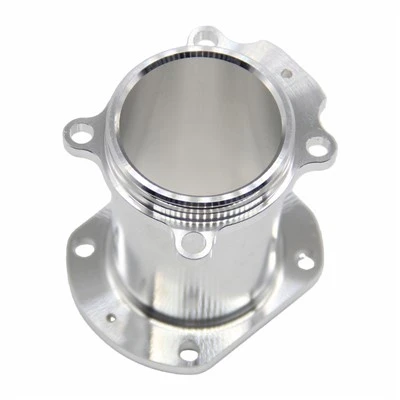
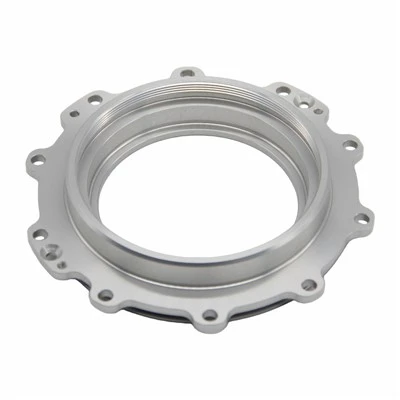
Motor housings, battery trays, cooling plates, structural brackets and inverter covers share several characteristics: thin walls, predominantly aluminum alloys, tight positional tolerances, and requirements for flatness, sealing or thermal performance. These features demand stable fixturing, controlled cutting forces and reliable process capability.
According to the IEA Global EV Outlook, electric car sales grew by about 20 % to exceed 20 million units in 2025-one quarter of all new cars sold worldwide. Sales are projected to reach roughly 23 million in 2026. Rising volumes increase pressure on the supply chain for precision aluminum components. Ordinary job shops that lack automotive process discipline often struggle with the combination of thin-wall stability, material traceability and consistent dimensional results required for EV applications. That is why specialized Aluminum CNC Milling for EV Components capability and a capable CNC Milling Supplier matter more than a generic machining shop.
Step-by-Step Checklist for Choosing an EV Parts CNC Machining Manufacturer
Check their certifications first
Look for:
IATF 16949 (the automotive quality management standard)
ISO 9001 as a baseline
Any customer-specific or process certifications relevant to your program
An IATF 16949 certified CNC machining supplier has demonstrated systems for process control, risk management, traceability and continuous improvement-requirements that ordinary ISO 9001 shops do not necessarily meet.
Look at the machines and the team
Confirm the presence of modern 3-axis, 4-axis or 5-axis mills suited to complex aluminum geometries. Ask about CMM or equivalent metrology equipment. Evaluate whether the engineering team can read GD&T, suggest practical DFM improvements, and discuss tooling strategy rather than simply accepting the drawing as-is. A strong EV Parts CNC Machining Manufacturer will have both the equipment and the people who know how to use it on thin-wall EV parts.
Ask about materials and traceability
Typical EV parts use 6061, 6082 or 7075 aluminum, occasionally copper alloys for thermal management. Request mill certificates and heat-lot traceability. A capable provider of Custom CNC Milling Services for New Energy Vehicles should treat material documentation as standard, not an extra.
Test their quality control
Expect:
First-article inspection with full CMM reports
Defined sampling plans for production lots
Process capability data (Cpk) on critical features when volumes rise
Clear non-conformance handling
Judge how they communicate
Response speed on quotes is useful, but more important is whether they proactively raise DFM questions, clarify ambiguous tolerances, or point out cost-saving opportunities before production begins. Silence after the order is placed is a warning sign.
Compare lead time and capacity
Ask for realistic prototype lead times (commonly 7–15 working days) and evidence that the shop can scale to stable low- or medium-volume production without repeated capacity problems. Rapid prototype CNC milling service capability is valuable early in a program, but long-term capacity matters more when you move beyond samples.
Factory, Trader or Manufacturer? How to Tell the Difference
A true factory owns the machines, employs the programmers and operators, and can show you the process. A trading company typically intermediates. Practical ways to distinguish them include requesting a live video walk-through of the shop floor, reviewing a current equipment list, and asking detailed questions about fixturing, tool life or chip control. Working directly with a CNC milling factory for EV parts usually yields better technical feedback and clearer accountability. When volumes grow, a partner that can also support wholesale CNC machined EV components becomes more efficient.
What Really Drives the Price of CNC Milled EV Parts
Price is driven by:
Material grade and buy-to-fly ratio
Machine time (geometry complexity, number of setups, thin-wall strategy)
Tolerance and inspection intensity
Surface treatments (anodizing, coatings, cleaning)
Order quantity (setup amortization)
The lowest initial quote is rarely the lowest total cost. Missing inspection, weak process control or later design changes often erase any apparent savings. Evaluating a CNC milling manufacturer in China or elsewhere should include these total-cost factors, not unit price alone. Choosing the right CNC Milling Supplier early prevents these hidden costs from appearing later.
Case Study: Reducing Trial-and-Error on an EV Structural Bracket
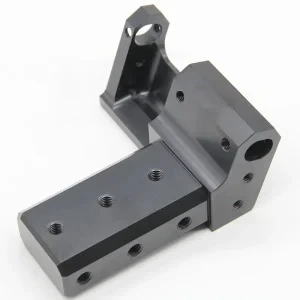
An EV customer needed aluminum structural brackets with tight positional tolerances on mounting holes and controlled flatness on mating faces. Early samples from another source showed dimensional scatter that caused assembly issues and delayed vehicle trials. The brackets were typical of many Aluminum CNC Milling for EV Components-thin sections, multiple critical hole patterns, and no room for secondary straightening.
The selected CNC Milling Supplier conducted a DFM review, adjusted fixturing to reduce distortion on the thin walls, and added in-process checks on the critical features. Material certificates and first-article CMM reports were supplied as standard. Once the process stabilized, subsequent batches met the required fit without repeated trial loops. The project illustrated the value of treating low volume CNC milling for automotive prototypes and early production as a controlled process rather than a series of one-off experiments.
(Exact part numbers, quantities and measured yield figures are omitted because specific project data were not supplied for publication.)
Industry Recognition That Buyers Can Trust
Buyers of EV components increasingly look for suppliers that maintain documented automotive quality systems and invest in process capability. Certifications such as IATF 16949, supported by modern multi-axis equipment and metrology, provide external evidence that a shop can meet the consistency demands of new-energy programs. A proven EV Parts CNC Machining Manufacturer that combines these elements reduces the risk of quality surprises that often outweigh any initial price advantage.
Red Flags to Watch Out For
Refusal or reluctance to supply inspection reports or material certificates
Extremely fast quotes issued without reviewing the drawings or asking clarifying questions
Unwillingness to allow a video factory tour or share equipment details
No proactive DFM feedback even when the design contains obvious cost or risk drivers
Overly optimistic lead-time promises that ignore current capacity
FAQ
Q: How do I choose a CNC milling supplier for EV parts?
A: Start with certifications (especially IATF 16949), then evaluate machines, material traceability, quality control practices, communication quality and realistic capacity. Use the six-step checklist above when selecting a CNC Milling Supplier.
Q: What certifications does an automotive CNC machining manufacturer need?
A: IATF 16949 is the key automotive standard. ISO 9001 is a useful baseline but insufficient on its own for most OEM or tier-1 EV programs.
Q: How much does CNC milling cost for new energy vehicle parts?
A: Cost depends on material, geometry complexity, tolerance level, surface treatment and quantity. Simple aluminum brackets can be relatively low-cost in volume; complex thin-wall housings with tight tolerances cost more. Always compare total landed cost, not just unit price.
Q: How long does CNC prototype milling usually take?
A: Typical lead time for functional prototypes is 7–15 working days after drawing approval, depending on complexity, material availability and current shop load.
Q: Can I order small batches from a CNC milling factory?
A: Yes. Many capable factories accept prototype quantities and low-volume production. The key is confirming they have the process discipline to maintain quality when volumes are small.
Ready to Start Your EV Project?
Send your drawings and 3-D models. A qualified CNC Milling Supplier experienced in Custom CNC Milling Services for New Energy Vehicles will review the files, provide practical DFM suggestions, and return a clear quotation-normally within 24 hours-so you can move from prototype to production with fewer surprises.