
Core Advantages
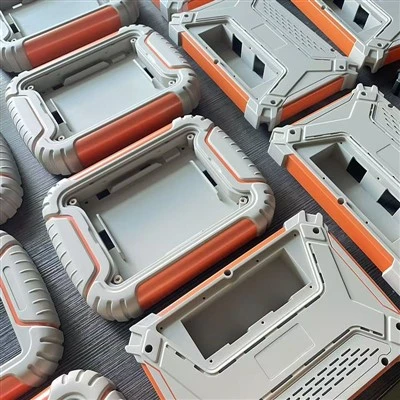
Our robotics plastic enclosure is purpose-built for engineers who refuse to compromise between weight, durability, and precision. Here are the four core engineering advantages that matter:
40% lighter than aluminum -
Every gram saved improves robot payload capacity, speed, and battery life. Our lightweight robot frame material selection routinely cuts system weight by 35–45% while maintaining full structural integrity
±0.1 mm precision fit -
Tight tolerances ensure seamless integration with servo motors, sensors, and cable routing - no post-machining or field adjustments required
Surface finish versatility -
Matte anti-glare, textured grip, UV-stable, or ESD-safe coatings - all applied in-house for zero supply-chain risk
Rapid 5–7 day prototypes -
From CAD file to physical part faster than most competitors' quoting process
Material Selection Guide
Choosing the right polymer is critical for robotics applications. The table below provides an engineering-level comparison for robotics plastic enclosure materials:
|
Material |
Density (g/cm³) |
Tensile Strength (MPa) |
Heat Deflection Temp (°C) |
Chemical Resistance |
Best Use Case |
Keyword Focus |
|
**ABS** |
1.04–1.06 |
40–60 |
80–100 |
Moderate |
General-service & educational robots |
ABS plastic robot enclosure |
|
**PC (Polycarbonate)** |
1.20–1.22 |
55–75 |
125–140 |
Good |
Impact-heavy collaborative robots |
PC robot housing |
|
**PA6-GF30 (Nylon + 30% Glass Fiber)** |
1.35–1.38 |
100–130 |
190–210 |
Excellent |
Industrial & agricultural robots |
Engineering plastic selection |
|
**PEEK** |
1.30–1.32 |
90–105 |
150–170 |
Outstanding |
Medical, cleanroom & high-temp robots |
High-performance robot casing |
Recommendation: For 90% of projects, we start with PC or PA6-GF30. PEEK is reserved for extreme environments. Full material datasheets and RoHS/REACH certifications are available on request.
Protection & Structural Design
Every robotics plastic enclosure we produce is engineered to survive real-world operating conditions:
IP65 / IP67 rating -
Achieved with continuous silicone compression gaskets, molded-in O-ring grooves, and interlocking snap-fit + stainless-steel screw bosses. Meets IEC 60529 standard
EMI shielding -
Optional conductive nickel or copper coating (surface resistivity < 1 Ω/sq) or molded-in metalized mesh for full Faraday cage performance
Structural rib design -
Finite-element-optimized internal ribs increase enclosure stiffness by up to 60% while adding less than 8% weight. Drop-tested to 1.5 m on concrete per IEC 60068-2-31
We also offer custom plastic enclosures for robots with integrated cable glands and vent membranes for pressure equalization - without compromising ingress protection ratings.
Manufacturing Capabilities
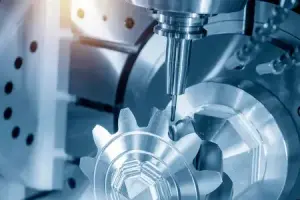
Injection-molded robot shells at scale, with prototype flexibility:
|
Process |
Details |
|
**Injection Molding** |
50–1,000-ton presses; ±0.1 mm repeatability; multi-cavity tooling |
|
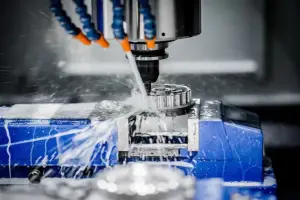
**CNC Rapid Prototyping** |
3–5 day aluminum or steel prototype tools |
|
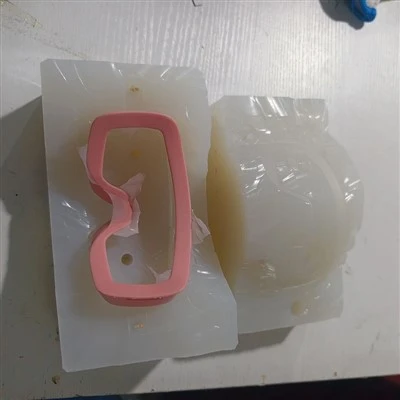
**Vacuum Casting** |
Ideal for 10–200 piece pilot runs |
|
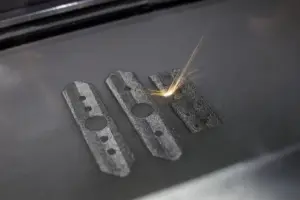
**Secondary Operations** |
Pad printing, laser etching, EMI coating, ultrasonic welding, full assembly & functional testing |
We are a robot housing manufacturer you can trust with your IP and timeline.
Customization Process
Requirement intake *(1–2 business days)* - Share your 3D STEP file, IP rating, material preference, and target quantity
DFM analysis & quote *(48 hours)* - Receive a detailed Design for Manufacturability report plus tooling and per-part pricing
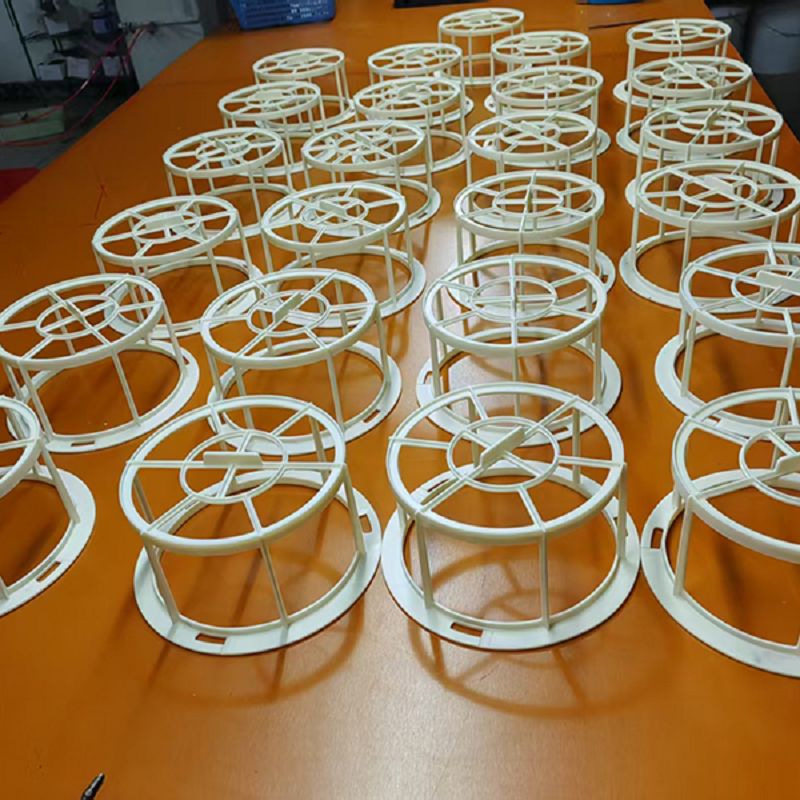
Sample approval *(7–10 days)* - Physical prototype + dimensional report + material certificate
Production & delivery - 2–4 weeks for first batch (volume-dependent); mold ownership remains with you
Application Scenarios
|
Robot Type |
Enclosure Requirements |
|
**Industrial Robots** |
Rugged robotics plastic enclosure surviving 24/7 factory vibration and coolant splash |
|
**Service & Humanoid Robots** |
Sleek, lightweight housings with soft-touch finish for safe human interaction |
|
**Agricultural Robots** |
UV-stabilized, IP67-rated protective covers that resist mud, dust, and agrochemicals |
|
**Medical & Surgical Robots** |
Biocompatible, autoclavable PEEK or PC enclosures with smooth, easy-to-clean surfaces |
|
**Educational & STEM Robots** |
Cost-effective yet professional-looking ABS shells built for classroom durability |
|
**Warehouse AGV / AMR** |
Low-profile, impact-resistant **AGV plastic covers** optimized for floor-level navigation |
|
**Security & Inspection Robots** |
EMI-shielded enclosures protecting sensitive camera modules and communications hardware |
|
**Underwater / Marine Robots** |
Specialized sealed plastic enclosures with corrosion-proof hardware and pressure-rated seals |
FAQ
Hot Tags: robotics plastic enclosure, China robotics plastic enclosure manufacturers, suppliers, factory, Functional Plastic Prototypes, Master Pattern Making, Medical Device Casting, Robotics Plastic Enclosure, Textured Plastic Prototypes, Transparent Plastic Casting