
Core Capabilities
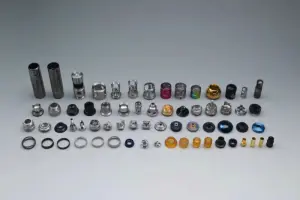
Our precision-cast medical devices are engineered specifically for the demanding requirements of the healthcare industry:
Precision to ±0.05 mm -
Fine investment casting (lost-wax process) achieves stable repeatability for complex geometries, minimizing the need for secondary machining
01
Surface roughness Ra ≤ 0.8 μm -
After electropolishing, parts meet implant-grade brightness requirements and reduce bacterial adhesion risk
02
Full compliance framework -
Conformant with ISO 13485 and FDA 21 CFR Part 820; complete material traceability (Heat Number) and CoC reports provided for every batch
03
15-day sample lead time -
From DFM analysis to first article, fastest completion in 15 working days, significantly shortening product certification cycles
04
Broad material portfolio -
Medical-grade Ti-6Al-4V, 316L stainless steel, CoCrMo, and Nitinol to meet diverse device performance requirements
05
Material Selection Guide
Selecting the correct casting material is critical to medical device performance. The table below provides engineering-level data based on ASTM/ISO medical specifications:
|
Material |
Biocompatibility (ISO 10993) |
Corrosion Resistance |
Sterilization Methods |
Tensile Strength (MPa) |
Hardness (HV) |
Density (g/cm³) |
Typical Applications |
|
**Ti-6Al-4V ELI** |
Compliant (Implant Grade) |
Excellent |
Autoclave, ETO, Gamma, VH₂O₂ |
860–965 |
300–380 |
4.43 |
Orthopedic implants, surgical tools |
|
**316L Stainless Steel** |
Compliant (Class I–III) |
Very Good |
Autoclave, ETO, Gamma, VH₂O₂ |
485–620 |
150–200 |
7.96 |
Surgical instruments, fixation plates |
|
**Cobalt-Chrome (CoCrMo)** |
Compliant (Implant Grade) |
Outstanding |
Autoclave, ETO, Gamma |
700–900 |
300–450 |
8.30 |
Joint prostheses, dental components |
|
**Nickel-Titanium (Nitinol)** |
Compliant (ISO 10993-5/10) |
Very Good |
ETO, Gamma, VH₂O₂ *(limited Autoclave)* |
800–1,000 (superelastic) |
250–350 |
6.45 |
Cardiovascular stents, guidewires |
Selection guidance: For over 90% of implant projects, Ti-6Al-4V ELI or CoCrMo is the recommended choice. Complete material datasheets, batch testing reports, and ISO 10993 biocompatibility test reports are available on request.
Precision & Quality Control
Every medical device casting undergoes a rigorous multi-stage inspection process to ensure compliance with medical-grade standards:
- CMM three-axis measurement - Accuracy ±0.01 mm, fully traceable
- X-ray inspection - Internal defect detection (porosity, inclusions, cracks)
- Metallographic analysis - Microstructure verification
- Surface roughness & dimensional full inspection - 100% parts checked
The quality documentation system includes First Article Inspection (FAI) reports, Batch Inspection Reports (CoC), and complete material heat number traceability - strictly adhering to ISO 13485:2016 clauses 7.1–7.5 and FDA 21 CFR Part 820 Subpart G requirements.
Sterilization Compatibility
Medical device castings must support the sterilization methods used by end-users. The table below summarizes compatibility by material:
|
Sterilization Method |
Ti-6Al-4V ELI |
316L Stainless Steel |
CoCrMo |
Nitinol |
|
**Autoclave (134 °C steam)** |
✅ Fully compatible |
✅ Fully compatible |
✅ Fully compatible |
⚠️ Evaluate cycle count |
|
**ETO (Ethylene Oxide)** |
✅ Compatible |
✅ Compatible |
✅ Compatible |
✅ Compatible |
|
**Gamma Irradiation** |
✅ Recommended |
✅ Compatible |
✅ Recommended |
✅ Compatible |
|
**VH₂O₂ (Plasma / Low-temp)** |
✅ Compatible |
✅ Best compatibility |
✅ Compatible |
✅ Compatible |
Surface treatments such as electropolishing + passivation significantly improve corrosion resistance and biocompatibility post-sterilization. We provide complete validation data for ETO and autoclave sterilization compatibility.
Manufacturing Capabilities
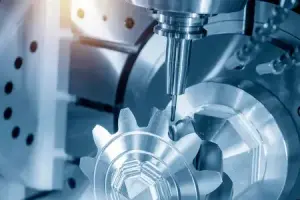
Our investment casting medical parts utilize fine lost-wax casting and comprehensive post-processing:
- Fine lost-wax casting - Tolerance ±0.05 mm; supports complex structures with minimum wall thickness of 0.5 mm
- Silica sol shell casting - Achieves superior surface brightness (Ra ≤ 0.4 μm)
- CNC precision machining - Auxiliary key dimensions reach ±0.01 mm
- Surface treatments - Electropolishing, sandblasting, passivation, PVD coating
Key equipment: Wax injection machine, vacuum induction melting furnace, ceramic shell preparation line, coordinate measuring machine (CMM), X-ray flaw detector. FDA QSR conformity declaration and CE Mark support available.
Customization Process
Requirements evaluation & NDA signing *(1–2 business days)* - Sign mutual NDA; receive and review 3D files and technical specifications
DFM analysis *(48-hour response)* - Return casting feasibility report and optimization recommendations
Wax pattern fabrication & trial casting *(10–12 days)* - Deliver first article samples and FAI report
Inspection report confirmation - Customer reviews CoC, dimensional report, and biocompatibility data
Mass production & ongoing quality monitoring - Batch production with per-batch inspection and stable delivery schedule
Application Scenarios
|
Application |
Details |
|
**Surgical Instruments** |
316L stainless steel clamp components; high surface brightness; validated for **200+ repeated sterilization cycles** |
|
**Cardiovascular Stent Components** |
Nitinol precision-cast stent parts combining superelasticity and biocompatibility |
|
**Dental Castings** |
CoCrMo denture frameworks with high precision and corrosion resistance |
|
**Endoscope Components** |
Miniature 316L stainless steel housings with thin walls and complex internal geometry |
|
**Diagnostic Equipment Housings** |
Lightweight titanium alloy precision castings meeting EMC and cleanliness requirements |
|
**Rehabilitation Robot Joints** |
CoCrMo joint components providing high strength and low-friction articulation |
|
**Minimally Invasive Instruments** |
Biocompatible metal castings supporting repeated ETO or gamma sterilization |
FAQ
Hot Tags: medical device casting, China medical device casting manufacturers, suppliers, factory