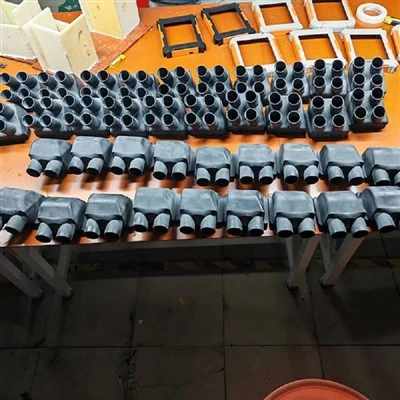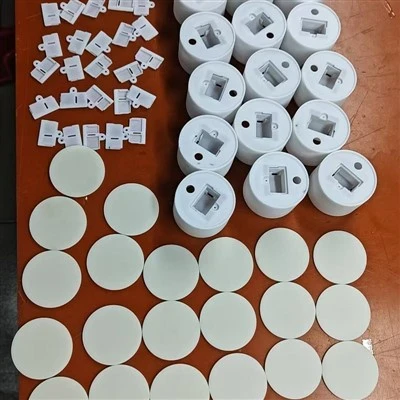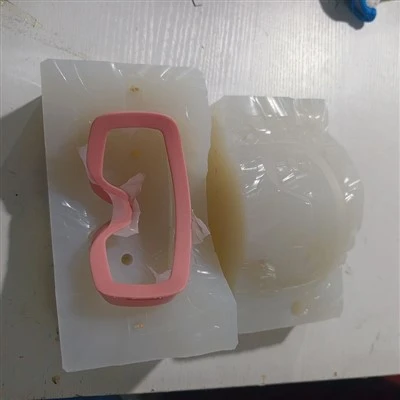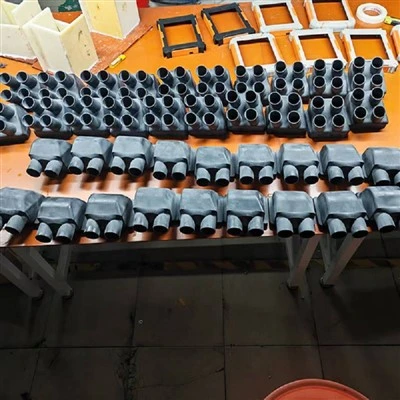

Key benefits:
Significantly shorter product development cycles
Lower overall prototyping and tooling costs
Early validation of true mechanical and functional performance
Strong integration between metal inserts and plastic components
Insert Types
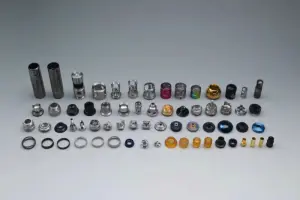
We support a wide variety of inserts for precision insert-molding prototypes:
Threaded inserts:
brass and stainless-steel inserts for high-strength, reusable threaded connections.
Electronic components:
pins, connectors, sensors, and terminals for integrated electrical functionality.
Magnets & bushings:
permanent magnets and precision bushings for functional and mechanical integration.
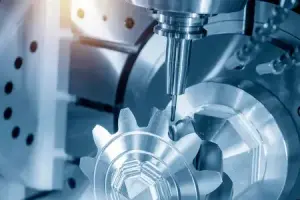
Custom CNC-machined inserts:
complex metal or ceramic inserts designed and machined to your specifications.
All inserts undergo appropriate surface preparation (e.g. plasma cleaning, chemical etching, or primer treatment) before molding to support strong, durable metal-to-plastic bonding.
Material Selection
Broad material compatibility for demanding mechanical, thermal, and chemical requirements.
Thermoplastics
PEEK: exceptional heat and chemical resistance - suited to aerospace and medical applications.
PPS: excellent dimensional stability and high-temperature performance - used in automotive electronics.
PA66 (Nylon): high strength and wear resistance - common in structural components.
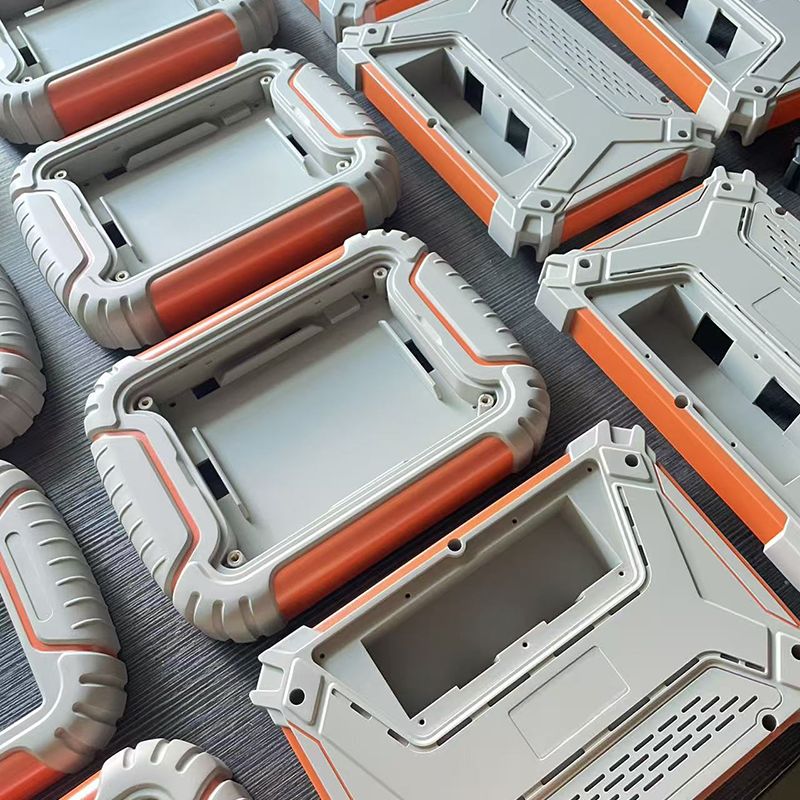
PC and PC/ABS: good impact strength and surface quality - suitable for consumer-electronics housings.
Insert Materials
Aluminum, steel, brass, stainless steel, copper, and ceramics.
Material compatibility: Bond strength is enhanced through plasma cleaning, chemical etching, or primer treatments. Thermal-expansion (CTE) compatibility between metal and plastic is evaluated during DFM to manage delamination and stress-cracking risk over service life.
Technical Capabilities
Our insert-molding prototype service is backed by appropriate equipment and process discipline:
Precision tolerance: general ±0.1 mm; ±0.05 mm achievable on critical dimensions; ±0.02 mm on selected features supported by post-machining (per ISO 20457 plastics-tolerancing principles)
Press tonnage: 20 T to 500 T injection machines for a range of part sizes
Machine types: vertical and horizontal injection molding machines - vertical machines provide more reliable insert positioning
Insert position tolerance: typically ±0.05 mm, verified at first-article inspection
DFM support: free Design for Manufacturability analysis covering insert placement, melt-flow behavior, gate design, and CTE matching
From rapid tooling to first-article inspection, we maintain process repeatability and consistent quality across prototypes and low-volume production runs.
Process Comparison
|
Aspect |
Insert Molding |
Overmolding |
Post-Molding Installation |
|
Process steps |
Single-shot molding around insert |
Multiple shots (soft over hard) |
Molding + secondary assembly |
|
Bond strength |
Excellent (mechanical + chemical interaction) |
Good |
Moderate (mechanical only) |
|
Assembly cost |
Lowest |
Medium |
Highest |
|
Production efficiency |
High |
Medium |
Low |
|
Part strength & durability |
Strong |
Good |
Average |
|
Best for |
Metal + plastic functional integration |
Soft + hard plastic |
Low-precision or late modifications |
Insert molding stands out by reducing assembly operations, improving structural integrity, and delivering higher reliability - making it the preferred choice for high-performance prototypes.
Application Scenarios
Our insert-molding prototype and custom insert-injection-molding services are used across precision-critical industries
Medical devices:
surgical instrument handles, diagnostic equipment enclosures, and precision components requiring reliable metal-plastic integration.
Automotive electronics:
sensor housings, connectors, and electronic modules requiring vibration resistance and electrical stability.
Aerospace:
lightweight connectors and structural parts focused on weight reduction without compromising strength.
Consumer electronics:
smart-device housings, charging interfaces, buttons, and internal structural components.
FAQ
Hot Tags: insert molding prototypes, China insert molding prototypes manufacturers, suppliers, factory, Functional Plastic Prototypes, High Gloss Vacuum Casting, Insert Molding Prototypes, rapid plastic prototyping, Textured Plastic Prototypes, Transparent Plastic Casting