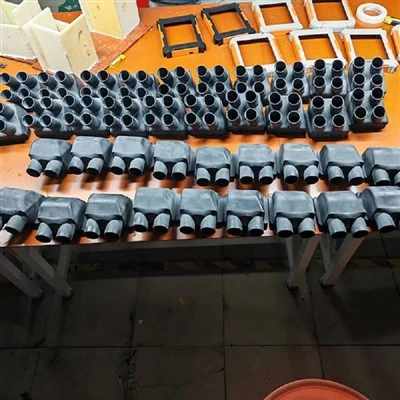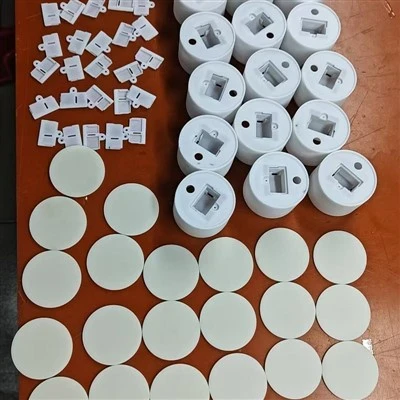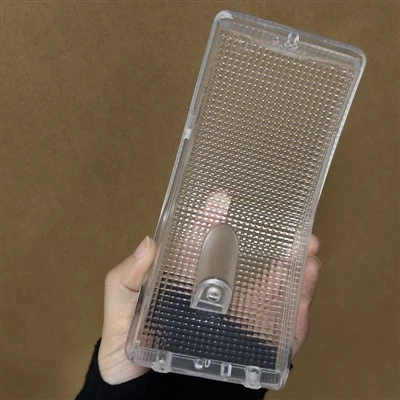

Core advantages:
- Master pattern accuracy down to ±0.1 mm (geometry- and process-dependent)
- 15+ master pattern materials
- ISO 9001 certified quality system
Why Master Pattern Quality Matters
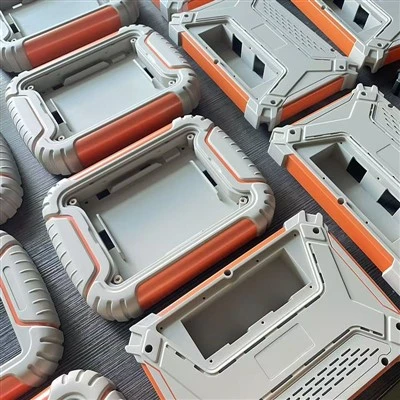
A high-quality master pattern is the foundation of successful casting production. Pattern quality directly affects accuracy, surface quality, and economics of the final cast parts.
Casting accuracy:
Pattern precision sets the baseline tolerance of the final cast part. Patterns held to ±0.1 mm typically yield cast parts with deviations of ±0.15–0.30 mm depending on resin shrinkage.
Tooling cost savings:
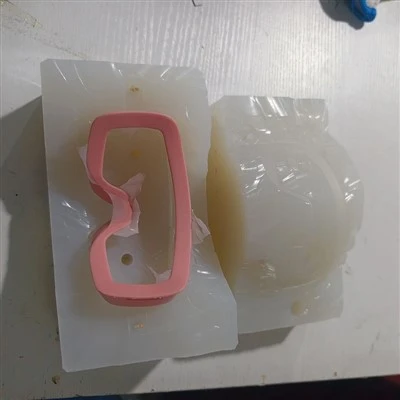
A master pattern combined with silicone molds can reduce upfront tooling cost by roughly 60–80% versus direct steel tooling - well-suited to prototyping and low-to-medium-volume production.
Material flexibility:
Wide selection including high-density epoxy tooling board, polyurethane board, CNC-machined aluminum, and SLA resin to match required temperature resistance and durability.
Faster iteration:
From design to finished master pattern in as little as 5–7 working days, supporting rapid design validation and shorter development cycles.
Impact on Mold Quality & Output
The pattern, the silicone mold, and the cast part form a chain - pattern quality propagates through each step:
- Pattern precision → casting dimensional stability: high-accuracy patterns support tight, repeatable tolerances across batches.
- Pattern surface quality → demolding & finish: well-finished patterns improve mold release and reduce surface defects, bubbles, and pull marks, raising yield.
- Pattern hardness → silicone mold wear: rigid, abrasion-resistant patterns (aluminum or high-density tooling board) preserve sharp detail across many demolding cycles. Note that overall mold life is most often limited by silicone aging and tear, typically 20–25 castings per silicone mold; rigid patterns can be re-used to produce multiple silicone molds.
- Parting-line & venting design → defect rate: optimized parting lines and venting reduce air traps and shrinkage porosity, supporting low defect rates in production.
- Investing in professional master pattern making improves casting quality and production efficiency throughout the program.
Technical Specifications
|
Parameter |
Specification |
Notes |
|
Machining accuracy |
±0.05 mm to ±0.1 mm |
Process- and size-dependent |
|
Maximum pattern size |
2,000 × 1,200 × 1,000 mm |
Supports large master patterns |
|
Common materials |
High-density epoxy tooling board, polyurethane board, aluminum alloy, SLA resin |
Selected for temperature and strength requirements |
|
Surface roughness Ra |
0.8 – 6.3 μm (customizable) |
Texture can be added on request |
|
Standard lead time |
5–10 working days |
Expedited options available |
|
File formats |
STEP, IGES, STL, OBJ, 2D drawings |
Full DFM report provided |
Pattern Making Methods
We offer multiple pattern-making processes to match part geometry, tolerance, lead time, and budget
CNC-Machined Master Patterns
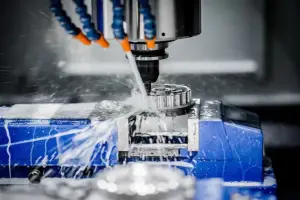
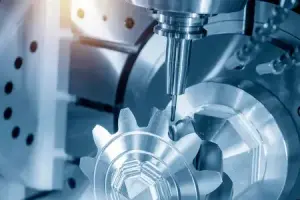
High-precision 5-axis CNC machining from epoxy tooling board or aluminum alloy. Best for complex geometries and tight-tolerance requirements.
Best for: industrial parts, functional prototypes, and medium-to-large patterns.
Hand Lay-Up Patterns
Manual layering of epoxy resin with fiberglass or carbon-fiber reinforcement. Suited to large curved surfaces and aesthetic components.
Best for: automotive interior/exterior parts and large consumer-product housings with complex organic shapes.
SLA 3D-Printed Master Patterns
Industrial-grade SLA printing for fine surface finish and detail.
Best for: small intricate parts and high-detail appearance models.
Tooling-Board Master Patterns
CNC-machined from high-density polyurethane tooling board. High hardness, thermal stability, and durability.
Best for: medium-volume casting programs requiring multiple silicone-mold replacements from a single master.
Cost Guide & Quantity Strategy
Master pattern pricing depends on size, geometric complexity, material, and surface requirements. Each project is quoted individually - please contact us with your STEP/IGES files for a detailed quotation.
Recommended quantity strategy:
1–50 pieces:
master pattern + silicone mold + urethane casting (best cost-performance)
50–500 pieces:
high-strength master pattern + durable silicone or polyurethane molds (multiple silicone molds may be made from one pattern)
500+ pieces:
consider aluminum or steel tooling for better long-term economics
Need expert advice for your project? Upload your files and we will provide a detailed master-pattern cost analysis and process recommendation within 24 hours.
FAQ
Hot Tags: master pattern making, China master pattern making manufacturers, suppliers, factory, Color Matched Plastic Parts, High Gloss Vacuum Casting, Master Pattern Making, Medical Device Casting, Textured Plastic Prototypes, Transparent Plastic Casting