

Bridge Tooling Plastics - Low-Volume Injection Molded Parts Before Full Production Tooling
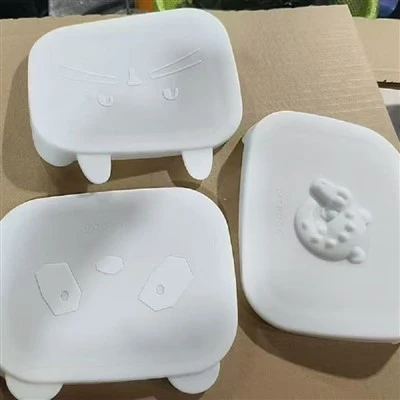
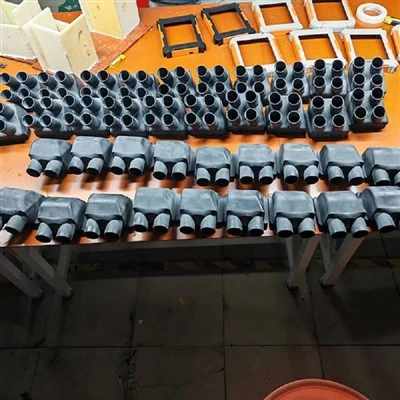
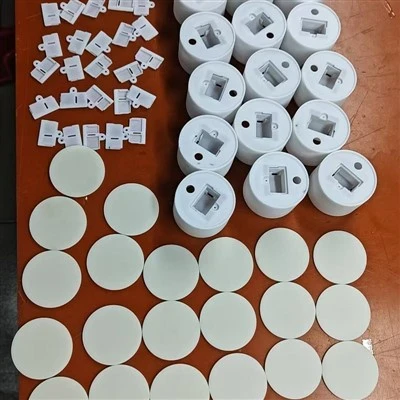
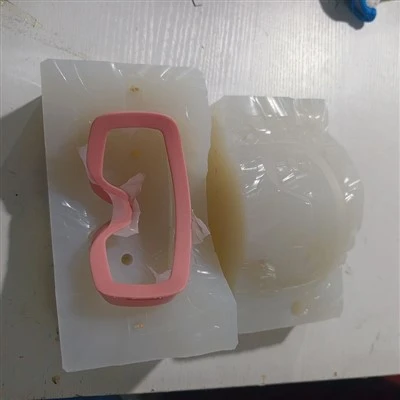
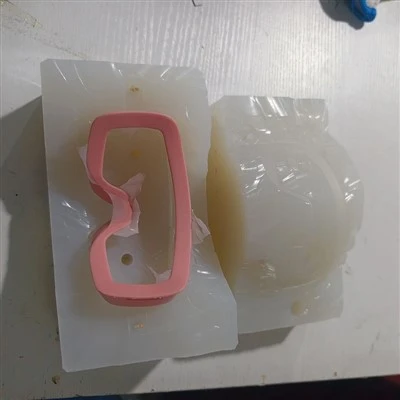
Need production-grade plastic parts quickly, before committing to full steel production tooling? Bridge tooling is the ideal solution. Using high-precision aluminum molds, we deliver low-volume injection-molded parts with quality and consistency close to mass production.
Core advantages:
- Aluminum mold life up to ~5,000 shots (material- and geometry-dependent)
- Typical lead time 3–4 weeks from DFM confirmation to first samples
- ISO 9001 certified quality system
Surface Finish & Appearance
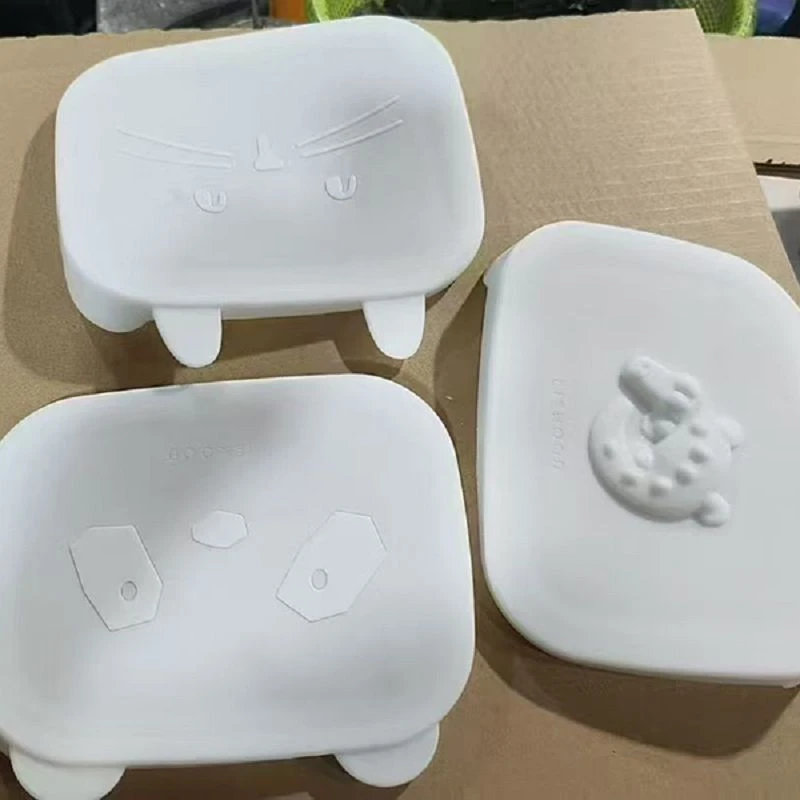
A major advantage of bridge tooling over rapid prototyping is its ability to achieve surface finishes comparable to production tooling.
Supported surface finishes:
SPI finish standards:
A1 (highest mirror), A2, B1, C1 - with Ra below 0.05 μm achievable on A1 finishes for optical and high-gloss applications.
VDI 3400 textures:
standard VDI textures (typically VDI 12–45), including fine to medium grain that can be matched to your production-mold spec.
EDM, leather, and bead-blast textures:
functional and decorative textures for grip and aesthetic appeal.
Secondary finishing compatibility:
compatible with painting, powder coating, electroplating, silk-screening, and laser etching - results comparable to mass production.
Technical Capabilities
|
Parameter |
Specification |
Notes |
|
Maximum part size |
800 × 600 × 400 mm |
Suitable for medium to large parts |
|
Wall thickness range |
0.5 – 4.0 mm |
Recommended 0.8 – 3.0 mm |
|
Tolerance |
±0.1 mm general / ±0.05 mm precision |
Geometry-dependent; per ISO 20457 plastics tolerancing where applicable |
|
Number of cavities |
1–4 cavities |
Selected based on volume requirements |
|
Aluminum mold life |
Up to ~5,000 shots |
Resin- and geometry-dependent (see Material Options) |
|
Secondary operations |
Threading, heat staking, ultrasonic welding, assembly |
Supports complex post-processing |
|
File formats |
STEP, IGES, SolidWorks, STL |
Full DFM report provided |
Material Options
Bridge tooling supports a wide range of engineering plastics, allowing you to test and validate real production materials early in development.
ABS: good overall performance and paintability - ideal for consumer-electronics housings and automotive interiors.
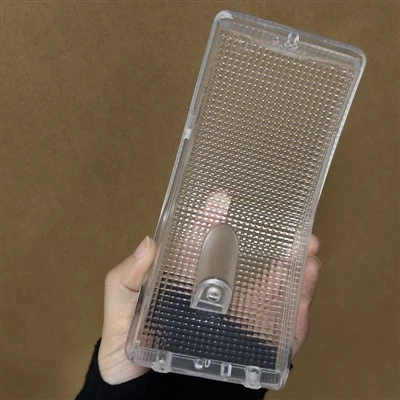
PC and PC/ABS: high impact strength and (for PC) optical clarity - suited to transparent parts and structural components.
PP: good chemical resistance and low cost - widely used in home appliances and automotive functional parts.
Nylon (PA6 / PA66): high strength, wear resistance, and self-lubrication - suitable for gears, bearings, and engineering structures.
TPU: high elasticity and abrasion resistance - ideal for flexible parts and seals.
Glass-fiber reinforced or high-temperature resins (PPS, PEI, PEEK): supported on a project basis. These materials are abrasive or require very high melt temperatures, which significantly reduces aluminum-mold life - typically a few hundred shots rather than several thousand. We confirm feasibility and expected mold life during DFM review.
Material Comparison
|
Material |
Tensile Strength (MPa) |
Heat Deflection Temp at 1.82 MPa (°C) |
Typical Industries |
|
ABS |
40–50 |
85–100 |
Consumer electronics, automotive |
|
PC |
60–70 |
125–135 |
Transparent housings, structural |
|
Nylon PA66 (unfilled) |
70–85 |
70–80 |
Gears, engineering parts |
|
TPU |
30–55 |
Not typically reported (Shore A/D used) |
Flexible parts, seals |
HDT values are for unfilled grades at 1.82 MPa per ISO 75. PA66 HDT increases substantially with glass-fiber reinforcement (typical PA66-GF30 reaches 240–250 °C). TPU softness is normally specified by Shore hardness rather than HDT.
Bridge tooling allows low-cost material switching and fast validation - multiple resins can often be tested with the same aluminum mold (within the mold's life and processing window).
Process Walkthrough
Our bridge-tooling process is transparent, efficient, and production-oriented:
Step 1 - DFM review:
comprehensive Design-for-Manufacturability analysis covering wall thickness, draft angles, gate locations, and shrinkage. Feedback within 1–2 working days.
01
Step 2 - Aluminum mold machining:
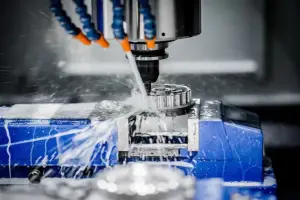
high-precision CNC machining of aerospace-grade aluminum. Mold machining typically takes 10–15 working days.
02
Step 3 - First-article inspection:
T1 samples produced and inspected on CMM. Detailed FAI report provided.
03
Step 4 - Low-volume production:
stable production from 50 to 5,000 shots according to your requirements.
04
Step 5 - Quality report & delivery:
full dimensional reports, material certifications, and surface inspection data.
End-to-end timing from DFM confirmation to first samples is typically 3–4 weeks; production-volume delivery follows on a per-batch schedule.
05
Process Comparison - Bridge Tooling vs Alternatives
|
Aspect |
Bridge Tooling (Aluminum Injection) |
3D Printing (SLA / FDM) |
Urethane Casting |
Full Steel Tooling |
|
Cost per part |
Medium |
Low (very low volume) |
Medium |
Lowest (at scale) |
|
Tooling cost |
Low (aluminum) |
None |
Low |
Very high |
|
Economic volume |
50–5,000 parts |
1–50 parts |
1–300 parts |
10,000+ parts |
|
Surface quality |
Excellent (near production) |
Fair |
Good |
Best |
|
Material authenticity |
True engineering plastics |
Limited |
Close but different |
True engineering plastics |
|
Lead time |
3–4 weeks |
3–7 days |
1–2 weeks |
8–14 weeks |
Bridge tooling delivers the best overall value in the 50–5,000 piece range, particularly when real material properties and production-level surface finish are critical.
FAQ
Hot Tags: bridge tooling plastics, China bridge tooling plastics manufacturers, suppliers, factory, Bridge Tooling Plastics, Color Matched Plastic Parts, Master Pattern Making, Medical Device Casting, rapid plastic prototyping, Textured Plastic Prototypes