
A product manager in the Netherlands spent €34,000 on an injection mold for a charger housing, then watched it sit idle for seven weeks. The rapid prototyping solutions she had bought delivered a flawless resin sample in nine days. What nobody checked: the sample carried 3.6 mm walls where the molded part would run 1.8 mm, and three side walls sat at 0.5° of draft.
That is the difficulty with a part headed for 10,000 units. The prototype is not a preview of the product, it is a rehearsal of the production process, and when the rehearsal is wrong the mold is what finds out.
Most rapid prototyping solutions are sold on turnaround time. For a part that has to reach 10,000 units, choosing among rapid prototyping solutions is really a question about a production process you have not committed to yet.
What The Sample Has To Lock Down Before Anyone Signs It
Three things get expensive when they are wrong, and all three can be settled cheaply while the part is still a sample, whichever provider of rapid prototyping solutions you use.
Material grade gets decided early, often without much thought. It is the most common place where rapid prototyping solutions let a project down. A polypropylene part molded at 1.8 mm walls behaves nothing like the same geometry cut from nylon, and if your test is about flex or chemical exposure, the sample has to come from the same material family as production.
Then the dimensional question. Mark the dimensions assembly actually touches and hold those. The rest can drift. Chasing every callout triples the inspection bill and buys you nothing.
Finishing is the one people forget. Anodising, powder coating and laser marking all add or remove material. A bracket measuring 40.00 mm in bare aluminium will not measure 40.00 mm after anodising.
The Production Gap Your Quote Does Not Show
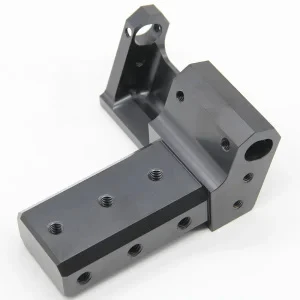
An automation integrator in Bavaria ordered 900 machined aluminium brackets, then won a contract taking the same part to 9,000 a year. Their production quote came back only 12% cheaper per unit, which surprised everybody.
Material was around 18% of the part cost. Cycle time was most of the rest, and cycle time does not fall because you ordered more of the same machined part.
A real step change meant changing process, not quantity. Die casting would have cut the unit price by more than half, but it changes the part - draft, radii, wall thickness - and that review burns engineering weeks before a single piece ships. This is the part of rapid prototyping solutions that capability pages never mention.
The saving from ordering more is linear. The saving from changing process is large, and it arrives with a design change attached.
Where The Process Switch Actually Happens
Three bands, and they are rough on purpose. Most comparisons of rapid prototyping solutions skip them and jump to a price table, which is how buyers end up paying twice.
Under 50 parts, 3D printing or CNC machining wins on everything except unit price, and this is where you should be spending, not saving. Between 50 and 500 pieces, vacuum casting off a silicone mold is the cheapest route to something that looks and feels molded; the tooling is soft, so design changes stay affordable. Past 500 pieces the arithmetic turns, and aluminium bridge tooling or a steel mold starts to pay back.
The switch point is not a quantity. If a mold costs $30,000 and each molded part saves $4 against machining, you break even at 7,500 pieces, so at 10,000 units it pays. That assumes a frozen design, and a design still 30% likely to change is not frozen. The volume line and the design-freeze line rarely cross in the same month. When you shortlist rapid prototyping solutions at this volume, do not ask which process is cheapest today. Ask which one you can still change in three months.
What Your Supplier Owes You Before You Scale
Providers of rapid prototyping solutions differ widely here, so ask before you release tooling - not for an audit, but because it is the only record you will ever have of what the sample actually was.
You want a dimensional report with the measurement method named, a first article inspection on the first parts off the new process, material certificates traced to a heat number, and a written change log of everything that moved between sample and released drawing.
If the sample ran in-house and the production parts ran somewhere else, get that in writing too. It is the most common reason a part passes the sample and fails the audit.
Quick answers on rapid prototyping solutions
Can I make 10,000 parts by CNC machining instead of a mold? Yes, and for some geometries it is the right call. If the part is simple, the material is expensive, or the design is still moving, machining 10,000 pieces avoids a $30,000 bet. Unit price is higher, but your downside is capped.
How many prototypes do I need before cutting a mold? Usually two rounds. One to prove the geometry, one in a production-family material to prove the process. A third is common when the part has a living hinge or a sealing surface.
What happens to my tolerances at volume? They get worse, then they get controlled. A machined sample holds ±0.05 mm without effort. A molded part starts near the middle of its band and drifts as the tool wears. What matters is whether the drift stays inside what assembly can absorb.
How long does the whole route take? Six to ten weeks if the design is frozen and the tool is simple. Twelve to eighteen if the first mold reveals a geometry problem. The difference is whether the sample stage was done properly.
Do I need a new sample if I change process? Yes. A sample in a different process validates a different thing. Cutting that corner is how the €34,000 mold in the opening paragraph ended up sitting idle. The rapid prototyping solutions that scale are the ones honest about this early.
Send The Drawing And The Annual Volume
If you have a part heading for 10,000 units and you are not sure which process should carry it, send the drawing and the annual volume together. Volume changes the answer more than geometry does. Reach our engineering team through our inquiry form, and if you want the processes side by side first, our rapid prototyping overview covers CNC, vacuum casting and metal printing in one place. Any of our rapid prototyping solutions can be quoted from that same drawing.