

A medical device buyer in Pennsylvania emailed me about a PEEK part that failed inspection. His company machined a surgical instrument housing, the drawing called for a 0.05mm tolerance, and the first batch of 200 units came back with a third of the parts out of spec. The shop blamed the material, and the buyer blamed the shop. I looked at the process, and the real problem was stress. PEEK holds its dimensions fine when it is cut correctly, but the material moves after machining unless the residual stress is handled. A peek cnc machining order works when three things are right: the tolerance strategy, the tooling, and the cost model. This guide walks through those three, starting with the one that ruined his first batch.
Tolerances on PEEK are about heat and stress, not just the machine
PEEK expands about five to ten times more than aluminum when the temperature changes, and that changes how you read a tolerance callout. A part that measures 25.00mm on the machine can read 25.08mm an hour later, because the heat from cutting leaves stress in the part and the material relaxes after it cools. The Pennsylvania housing had this exact failure, and the fix was a stress relief step before the finish pass. I ask every peek cnc machining shop how they handle annealing and where they measure the part, because a shop that measures straight off the spindle is measuring the wrong number. The safe approach is to hold general tolerances at plus or minus 0.05mm, run the finish pass after the part stabilizes, and only push tighter where the design truly needs it. Most buyers shop the price first, and the tolerance failure comes later, so the peek cnc machining quote should include the stress relief step in the process, not as an extra.
Tooling decides whether PEEK cuts clean or burns
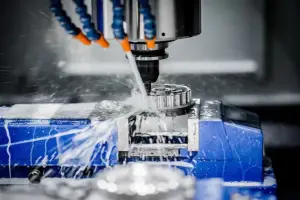
PEEK cuts well with the right tool, and poorly with the wrong one. The heat from cutting is the enemy, because unfilled PEEK softens and smears while filled grades wear the tool fast. I had a client machining 30 percent glass filled PEEK with standard carbide tooling, and the inserts wore out every twenty parts, the edges dulled, the finish turned rough, and the quote went up with every reorder. The switch to polycrystalline diamond tooling took the tool life from twenty parts to over five hundred, and the surface finish improved at the same time. Sharp edges, high spindle speed, and the right coolant strategy are the difference between a clean PEEK part and a burned one. For unfilled PEEK, compressed air keeps the cut cool without moisture. For glass and carbon filled grades, a water soluble coolant handles the heat. A peek cnc machining supplier who talks about tooling before price is a supplier who has actually run the material.
Cost is the number that surprises most buyers
PEEK is an expensive material, and a peek cnc machining job costs more than metal because the process is slower and the stock waste is higher. PEEK rod stock runs far above the cost of aluminum, and a finished part can come in at several times the price of the same part in 6061. One client compared quotes on a valve body and saw the PEEK version at eighty five dollars against twelve dollars for aluminum, and the reaction was shock until we walked through what the material does. The premium buys high temperature resistance, chemical resistance, and strength per gram, and the part only earns that premium when it replaces a metal part in a hot, chemical, or medical application. The cost question to ask is not why PEEK costs more. It is which feature of the application justifies the material, and whether a lower cost engineering plastic does the job.
Material grade is a decision, not a default
PEEK is not one material, and the grade changes the machining behavior and the part performance. Unfilled PEEK is the general purpose grade, and it is the easiest to machine. Thirty percent glass filled PEEK adds stiffness and wear resistance, and it eats tooling faster. Carbon filled PEEK adds conductivity and self lubrication, and it is the grade for semiconductor and bearing parts. A client once ordered unfilled PEEK for a seal that ran in a hot chemical line, the part softened under the temperature, and the fix was a switch to a glass filled grade with a slightly looser tolerance. The material choice has to come before the peek cnc machining quote, because each grade machines differently and the price moves with it. Send the application details, not just the material name, and the peek cnc machining quote will actually match the part.
How I screen a peek cnc machining supplier
I screen a peek cnc machining shop the way I screen any critical part supplier. I ask for the material certificate and the grade, and I ask whether the stock is virgin or recycled, because the price difference shows up in the part. I ask how they handle stress relief and where they measure the part. I ask for the tooling they run, because carbide tooling on filled PEEK tells me the shop has not done the math. I ask for the tolerance history on past PEEK jobs, not the marketing page. I ask what happens to a part that fails inspection at the finish stage, and whether the scrap is on the shop or on the buyer. I ask for samples before the order, and I check the samples for dimensional stability after a day, not straight off the machine. The suppliers who answer those questions in one email are the ones worth building a production line on.
Quick answers on peek cnc machining
What tolerance can PEEK hold? Plus or minus 0.05mm is a practical general tolerance, and tighter callouts need stress relief and a stable measurement process. Why do my PEEK parts measure differently after cutting? Residual stress from cutting relaxes as the part cools, so the part should stabilize before the finish pass. What tooling is best for PEEK? Polycrystalline diamond tooling lasts far longer than carbide on filled grades. Does PEEK cost more than aluminum to machine? Yes, the material and the slower process put the part at several times the cost, and the premium is only worth it in hot, chemical, or medical applications. Which PEEK grade should I use? Unfilled for general parts, glass filled for stiffness, carbon filled for conductivity and wear. Is PEEK medical grade? Yes, medical grades carry USP Class VI and ISO 10993 compliance, and the certificate should come with the material.
Send us the application, get a peek cnc machining quote that fits
A peek cnc machining project works when the tolerance, the tooling, and the grade match the application, and that starts with the details you send us. Tell us the operating temperature, the chemical exposure, the loads, and the critical dimensions, and our engineers will recommend the grade, the tolerance strategy, and the finishing that fit the part. Our CNC machining services cover engineering plastics alongside metal, and our medical parts manufacturing line runs PEEK to the material certificates and cleanliness the application needs. Send your project details through our inquiry form, and we will quote the peek cnc machining job that matches your part instead of the one that matches your budget first.