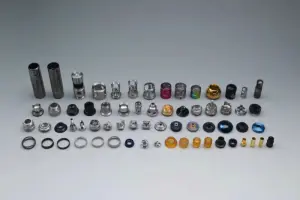

Custom mjf 3d printing enters most projects through a calendar problem, not a geometry problem, and the order that taught me this came from a consumer electronics customer who needed twenty functional test housings for a drone accessory line; the parts had to survive two hundred insertion cycles, hold a thread insert without cracking, and land on the bench inside three days. Our first instinct was CNC, but the design carried internal channels a two-millimeter end mill could not reach, and a metal version would have doubled the weight of the finished assembly. That order is how I usually explain what mjf 3d printing can do: it turned a design that was impossible to machine into twenty usable housings in seventy-two hours, on a material budget that made the project manager check the invoice twice.
What MJF actually is
MJF 3D printing is not a laser process, which is the first thing most engineers need to unlearn. An HP machine spreads a thin layer of nylon powder across the build bed, then two printheads sweep over it; one deposits a fusing agent where the part should solidify, the other deposits a detailing agent at the edges of every feature to keep those boundaries crisp, and an infrared lamp passes over the layer to melt only the treated areas. The bed indexes down, the sequence repeats, and the entire build volume fuses at once rather than point by point, which is why the process fills a full tray of parts in roughly the same time it takes to fill one. That full-bed efficiency is the single biggest reason mjf 3d printing undercuts laser sintering on small parts, and it is also why the technology rewards density: a tray packed with fifty brackets prints almost as fast as a tray holding five.
Where MJF fits
The honest answer is that mjf 3d printing earns its place in a narrow but crowded band of work. Parts that sit between the size of a matchbox and a loaf of bread, in quantities from a handful of prototypes to a few thousand units, with internal features that milling cannot reach and tolerances that do not demand metal, are the natural territory; the absence of support structures means channels, undercuts, and lattice features come out of the machine in their final orientation, and the speed of a full-bed fusion run means twenty small parts cost nearly the same per hour as one large part. When a customer tells me they need fifty jigs for a production line, or a hundred connector housings for a field trial, or a functional prototype that has to survive real use rather than sit on a shelf, mjf 3d printing is the first conversation I start. The economics follow the same logic: for a dense tray of small nylon parts, mjf 3d printing is often the cheapest way to hold a production tolerance without tooling, which is a sentence few other processes can honestly finish.
Where MJF falls short
The same physics that make the process fast set its limits, and a factory that does not tell you both sides is doing you a disservice. Every part from mjf 3d printing carries the grain of the powder-bed layer, so a visible matte texture is normal and a cosmetic class-A surface is not something you get out of the machine; the accuracy spec of plus or minus two-tenths of a millimeter at plus or minus three-tenths of a percent is excellent for nylon but meaningless for a shaft that has to run against a bearing seat; and the material itself, PA12 and its compounds, remains a thermoplastic, so sustained heat, constant high load, or aggressive chemicals will eventually find its limits. Large parts are another constraint, because the build volume and the economics both favor density, and a single big housing wastes the very throughput that makes the process cheap; when a customer brings me a part that belongs in metal, or a wall thicker than it needs to be, or a tolerance that no polymer can hold, the useful answer is often to machine it instead. That honesty is why a factory that offers both CNC and mjf 3d printing is easier to work with than one that sells a single process, because the right answer for your part may not be the process you came in asking about.
The materials that matter
Material choice does more work in mjf 3d printing than most buyers realize. Standard PA12 is the workhorse, with a good balance of stiffness, impact resistance, and dimensional stability, which is why it shows up in housings, brackets, and ducting; PA12 GB adds glass beads that stiffen the part and stabilize its dimensions, at the cost of some ductility, which makes it the right call for structural mounts and anything that has to hold its shape under load; PA11 brings more toughness and flexibility for parts that snap, clip, or flex repeatedly, like cable clips and living-hinge prototypes. The option most people do not expect is color: HP's color platform and post-print dyeing let a factory deliver mjf 3d printing in black, gray, red, blue, and custom tones, which is why the colorful MJF parts customers ask about are not a gimmick but a way to skip painting on small runs. Nylon also absorbs moisture, which shifts dimensions slightly, so a shop that dries powder and conditions parts before measuring them delivers mjf 3d printing closer to the drawing than one that skips the step.
From file to finished parts
The path from a CAD file to parts in your hand is shorter than the process sheet suggests. You send the design, our engineers review it for wall thickness, clearances, and orientation, and we flag features that will not print well before anything goes near a machine; the material and technology selection follows, where we decide whether PA12, PA12 GB, or PA11 matches the application; the print itself runs on one of the HP machines in the shop, with layer thickness down to fifteen to twenty microns and a minimum wall of sixty microns; and finishing covers bead blasting, dyeing, sealing, and any assembly before the parts ship. The numbers that matter for planning are the MOQ of a single piece, a typical print window of one to five business days, and a delivery time of two to four days, which is why we quote mjf 3d printing jobs on the calendar, not on a promise.
What to ask a factory before ordering
The questions that separate a real mjf 3d printing partner from a reseller are all about evidence. Ask whether the shop runs its own HP machines, because a reseller cannot control density, packing, or the detailing-agent balance that decides your tolerance; ask for the dimensional report on the first article and compare it with the drawing, ask what the surface finish spec is before and after blasting, and ask whether the dye on a colored part is tested for fade before it ships. At Multi-Wins we run more than twenty HP MJF printers, support colorful MJF printing in house, and hold ISO 9001, ROHS, and REACH compliance across the shop, so if you are weighing mjf 3d printing against CNC or injection molding, send your file to our additive manufacturing service page and get a quotation through our contact page; the design review is free, and the first article report comes with the order.