
Industrial 3D printing services have a strange problem. Everyone knows they exist, but most engineers still cannot tell you when to use them. A product designer in Munich sent us a valve manifold last spring that had five internal passages no end mill could reach, and we printed it as one piece. Three weeks later the same engineer asked about two thousand brackets, and the answer flipped completely. That is what the 3D printing vs CNC question really is: not which technology is better, but which one fits the part you are holding right now. A good industrial 3D printing services partner should help you split that call, not just sell you print hours.
Look inside the part first
The fastest test is geometry. Deep internal channels, lattice structures, conformal cooling lines, undercuts a tool cannot touch: machining either cannot make these or has to build them from expensive assemblies. That Munich manifold was a textbook case. Wire EDM for the passages, brazed joints, a week of fixturing, or one metal print job that came out in a single build. When the inside of the part is the problem, this is where industrial 3D printing services earn their keep, and the file alone tells the story.
Quantity flips the math
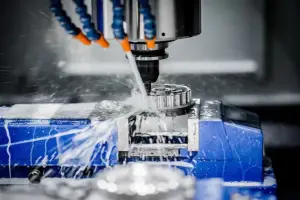
Volume changes everything. One prototype, or ten pieces, justifies a print run even for a simple shape. At two thousand pieces the numbers flip: a CNC mill with a fixture holds tolerance, repeats the part, and runs unattended overnight, while a print bed builds one layer at a time. The breakeven point depends on material and size, but as a rough rule, anything above a few hundred parts starts to look like machining territory unless the geometry is genuinely exotic. Ask your industrial 3D printing services what their breakeven quantity is; a straight answer tells you they have thought about your cost, not their margin.
Material behaves differently in each process
A nylon SLS part and a stainless 316L SLM part are different products with different price tags, and neither behaves like a machined billet. Machining gives you wrought material with known grain and fatigue behavior. Printing gives you near-net geometry from powder that has to be sieved and often hot isostatically pressed before it reaches full density. For a structural bracket in 7075 aluminum, start with machining. For a titanium lattice that has to bond with bone, printing is the only honest option. A serious industrial 3D printing services quote states the powder grade, the layer thickness, and the heat treatment, because those three numbers decide whether the part survives its job. Listen to how the industrial 3D printing services team talks about grain structure and porosity; that conversation tells you who understands the material science.
Tolerance is the honest separator
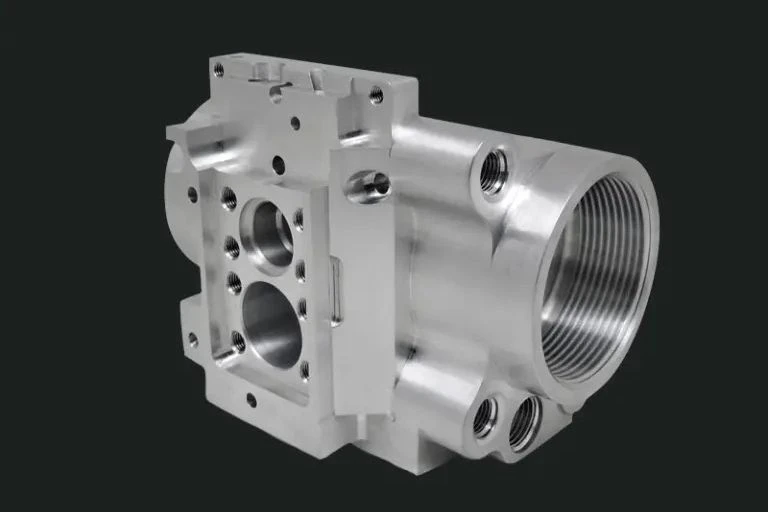
Printed metal parts come off the machine at roughly plus or minus 0.1mm. CNC milling holds 0.01mm without drama. If the drawing carries a real tolerance on a mating surface, the printed part almost certainly needs a secondary machining step. That is why most industrial 3D printing services quote the print and the finish cut together, instead of pretending the print alone is the whole job.
Prototype first, decide later
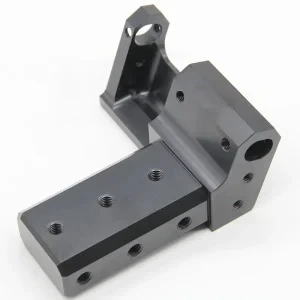
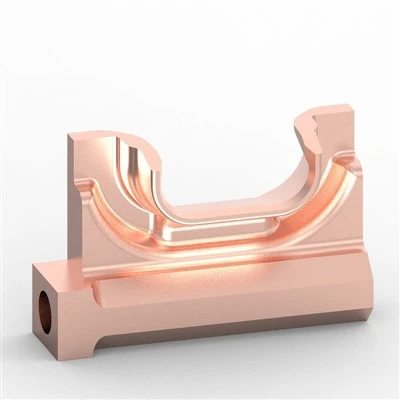
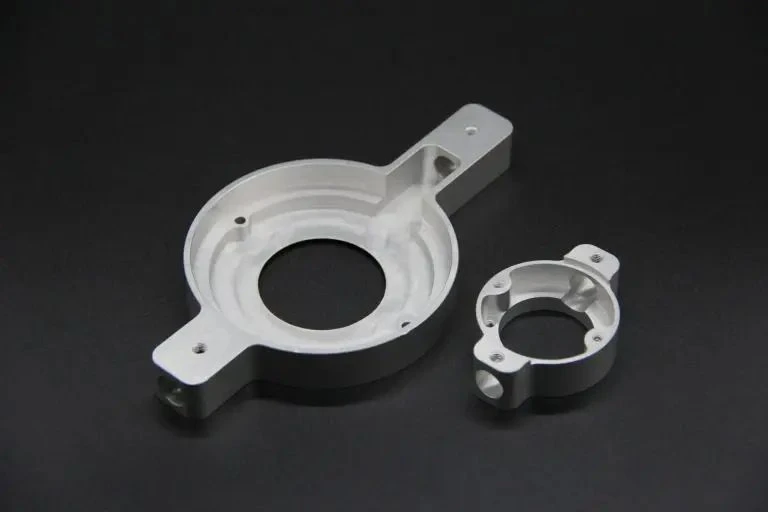
The cheapest way to answer the 3D vs CNC question is to hold a part in your hand. Print one piece, check the fit, the weight, the feel, and the assembly. If the design stabilizes and the quantity climbs, hand the same file to a mill. An industrial 3D printing services shop that also runs mills will print your prototype without pushing you toward a production run, because the same floor stands to win the machining order later. A shop that runs both processes moves the project between them without you re-sourcing the work, which is exactly the setup at Multi-Wins. Its additive manufacturing and CNC machining services pages walk through both routes in detail.
The hybrid route most people miss
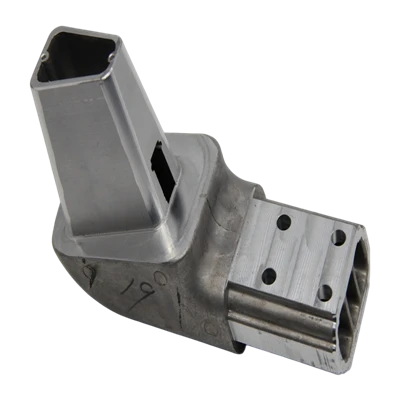
The best answer is often neither pure printing nor pure milling. Print the complex core, machine the mounting faces, thread the holes. Aerospace suppliers do this constantly: additively build the internal lattice, then CNC finish the outer envelope and the bolt pattern. The result beats both single-process routes on cost and quality. Not every industrial 3D printing services runs mills in-house, but the ones that do can price the hybrid honestly. The best of them will even point out when you should not print the whole part, because a hybrid saves you money and they would rather keep you as a customer than win one quote.
So which one fits your part?
Start with the drawing, not the process. Complex internal geometry, low quantity, exotic material, or a part you cannot machine at all: printing. Simple geometry, high volume, tight tolerances, large envelope: machining. In between, ask the supplier to price both routes and the hybrid, then decide with real numbers instead of opinions. When in doubt, ask the industrial 3D printing services shop to quote the same file both ways. Multi-Wins runs metal printing and CNC on the same floor, so one inquiry gets you all three options. Start at the Multi-Wins homepage and send the file; an industrial 3D printing services quote and a CNC quote come back side by side, and the hybrid option with them. That is the entire trick: compare industrial 3D printing services and machining on the same part, at the same time, and let the numbers pick. With the part in front of you and the numbers on the table, the decision stops being a debate.