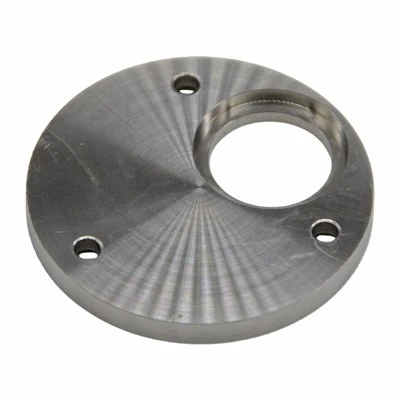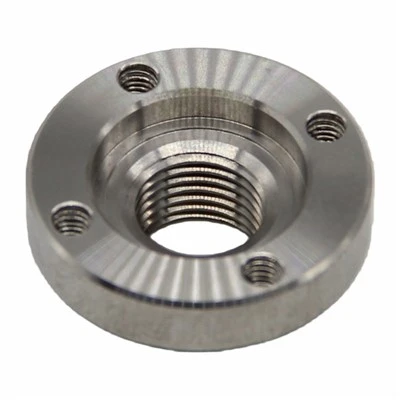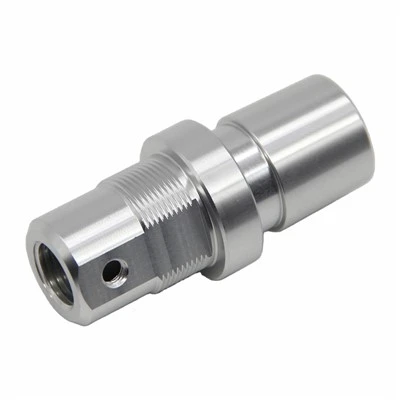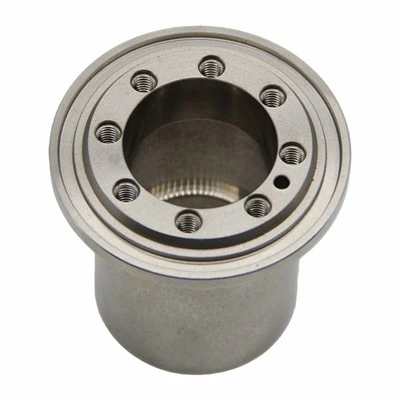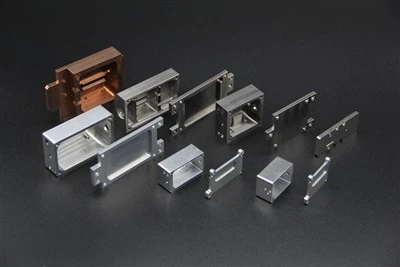
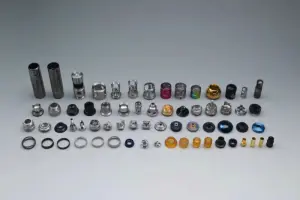

For companies sourcing non-standard metal parts, plastic components, or complex mechanical parts, custom cnc machining is rarely just about sending a drawing to a shop and getting a finished component back. Once a project involves tight tolerances, special materials, multi-sided machining, complex geometry, or repeat production, the supplier's engineering judgment, equipment, inspection process, and production consistency all start to affect the real cost of the job.
That is what separates custom machining from standard-part purchasing. Standard components can usually be ordered by part number. Custom parts are different. The supplier has to understand the drawing, the 3D model, the application, and which dimensions actually control fit, sealing, motion, alignment, or appearance before deciding how the part should be made.
Multi-Wins, based in Shenzhen, presents CNC turning, CNC milling, 5-axis CNC machining, rapid prototyping, metal 3D printing, vacuum casting, injection molding, finishing, and assembly as part of its on-demand manufacturing capability. Its public information lists more than 250 pieces of equipment, including over 150 CNC turning machines, more than 80 3- and 4-axis machining centers, and over 10 5-axis CNC machines. The company also states that it operates under ISO 9001:2015 and IATF 16949 quality systems.
For buyers looking for custom cnc machining services, those numbers are useful, but the more important question is how well the available equipment matches the actual part.
Custom CNC Machining Starts Before the Machine Runs
Many machining problems are already built into the design before the first tool touches the material.
A deep, narrow cavity may require a long-reach cutter with reduced rigidity. Thin walls can move under cutting and clamping forces. Sharp internal corners may not be practical with standard milling tools. Some tolerances may be much tighter than the function actually requires.
This is why mature custom cnc machining usually begins with drawing review and DFM rather than immediate production.
Multi-Wins places design review at the start of its published quality process and also presents DFM support, engineering review, and material recommendations as part of its service.
That early discussion matters. A capable custom machining supplier should do more than follow a drawing literally. It should be able to identify where the design creates unnecessary manufacturing difficulty and where a tight requirement is genuinely important.
If a non-critical feature can move from ±0.005 mm to ±0.02 mm without affecting function, that change may reduce machining time and inspection cost. On the other hand, a locating face or bearing seat may need to remain tightly controlled because the whole assembly depends on it.
What Custom CNC Machining Services Actually Include
custom cnc machining services usually involve more than one machining process.
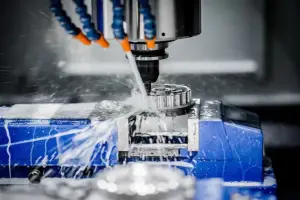
A part may begin on a CNC lathe to create its main rotational features, then move to a machining center for holes, pockets, flats, or side features. More complex components may require 4-axis or 5-axis machining to reduce repeated setups.
Multi-Wins lists CNC turning, 3- and 4-axis milling, and 5-axis CNC machining among its core capabilities. Its published material range includes aluminum, stainless steel, steel, brass, copper, titanium, Inconel, Invar, Kovar, and a variety of engineering plastics.
The value of that process range is not that every project should use the most advanced machine available. The value is being able to choose the right route for the geometry.
A simple part does not become better just because it was made on a 5-axis machine. But if a component has multiple complex features on different sides, with tight relationships between those features, reducing the number of setups can have a real effect on accuracy and process stability.
Why Complex Parts Benefit From Multi-Axis Machining
Every time a part is removed, repositioned, and located again, another setup error can enter the process.
For straightforward work, that may not matter. In more complex custom cnc machining projects, especially when several holes, surfaces, and datums have tight positional relationships, repeated setups can make tolerance control harder.
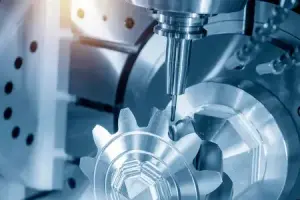
Multi-Wins lists more than 10 5-axis CNC machines and positions them for complicated and intricate geometries. Its 3- and 4-axis machining centers are also used for complex shapes and higher-precision work.
The real advantage of 5-axis machining is not simply that the machine moves in more directions. It is that more features can often be completed in one setup and within one coordinate system.
That can be particularly useful in custom cnc fabrication, where the geometry is often too complex to treat as a simple two-dimensional machining job.
Tight Tolerances Should Be Functional, Not Decorative
Multi-Wins publishes machining capability down to approximately ±0.005 mm for selected custom cnc machining services.
That figure is useful, but it can also lead to a common mistake: assuming that if the supplier can hold ±0.005 mm, every dimension should be drawn that way.
In reality, tighter tolerances usually mean more machining time, more measurement, greater tooling demands, and higher scrap risk.
Good custom machining separates dimensions by function. Features that control fit, alignment, motion, sealing, or assembly may justify tighter tolerances. General dimensions often do not.
This is not about lowering quality. It is about putting precision where precision actually matters.
Material Experience Matters More Than a Long Material List
Many CNC suppliers publish long lists of machinable materials, but "can machine" and "has a stable process for" are not the same thing.
Aluminum is generally easy to cut, but thin-wall and high-precision aluminum parts can still distort. Stainless steel is more prone to work hardening. Titanium and Inconel place much higher demands on heat control and tool life. Engineering plastics bring their own issues with heat, clamping, and dimensional stability.
Multi-Wins lists materials including aluminum, stainless steel, steel, brass, copper, titanium, Inconel, Invar, Kovar, and engineering plastics. Published aluminum grades include 6061-T6, 6082, 5052, 7075-T651, and 2014.
For a custom cnc machining project, the better question is not simply, "Can you machine 7075?"
It is, "Have you machined 7075 parts with geometry and tolerance requirements similar to ours?"
The same material can behave very differently in a thick structural part and a thin, highly detailed component.
Prototype Work and Production Work Are Not the Same
A good sample proves that a part can be made.
Production proves whether the process is stable.
As quantities increase, tool wear, fixture repeatability, material variation, machine condition, and inspection discipline all start to matter more. This is where custom cnc machining services move beyond prototype work.
Multi-Wins describes its service range as covering rapid prototyping through high-volume production. Its published quality process includes First Article Inspection, in-process inspection, and final verification. The company states that critical dimensions are checked on the first article before production continues, with further inspection during machining and again before shipment.
For repeat custom machining, that process is more meaningful than a single "best tolerance" figure.
A supplier may be able to hit a dimension once. The harder question is whether it can still hit it on the 500th part.
Why First Article Inspection Matters
FAI, or First Article Inspection, is especially valuable in custom work because the part itself is often unique.
The first article is not just a sample. It is a check of the machining program, tooling, fixture strategy, material, and inspection method before the full batch moves forward.
Multi-Wins includes FAI in its published quality workflow and states that critical dimensions and tolerances are reviewed before continued production.
This is particularly relevant in custom cnc fabrication, where there is no off-the-shelf production standard to fall back on.
If a drawing interpretation or process issue is found during the first article, the correction is usually manageable. If the same issue is found after 500 pieces are complete, the cost is very different.
Inspection Is What Turns Precision Into Evidence
There is a big difference between saying a factory can hold ±0.005 mm and being able to show inspection data that proves it.
Simple dimensions can be checked with standard hand tools. Complex relationships, geometric tolerances, and 3D features may require more advanced inspection methods.
Multi-Wins refers to hand metrology, laser inspection, CMM inspection, 3D scanning, and material testing in its published manufacturing and quality information.
That matters when sourcing custom cnc machining services.
Machining capability should always be evaluated together with measurement capability. Precision that cannot be verified is difficult to manage in a real production environment.
Custom CNC Fabrication Can Involve More Than Subtractive Machining
Not every custom cnc fabrication project should be machined entirely from a solid billet.
If the geometry is extremely complex, the material removal is excessive, or the project is still in an early development stage, other manufacturing methods may be more practical.
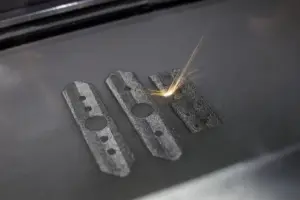
Multi-Wins also provides metal 3D printing, SLM/DMLS, MJF, SLS, SLA, FDM, DLP, rapid tooling, vacuum casting, injection molding, finishing, and assembly in addition to CNC machining.
That gives product-development teams more options.
An early prototype may be 3D printed to check fit. Functional parts may then move to custom cnc machining. Once the design is stable and the volume increases, molding or another production method may make more sense.
The important point is that process selection should follow the part and the volume, not the other way around.
Surface Finishing Should Be Considered Before Machining Ends
Many CNC parts still need anodizing, plating, passivation, polishing, powder coating, or another finishing process after machining.
Those steps can affect dimensions.
Anodizing adds surface thickness. Plating can change fits. Polishing can soften edges or alter local geometry. Precision holes, threads, sealing faces, and mating surfaces may need allowances or masking.
Multi-Wins presents finishing and assembly as part of its manufacturing capability and lists multiple post-processing options.
For custom machining, the practical advantage is that finishing can be considered during process planning instead of being treated as a separate problem after the part is already complete.
Why Custom CNC Machining Works Well for Prototypes and Lower Volumes
One of the biggest advantages of custom cnc machining is that it does not require the upfront tooling investment associated with injection molding.
For 10 parts, 50 parts, or a few hundred parts, CNC machining can be much more flexible. If the design changes, the program or process can often be updated without building a new mold.
That is why custom cnc machining remains important in prototypes, engineering validation, low-volume production, and complex industrial parts.
Multi-Wins states that it supports work from single prototypes through full-scale production, with machining available across metals and plastics.
At very high volumes, CNC may not always be the lowest-cost option. A mature supplier should be able to recognize when another manufacturing method becomes more economical.
Why Custom Machining Quotes Can Vary So Much
It is common to send the same drawing to several factories and receive prices that differ by 20, 30, or even more percent.
That does not always mean one supplier is simply taking more profit.
Machine choice, setup count, fixture design, tooling, raw material, inspection frequency, finishing, and batch size can all affect the final price.
A part that needs five separate setups on conventional equipment may be completed in two setups with 5-axis custom cnc machining. The hourly machine rate may be higher, but the total manufacturing cost may still be lower.
The same applies to inspection. A part requiring full CMM inspection will not cost the same as a part checked with standard gauges on a sampling basis.
For custom machining, price comparisons are only meaningful when the material condition, tolerance requirements, inspection level, and finishing requirements are aligned.
Otherwise, the quotes may not be describing the same manufacturing plan at all.
From CAD File to Finished Part, Clear Information Helps
Multi-Wins describes a CNC workflow that begins with CAD file submission, followed by confirmation of material and tolerance requirements, quotation, manufacturing, quality control, and delivery. Supported file formats include DWG, DXF, STP, STEP, IGES, OBJ, 3DM, and SAT.
For B2B buyers, a clear RFQ makes the whole process easier.
Whenever possible, send both a 3D model and a 2D drawing. The 3D file helps the manufacturer understand geometry. The 2D drawing is where tolerances, GD&T, material, surface roughness, and special notes are usually defined.
A STEP file with a message that says "Please quote" may be enough to start a conversation, but it usually does not contain all the information needed for reliable custom cnc machining services.
Different Industries Need Different Things From Custom CNC Machining Services
The priorities are not the same in every industry.
Medical equipment may care more about material control, finish, and traceability. Robotics may place more emphasis on weight, position, and concentricity. Automotive work often demands stronger production consistency. Semiconductor equipment may involve complicated geometry, close fits, and stricter process expectations.
Multi-Wins lists medical devices, robotics, electronics, automotive, and semiconductor applications among its CNC machining markets, while its broader company information also refers to aerospace and industrial projects.
When choosing custom cnc machining services, it is useful to know whether the supplier has already worked with similar parts and similar end-use requirements.
Industry experience does not automatically guarantee quality, but it often reduces the learning curve.
A Practical Way to Evaluate a Custom CNC Machining Supplier
The simplest test is a real part.
Send the 3D CAD file, 2D drawing, material, quantity, critical tolerances, finishing requirements, and application details. Then look at the response.
If the part is complex and the supplier comes back immediately with a final price and no technical questions, that should probably make you cautious.
An experienced custom cnc machining team will often ask which dimensions are critical, whether the material condition is fixed, whether a deep feature can be modified, how coating should affect final dimensions, whether FAI is required, and which dimensions need closer monitoring during production.
Those questions show that the supplier is thinking about how to make the part consistently, not just how to quote it.
Multi-Wins states that it has more than 20 years of manufacturing experience and more than 250 pieces of production equipment, with capabilities spanning CNC machining, rapid prototyping, additive manufacturing, finishing, and assembly.
For buyers looking for long-term custom machining, the value is not simply in making one batch. It is in being able to support the part as it moves from prototype to production.
In Custom CNC Machining, the Part Should Drive the Process
No supplier is automatically the best fit for every custom cnc machining services project.
A simple aluminum component may only need 3-axis milling. A shaft may be better suited to turning. A part with difficult features on several sides may need 5-axis machining. In some development projects, additive manufacturing or vacuum casting may be a better first step.
The best custom cnc machining supplier is therefore not the one with the longest machine list. It is the one whose equipment, engineering experience, material knowledge, and inspection process fit the actual part.
Multi-Wins currently combines CNC turning, milling, 5-axis machining, metal 3D printing, rapid prototyping, finishing, and assembly within its on-demand manufacturing system, supporting projects from single prototypes through production.
For companies sourcing custom cnc fabrication or ongoing custom cnc machining services, the best starting point is still a complete project package.
Material, quantity, tolerance, surface finish, application, and delivery requirements give the manufacturer enough information to build a realistic process plan. That is what turns a quotation into something useful.
Tags: Custom CNC Machining, Custom Machining, Custom CNC Machining Services, Custom CNC Fabrication, CNC Machining, 5-Axis CNC Machining, CNC Milling, CNC Turning, Precision Machining, Rapid Prototyping