
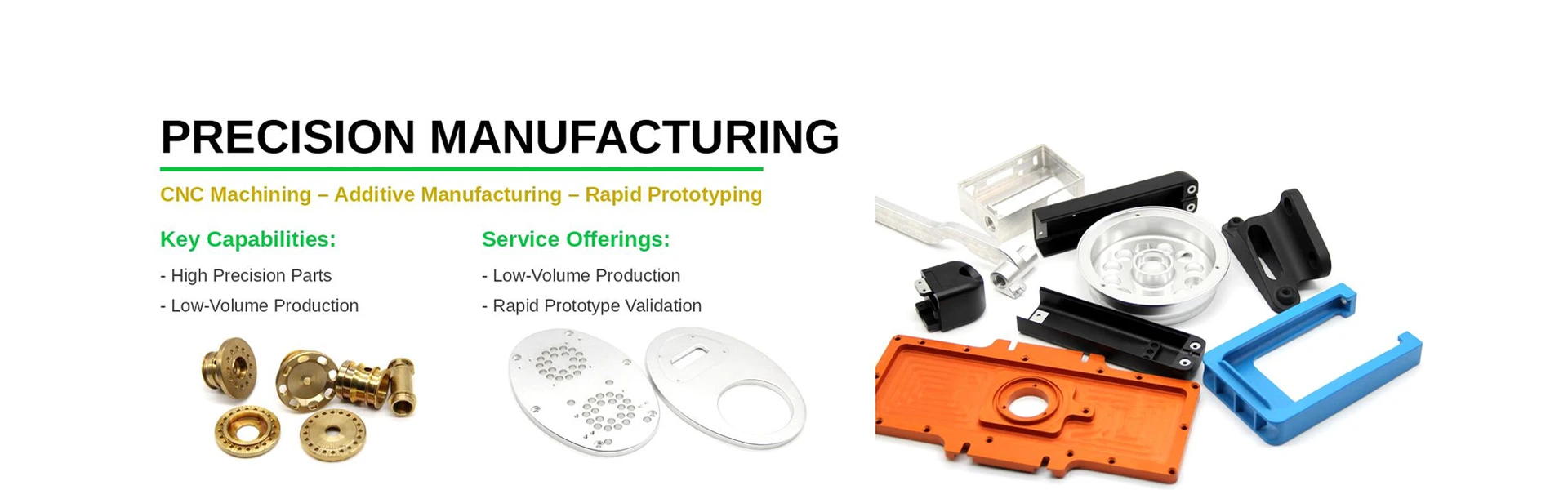
What Makes Aluminum the Go-To Material for EV Prototypes?
Weight remains one of the highest-leverage variables in electric vehicles. Every kilogram removed from the structure or power-electronics packaging improves range or allows a slightly smaller battery for the same range. Aluminum delivers a favorable strength-to-weight ratio, good thermal conductivity for heat-generating components, and solid corrosion resistance in most automotive environments. These properties let engineers build prototype parts that behave closer to the eventual production intent than many polymer or printed alternatives.
6061 vs 7075 vs 5052 - where each one fits
6061-T6 is the everyday choice. It machines cleanly, accepts anodizing well, and offers a balanced mix of strength, cost, and corrosion resistance. Most brackets, housings, and general structural prototypes start here.
7075-T6 provides noticeably higher strength and is selected when loads are higher or safety factors are tighter. It costs more and needs more attention during machining, but it is common for highly stressed mounts and certain enclosure features.
5052 is chosen less often for structural parts but appears where formability or specific corrosion performance is required, or when the part will later be bent or welded in addition to machining.
The decision between 6061 and 7075 is one of the most frequent material conversations in CNC machining for electric vehicle prototypes.
Why CNC Milling Beats Other Methods at the Prototype Stage
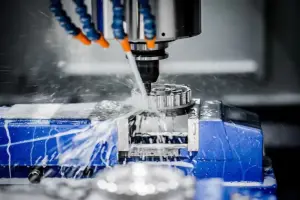
At the prototype stage the design is still moving. CNC milling requires no hard tooling. A geometry change is handled by updating the CAM program rather than cutting a new mold. That single fact compresses iteration cycles from weeks to days.
Accuracy and surface quality are high enough for real assembly and functional testing. Critical interfaces can be held to tolerances that allow motors, inverters, and battery modules to be mounted and run without constant shimming or rework. Surface finishes are suitable for sealing surfaces, bearing fits, and cosmetic areas that will be visible in investor or customer demonstrations.
CNC vs 3D printing vs die casting (prototype stage)
| Process | Speed for First Parts | Unit Cost (Low Qty) | Strength & Stiffness | Typical Quantity Fit |
|---|---|---|---|---|
| CNC Milling | Fast | Medium | High | 1– hundreds |
| 3D Printing | Very fast | Low–Medium | Lower / anisotropic | Concept & fit models |
| Die Casting | Slow (tooling) | High (until volume) | High | Thousands and above |
Printed parts are excellent for form-and-fit checks and complex internal geometry that is difficult to machine. They rarely match the isotropic strength and thermal performance of aluminum for load-bearing or heat-critical EV components. Die casting only becomes economical once the design is frozen and volumes justify the tooling investment. For the majority of functional EV prototype work, CNC remains the default.
Which EV Parts Are Usually CNC Machined from Aluminum?
Typical aluminum CNC components in EV prototypes include:
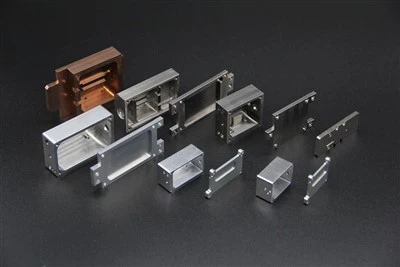
Battery enclosures and covers - Need stiffness, sealing surfaces, and accurate mounting features while keeping weight low.
Motor housings and end bells - Require precise bearing and alignment features plus good heat dissipation.
Cooling plates and cold plates - Channel geometry and flatness directly affect thermal performance.
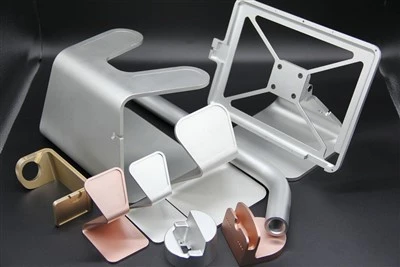
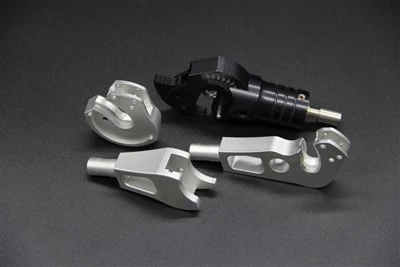
Structural brackets and mounts - Must hold position under vibration and crash loads during testing.
Charging-port housings and supports - Combine mechanical strength with packaging constraints.
Inverter and power-electronics housings - Demand thermal conductivity, EMI considerations, and accurate connector interfaces.
In each case the combination of speed, material performance, and dimensional control makes CNC the practical route for early vehicles.
Real Case: How Sunhingstones Handled an EV Prototype Project
A development team needed a set of aluminum structural and thermal parts for a rolling EV prototype on a compressed schedule. The design was still evolving, so hard tooling was not an option. Sunhingstones reviewed the models for manufacturability, recommended minor changes to wall thickness and internal radii to improve both stiffness during machining and final part stability, and processed the components in 6061 and 7075 as specified.
Critical interfaces were held to the tolerances required for assembly, first-article inspection was completed and approved, and the parts were delivered in time for the planned vehicle build. Subsequent small design updates were handled by revising tool paths rather than starting over. The same process discipline-material certification, dimensional verification, and clear communication-supported the transition from the initial prototype set into the following low-volume build.
How to Choose an EV Prototype CNC Machining Manufacturer
When evaluating an EV prototype CNC machining manufacturer or custom aluminum CNC milling parts factory, look for:
Appropriate machine capability (3-axis and 5-axis capacity matched to your part size and complexity)
Material traceability and certificates for the alloys you specify
Demonstrated tolerance capability on similar aluminum parts
Willingness and ability to run low quantities without forcing high minimums
Responsive technical communication and useful DFM feedback
A clear path from prototype quantities into later low-volume or wholesale aluminum CNC parts supplier production if the program continues
Suppliers who treat prototype work as a disciplined process rather than a quick one-off job reduce the risk of dimensional surprises when the vehicle moves from the lab to the test track.
Cost and Lead Time: What to Expect
Several factors drive the cost of aluminum CNC machined parts for EV prototypes:
Part size and volume of material to be removed
Number of setups and whether 5-axis work is required
Tolerance and surface-finish requirements
Alloy (7075 is typically more expensive to buy and machine than 6061)
Quantity and any secondary operations (anodizing, assembly, special packaging)
Prototype lead times commonly range from a few working days for simple brackets to two or three weeks for complex housings or multi-part sets, depending on material availability, finishing, and current shop load. Always confirm the schedule against your specific geometry and requirements.
FAQ
Why is aluminum used so much in EV prototypes?
It offers a strong combination of low weight, adequate strength, good thermal conductivity, and corrosion resistance, while remaining straightforward to machine in small quantities.
Is CNC machining better than 3D printing for EV prototypes?
For structural, thermal, or high-precision interfaces, yes. Printing is faster and cheaper for concept models and non-critical geometry.
Which aluminum grade is best for an EV battery enclosure?
6061 is the most common starting point. 7075 is used when higher strength is required. The final choice depends on load cases, weight targets, and cost.
How long does it take to get CNC machined EV prototype parts?
Simple parts can often be delivered in under two weeks. Complex housings or multi-component sets typically need two to four weeks. Exact timing depends on the design and finishing requirements.
Can you also make small batches after the prototype is approved?
Yes. The same process controls used for prototypes support low-volume production and later scaling when the design stabilizes.
Next Step
Functional EV prototypes depend on parts that are dimensionally reliable, light enough, and strong enough to support real testing. If you have models or drawings for battery enclosures, motor housings, cooling components, or structural brackets, share them for a manufacturability review and quotation. Clear feedback at the prototype stage remains one of the most effective ways to keep both the schedule and the technical risk under control.