
When it comes to subtractive manufacturing, turning and milling remain the two most fundamental and widely used machining processes in the industry. Both methods are capable of producing precise, functional metal and plastic components, yet they rely on fundamentally different mechanics, serve different part geometries, and are chosen based on very different production goals. Understanding these distinctions is essential for engineers, procurement teams, and manufacturers who need to select the right process for a given part - and for anyone specifying custom machined components for a project. Below, we break down the main differences between turning and milling across machining method, applicable part shapes, precision and surface quality, and production efficiency.
Machining Method

Turning: Turning works by rotating the workpiece while a fixed cutting tool, mounted on a tool holder, removes material from its surface. The workpiece is clamped onto the spindle of a lathe and spun at high speed, while the cutting tool moves along the axial or radial direction of the part to shave away material layer by layer. Because the tool itself typically does not rotate - it is the workpiece that spins - turning is especially efficient at producing smooth, continuous cuts along a rotational axis. Modern CNC lathes can control feed rate, spindle speed, and tool path with extreme precision, allowing operators to produce complex profiles, tapers, threads, and grooves in a single setup.
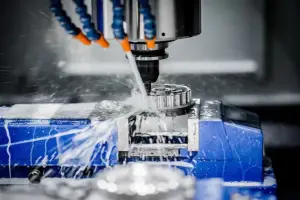
Milling: Milling operates on the opposite principle. Here, it is the cutting tool - the milling cutter - that rotates, often at very high spindle speeds, while the workpiece generally remains stationary or is repositioned by the machine's table or rotary axes. The rotating cutter moves across the surface of the workpiece, removing material as it travels along programmed paths in multiple directions. Because the cutter can approach the part from many angles, and because modern CNC milling machines commonly include 3-axis, 4-axis, or even 5-axis capability, milling offers far greater flexibility in the types of cuts, pockets, and contours that can be produced.
This fundamental difference - rotating workpiece versus rotating tool - is the starting point for nearly every other distinction between the two processes.
Applicable Part Shapes
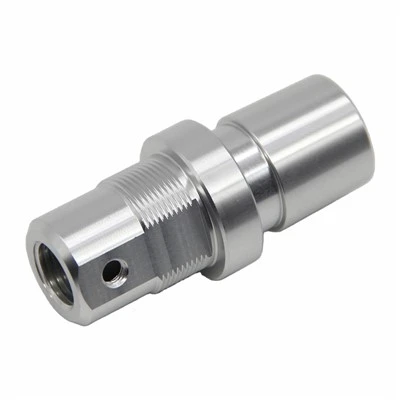
Turning is particularly well suited to machining cylindrical parts - shafts, sleeves, bushings, pins, and any component that is rotationally symmetric around a central axis. Because the workpiece spins continuously during cutting, turning naturally produces round profiles, and it is the go-to process whenever a design calls for external diameters, internal bores, tapers, or threaded cylindrical features. Parts like drive shafts, hydraulic cylinders, and threaded fasteners are classic examples of turned components.
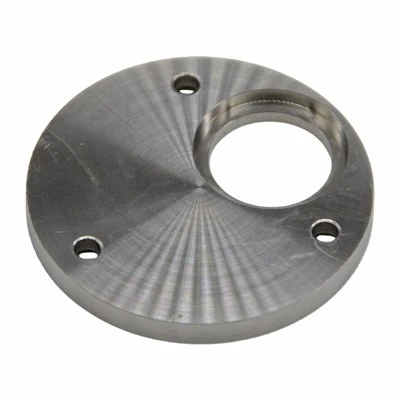
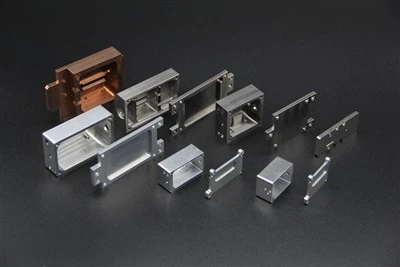
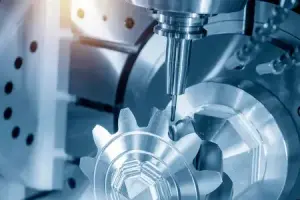
Milling, by contrast, is far more versatile in terms of geometry. Because the cutter can move along multiple axes and approach the workpiece from different directions, milling can produce flat surfaces, contoured or free-form surfaces, slots, pockets, holes, and complex 3D shapes that would be difficult or impossible to achieve through turning alone. This broader range of applicable shapes makes milling the preferred choice for parts such as brackets, housings, molds, gears, and structural components with non-rotational geometry.
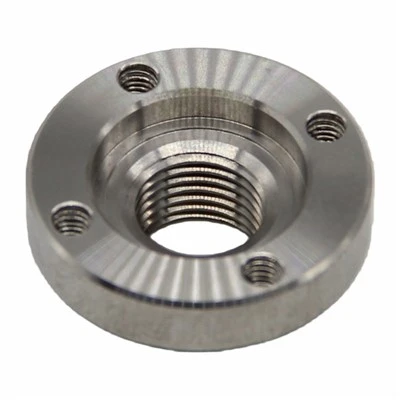
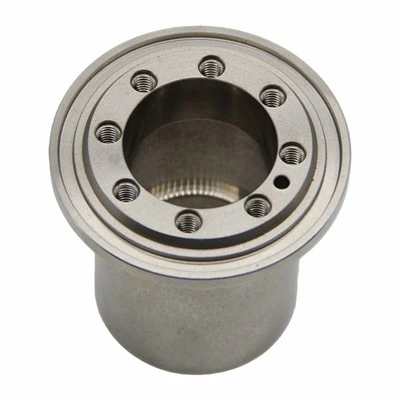
In many real-world manufacturing workflows, turning and milling are not mutually exclusive - they are often combined. A single component might start as a turned cylindrical blank and then be moved to a milling operation (or a mill-turn hybrid machine) to add flats, slots, or off-axis features that a lathe alone cannot produce.
Machining Precision and Surface Quality
Turning generally delivers higher machining precision and superior surface finish, which is why it remains the process of choice for parts with tight tolerance requirements on cylindrical features. Because the workpiece rotates at a constant, controlled speed against a fixed tool, turning tends to produce very consistent surface texture along the length of a cut, with minimal chatter or vibration when properly tuned. This makes turning ideal for precision shafts, bearing journals, and sealing surfaces where roundness and surface roughness values must meet strict specifications.
Milling can also achieve excellent precision and surface quality - high-end CNC milling centers with rigid spindles, quality tooling, and optimized feeds and speeds routinely hold tolerances in the same range as turning. That said, because milling involves an interrupted cut (the cutter engages and disengages material repeatedly as it moves through its path, especially in pocketing or contouring operations), it can be somewhat more prone to tool marks, vibration, or surface inconsistency compared to the continuous cutting action of turning. In exchange for this slight trade-off in surface consistency, milling offers significantly higher production efficiency for parts requiring multiple features across different surfaces.
Production Efficiency
Turning is typically best suited to producing a single part or a small batch of parts with very high precision. Because the process is optimized around one rotational axis, setup and cycle times for simple cylindrical geometries can be fast, but turning is not inherently designed for extremely high-volume removal of complex, multi-directional material.
Milling, on the other hand, is well known for its high production efficiency, particularly in scenarios involving large-batch manufacturing or the removal of substantial volumes of material. Multi-axis CNC milling machines can rapidly clear large amounts of stock, cut multiple features in a single setup, and run unattended for extended periods with automated tool changes - all of which make milling especially valuable for high-volume production runs where throughput and repeatability matter as much as precision.
Summary
Turning and milling both hold an important place in the field of mechanical manufacturing, and each carries its own distinct strengths and ideal use cases. Turning excels at producing high-precision, rotationally symmetric parts with excellent surface finish, making it the natural choice for shafts, bushings, and similar cylindrical components. Milling, meanwhile, offers far greater versatility in the shapes and features it can produce, along with higher throughput for batch production, making it the go-to process for flat, contoured, or geometrically complex parts.
In practice, selecting the right machining method - or combining both within a single production workflow - depends heavily on the specific requirements of the part in question: its geometry, the tolerances it must meet, the surface finish required, and the production volume needed. Manufacturers and engineers who understand these core differences are better equipped to specify the right process from the outset, reducing costly redesigns, minimizing lead times, and ensuring that the final component meets both functional and economic requirements. For complex assemblies that combine cylindrical and non-rotational features, working with a machining partner capable of both turning and milling - or offering integrated mill-turn capability - often provides the most efficient path from design to finished part.