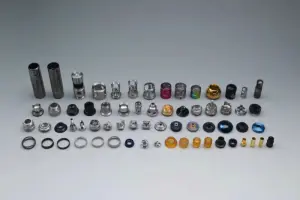

Vacuum casting is a process technology that molds liquid materials under negative pressure, commonly used for the precision replication and small-batch production of materials such as polyurethane, epoxy resin, and silicone. Its core principle is to eliminate air under vacuum, allowing the material to fill the mold in a bubble-free environment, thus obtaining high-quality products.
This process is typically performed inside a vacuum chamber. First, the mold is placed in the equipment, then a vacuum is drawn to a certain negative pressure (usually close to -0.1 MPa), and then the pre-mixed liquid resin is slowly poured into the mold. Because internal air is removed, the material can more fully fill in fine structures, avoiding air bubble residue.
A key characteristic of vacuum casting is its high replication accuracy. It is often used in conjunction with silicone soft molds to highly reproduce the details of the prototype, even including textures and microstructures, and is therefore widely used in the industrial design verification stage.