The most common mistake people make with a metal 3D printing service is also the most expensive one: drag an STL file into a website, place the order, wait for the box - and discover the part doesn't behave like they hoped. Metal printing is not plastic printing with a heavier material. It's a family of very different processes, each suited to different parts, and the choices you make before you order decide whether you get a prototype or a paperweight. Three decisions matter most: the process, the alloy, and the post-processing. Get those right and the rest is logistics.
First, the honest question: does your part even need a metal 3D printing service? Metal printing earns its keep on four kinds of work. Internal geometries you can't machine - conformal cooling channels, lattice structures, complex internal cavities. Lightweighting where every gram counts. Small batches where tooling costs can't be justified. And difficult alloys like titanium or Inconel that chew up tooling in conventional machining. If your part is a simple bracket with straight holes and you need five thousand of them, CNC machining wins on cost per piece. If it has an organic shape, an internal channel, or needs to be made of something hard to cut, that's when a metal 3D printing service stops being an option and becomes the plan.
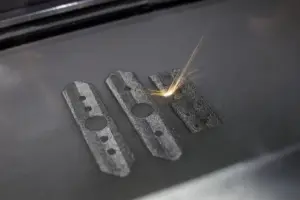
Now the acronym soup. SLM - selective laser melting - fully melts the metal powder, layer by layer, into a solid part. That gives you near-full density and mechanical properties close to wrought material, which is why SLM is the default for structural parts in titanium, aluminum, and stainless steel. DMLS - direct metal laser sintering - fuses powder at a scale that suits multi-component alloys like nickel-based superalloys and cobalt-chrome. For most engineers the practical rule is simple: structural parts in common metals go SLM; specialty superalloys and alloys engineered for extreme service ask for DMLS. Add EBM and binder jetting to the list if you're shopping exotic territory, but SLM and DMLS cover the overwhelming majority of what a metal 3D printing service is asked to do.
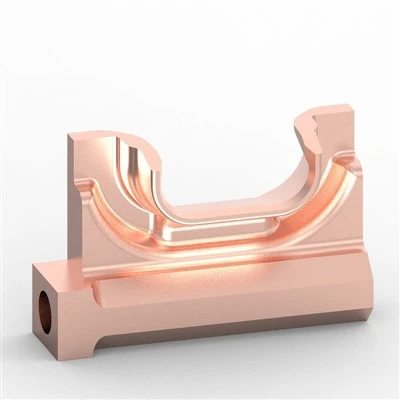
Alloy selection is where projects actually succeed or fail. Ti-6Al-4V is the workhorse for aerospace brackets and medical implants - strong, light, biocompatible. 316L stainless steel brings corrosion resistance and is the go-to for tooling, marine parts, and food-grade components. Aluminum alloys give you light, thermally conductive parts for automotive and electronics. And then there's pure copper, the one that breaks most printers: copper reflects infrared lasers and conducts heat away so fast that standard machines can't melt it properly. A capable metal 3D printing service solves this with green-laser technology - Multi-Wins, for example, runs 515nm LPBF specifically for copper, hitting 95–98% IACS electrical conductivity and around 390 W/m·K thermal conductivity with minimum features down to 0.3–0.5mm. That's the difference between a supplier who prints your heat sink and one who actually makes it work.
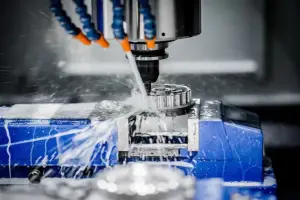
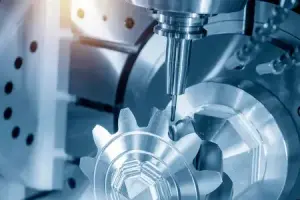
Post-processing is the part of the quote everyone underweights. A part fresh off the build plate has support structures to remove, residual stress from rapid melting and cooling, and a surface finish that looks more like sandblasted metal than machined. Serious shops follow the print with stress relief or heat treatment, remove supports carefully, machine the critical mating faces to tolerance, and finish the surfaces - bead blasting, polishing, or coating as the application demands. If your metal 3D printing service quotes you a raw-print price and stops there, the "savings" will come back as rework. Ask what the finished part includes before you compare numbers.
Which brings the question: how do you actually vet a metal 3D printing service? Run through a short checklist. Do they publish the process range - SLM, DMLS, EBM, MJF - or only the one they own? Can they quote your exact alloy, or just "stainless"? Are they certified - ISO 9001:2015 at minimum, IATF 16949 if your parts end up in vehicles? Do they have post-processing in-house, or do they ship your parts out to a third shop? And most tellingly: will their engineers push back on your design? A supplier who tells you upfront that a 60-degree overhang needs supports, that this wall is too thin for the alloy, or that your file has a hidden non-manifold edge is worth more than one who just says yes and prints it.
Multi-Wins is the kind of metal 3D printing service that answers yes to most of that checklist. They hold both ISO 9001:2015 and IATF 16949 certifications, run 250+ pieces of high-end equipment across two decades of manufacturing, and their additive line covers metal printing, SLS, and MJF alongside full CNC machining - which matters more than it sounds. When the same shop prints your part, machines its critical faces, and finishes the surface, you eliminate the hand-off errors and tolerance arguments that come with splitting work across vendors. Their metal 3D printing experience spans automotive, aerospace, and medical customers, and the green-laser copper capability is the kind of specialty that separates a generalist from a partner.
Choosing a metal 3D printing service was never really about the lowest quote. It's about finding someone who treats process, material, and post-processing as one engineering problem instead of three line items. Ask the right questions, verify the answers, and the part you get back will be the part you designed - not a close approximation that failed quietly on the test bench.