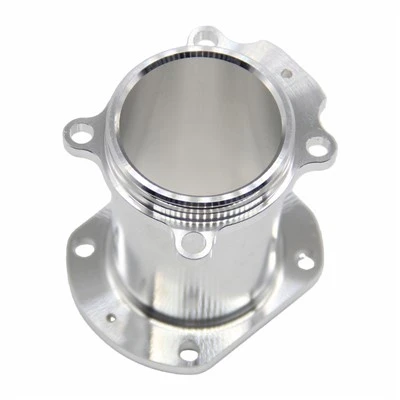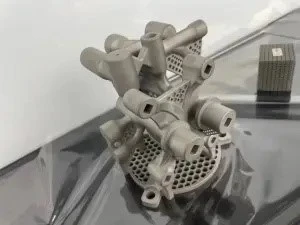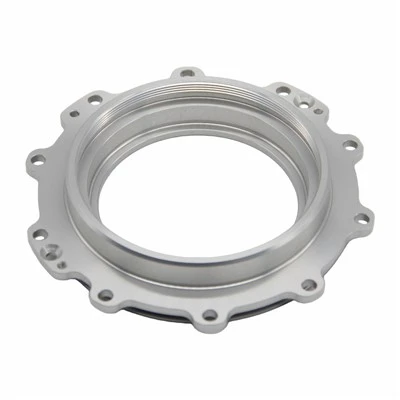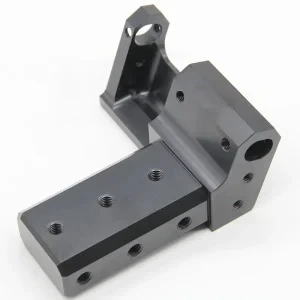

Ten years ago, a part with a compound angle meant five setups, three fixtures, and a long argument over which tolerance we'd have to give up. Today the same part comes off the machine in one setup. That's the difference 5 axis cnc machining services make, and it's why they've gone from a specialty to something most customers ask for upfront.
Before you send drawings out and start comparing quotes, it's worth knowing what five-axis actually does, what it doesn't, and where the money goes. We have this conversation with every customer before we write a 5 axis cnc machining services quote, so you might as well hear it now.
What five-axis machining actually means
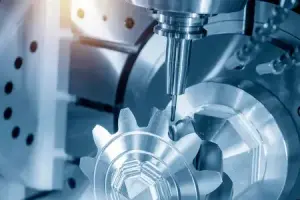
A 5-axis machine moves the tool along X, Y and Z, and adds two rotary axes, usually A, B or C. The extra axes let the tool approach a feature from an angle, which means you don't have to rotate and re-clamp the part between operations. Every re-clamp introduces a little error, so cutting them out helps the tolerance hold.
Two different jobs get lumped under 5 axis cnc machining services, and they're not the same thing. The first is 3+2 positioning: the machine tilts the part to a fixed angle, locks the rotary axes, then cuts with regular three-axis moves. It's quick and works well for boxy parts that need five faces done in one setup. The other approach is simultaneous five-axis, where all five axes move together and the tool traces a curved surface. You need this for impellers, turbine blades, and similar freeform shapes.
If a shop can't tell you which one your part needs, that tells you something right there. Most of the 5 axis cnc machining services work we quote is 3+2. Full simultaneous five-axis is less common and takes more planning, but sometimes it's the only way.
Where the value shows up
People say five-axis is for "complex geometries," which doesn't tell you much. Here's what it actually means on the shop floor.
Setup is where most errors come from. Re-clamp a part and the position shifts a little. Do it four times and those shifts add up. One setup instead of four doesn't just save time; it removes whole classes of problems. You also get a better surface finish, because the tool stays tangent to the part instead of stepping over it, and you can use short, rigid tools, which cut cleaner and last longer. It's also why companies that have never used 5 axis cnc machining services are sometimes surprised by the quote: they're comparing one setup against four, and the math only works if you count the whole job.
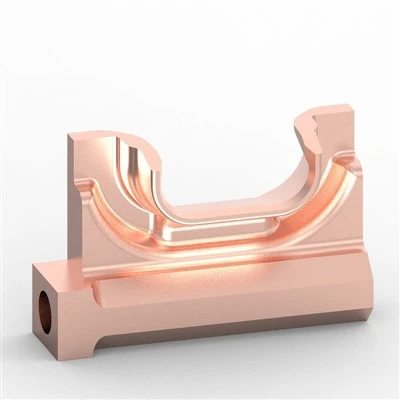
Then there's the geometry itself. Undercuts, compound bores, thin walls, twisted channels: features that would force a 3-axis shop to get creative with fixtures, or hand parts off to EDM, become routine. For a thin-walled housing or a titanium bracket, this isn't a luxury. It's the only practical way to hold the tolerance.
That's why we push back when someone assumes 5 axis cnc machining services are a premium product for exotic industries. They're a tool, like any other: use them where they earn their keep, skip them where they don't. A simple part on a five-axis machine is just a more expensive simple part, and any 5 axis cnc machining services provider that won't tell you that is selling you something you don't need.
When you don't need it
Plenty of parts don't need five axes at all. A flat plate with drilled holes is a three-axis job, full stop, and a good shop will tell you so. Honestly, a large share of the drawings that land on our desk don't need 5 axis cnc machining services either. They need someone to say so.
You'll see five-axis in aerospace, medical, mold and die, automotive prototyping, energy, and robotics. The parts are the usual ones: turbine blades, implants, mold inserts, engine components, valve bodies. Materials run from aluminum and stainless to titanium, tool steel, Inconel, and plastics like PEEK. Any shop offering 5 axis cnc machining services should be able to talk feeds and speeds for these materials without looking them up. The machine itself is only half of it. The programming and the tooling strategy are the other half, and that's where good shops separate themselves.
If your part has one or two features like this, a shop that does both 3-axis and 5 axis cnc machining services can often split the job and save you money. That flexibility is worth asking about up front.
Picking a shop, and a quote
The machine matters less than the people running it, and that's true of 5 axis cnc machining services just as much as three-axis work. You can have a ten-thousand-hour spindle in a shop that can't program their way out of a paper bag. We've seen five-axis work fail on the CAM side far more often than on the machine side, which is why we check three things before we trust a quote.
First, ask about programming. How does the shop verify toolpaths? Do they simulate the full job and check for collisions? A shop that walks you through their CAM workflow, and pushes back on your model when a feature is going to be a problem, is worth more than one that says "no problem" to everything.
Second, ask how they inspect. Five-axis parts tend to be the ones where tolerances are tight, so inspection matters. Ask whether they use a CMM, in-process probing, or first-article inspection, and what the report actually contains. Also ask what happens when a dimension comes in out of spec. A good shop will tell you straight; a bad one will hope you don't check. Watch how they answer. Evasiveness is a red flag.
Third, ask what they'd change about your design. It's the best question we know. If a shop comes back with suggestions about draft angles, wall thickness, or a cheaper way to hold the part, they're thinking about your job, not just their margin. When you're comparing 5 axis cnc machining services, the quote with engineering notes is almost always the better one, even if it costs more. On certifications: ISO 9001 is basic, AS9100 matters for aerospace, ISO 13485 for medical. They're worth having, but a certificate on the wall doesn't mean the parts will be right. When you're weighing 5 axis cnc machining services quotes side by side, treat the cheapest one as a flag, not a win.
What you end up paying
Five-axis costs more per hour than a 3-axis machine. That's the part everyone notices. It's also the wrong number to focus on. Programming is a one-time cost that spreads across the run. Fewer setups mean less fixturing, less labor, less inspection time. Scrap is the expensive part, and five-axis parts scrap less often.
So the honest math is: for a complex part, 5 axis cnc machining services often come out cheaper than the multi-setup alternative once you count engineering time and rework. For a simple part, they're overkill. The supplier who tells you which one you've got is the one you want. If a quote for 5 axis cnc machining services doesn't break down setup time, machining time, and inspection time separately, ask why. You're not being difficult; you're learning how the shop thinks.
One last thing
You don't need to become a five-axis expert to buy it well. You need a shop that explains the process, shows its working, and tells you when you're better off elsewhere. Start with the drawing, ask the questions above, and ask for a DFM review before anyone commits to a process. If a shop hesitates on that, keep looking. The right 5 axis cnc machining services won't just make the part. They'll make it look easy, and that's a sign you picked well.