
The drawing usually reveals the process
A machined part does not care whether a supplier prefers mills or lathes. Its geometry decides. Broad faces, pockets, slots, and features approached from several directions usually point toward milling. Diameters, shoulders, grooves, and threads arranged around one centerline generally favor turning.
The difficult jobs sit between those categories. A cylindrical housing may need a connector pocket on one side. A shaft may include cross-holes, wrench flats, or an off-center slot. In those cases, the real decision is not simply milling versus turning. It is how to hold the critical relationships without creating unnecessary setups.
Multi-Wins lists CNC turning, 3- and 4-axis milling, 5-axis machining, and compound machining among its capabilities. That range is useful only when the chosen route matches the part. More axes and more operations do not automatically produce a better result.
When milling is the natural starting point
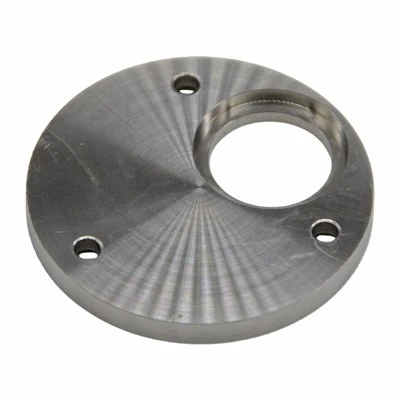
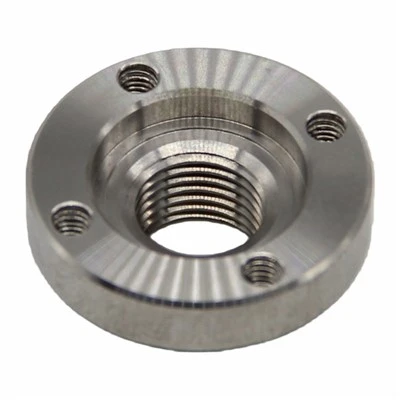
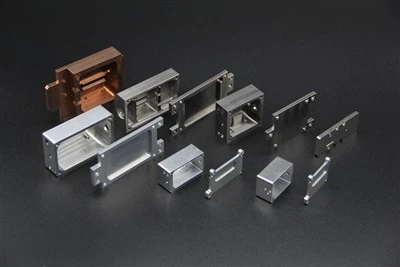
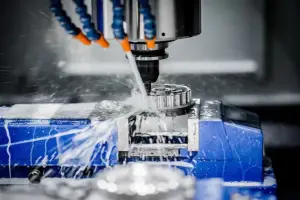
A cnc milling service holds the workpiece while a rotating cutter removes material. The process suits brackets, housings, plates, manifolds, heat sinks, tooling components, and parts dominated by non-rotational features.
Three-axis machining works well when features are accessible from straightforward directions. A fourth axis can rotate the workpiece for features around its sides, while five-axis equipment can reduce repositioning on complex surfaces and compound angles. The value lies in access and setup reduction-not in adding an impressive machine name to the quotation.
For custom cnc milling, the first design review should identify tool access, internal corner radii, pocket depth, thin walls, datum surfaces, and areas that require a special finish. A narrow, deep pocket may be possible, yet demand a long cutter that is more likely to deflect or chatter. A slightly larger internal radius can sometimes improve stability and shorten cycle time without affecting how the part works.
Turning is efficient when the centerline controls the part
A cnc turning service rotates the workpiece against stationary cutting tools. It is a direct way to produce shafts, bushings, sleeves, pins, rollers, nozzles, threaded components, and other parts built around a rotational axis.
Simple appearance can be misleading. Thin rings may distort in the chuck. Long shafts can vibrate. Deep bores complicate chip removal and measurement. Tight runout between two separated diameters may matter more than several ordinary dimensional tolerances elsewhere on the drawing.
Multi-Wins publishes a turning tolerance capability of ±0.005 mm for its CNC turning services. As with any published tolerance, the drawing still needs review. Diameter, length-to-diameter ratio, wall thickness, material, surface finish, feature access, and inspection method determine whether that tolerance is practical on a specific feature.
Custom turning often includes secondary geometry
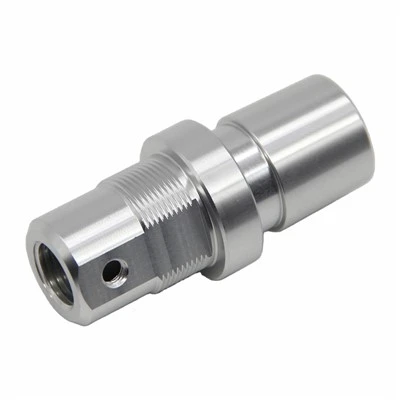
The phrase custom cnc turning does not mean that every feature must be produced by a stationary lathe tool. Many turned parts need milled flats, radial holes, axial slots, engraved markings, or other secondary work. The supplier can move the part to a mill or use a turning center with live tooling where appropriate.
Keeping features in one setup can protect their relationship to the turned centerline. Moving the part to another machine may be more economical for a straightforward job or a small quantity. Neither route is universally superior. The right choice depends on datum strategy, tolerance relationships, cycle time, tooling, and batch size.
A useful quotation should make that route visible. If a cross-hole is controlled tightly to a bearing journal, ask whether both will be completed in one setup. If their relationship is loose, a secondary operation may be perfectly reasonable and less expensive.
Precision milling depends on more than machine accuracy
Reliable precision milling services begin before the first chip. The fixture must support the part without distorting it. Cutting tools need enough rigidity and access. The operation sequence should leave stable material around critical features until those features are finished.
Temperature, tool wear, workholding, and measurement timing can shift results even when the machine itself is capable of fine positioning. This becomes obvious on thin plates, long features, and materials that release internal stress as stock is removed. Sometimes the answer is a roughing and finishing sequence with time between operations. Sometimes the design or stock form should change.
Multi-Wins states that its precision CNC milling covers 3-, 4-, and 5-axis machining of metals and engineering plastics, with published tolerances as tight as ±0.005 mm. That is a useful capability marker. It should be converted into feature-level requirements on the controlled drawing rather than applied indiscriminately to the whole part.
One part may need both processes
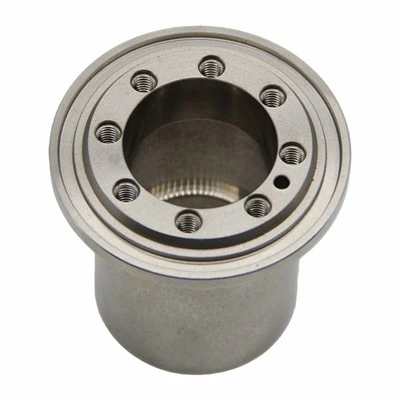
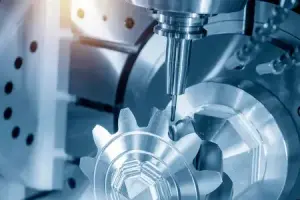
cnc milling and turning services are often combined for components that are mainly rotational but carry important off-axis geometry. Valve bodies, instrument housings, drive components, connectors, and robotic parts can fall into this group.
The manufacturing route might begin from bar stock on a lathe, establish the bore and outside diameters, then create milled features in the same machine or a later setup. Another part may begin as a milled block and require a precise turned bore. Process order matters because the first operations establish the surfaces used to locate everything that follows.
Ask which machine creates each critical feature and which datum will locate the part at every stage. That question is more revealing than asking whether a shop "has mill-turn." Equipment availability matters; process ownership matters more.
Material choice changes the machining plan
Multi-Wins lists aluminum, stainless steel, steel, brass, copper, titanium, Inconel, Invar, Kovar, and engineering plastics among its machining materials. A material name alone is not enough for production. Alloy and condition affect cutting behavior, tool wear, dimensional movement, achievable finish, and raw-stock availability.
Aluminum alloys often support efficient material removal, but a thin aluminum housing can move after unclamping. Stainless grades may work-harden if the cutting strategy is poorly matched. Engineering plastics react to heat and clamping differently from metals. Substituting a "similar" grade without approval can change both machining and part performance.
Include the exact material specification on the drawing and state whether certification or traceability is required. If heat treatment, anodizing, plating, passivation, or another finish follows machining, dimensions must be planned around that sequence.
Evaluate the manufacturer through process control
A cnc turning manufacturer should be able to explain more than machine quantity. Multi-Wins lists more than 150 precision turning lathes, over 80 three- and four-axis milling centers, and more than 10 five-axis machines. Capacity is valuable, but buyers also need to know how jobs move from first article to repeat production.
The company's published quality flow includes design review, first article inspection, in-process inspection, and final verification, with hand metrology, laser measurement, and CMM inspection available. For a specific order, confirm which dimensions are checked at each stage, the sampling plan, and whether an inspection report is required with shipment.
Send both the 3D model and a controlled 2D drawing. Identify functional datums, tight tolerances, threads, surface finish, material condition, finishing, expected quantity, and any special reporting requirement. Good process planning starts with those details. Without them, even an experienced shop is estimating what the part really needs.
The best process is the shortest reliable route
Milling is usually the better foundation for prismatic geometry. Turning is usually more efficient for concentric geometry. Combined machining earns its cost when features from both groups must maintain a close relationship or when production volume makes repeated refixturing inefficient.
There is no prize for using the most advanced machine. The goal is a route that protects the functional dimensions, can be inspected clearly, and remains stable when the order moves beyond the first sample. That is the point where machining capability becomes dependable production.
Tags: cnc milling service, cnc turning service, custom cnc milling, custom cnc turning, precision milling services, cnc turning manufacturer, cnc milling and turning services