
Search for a cnc machining manufacturer and you will have no shortage of names. A quick search turns up pages of suppliers showing similar machines, similar sample parts, and nearly identical promises about precision.
Working out which one should make your parts is harder.
One cnc machine shop may be excellent at producing a single prototype but struggle with a monthly order of 5,000 pieces. A large cnc manufacturing company may have ample capacity, yet place small jobs at the back of the queue. Grinding may happen two buildings away; plating may be handled across town. Some cnc machining companies say so clearly. Others bury that handoff in the fine print. If one of those outside processes controls the final dimensions, the hidden handoff matters.
Price and machine count help. A better clue is what happens after the RFQ lands: who reads the drawing, plans the setups, checks capacity, and owns a miss. That tells you much more about a cnc machining manufacturer.
CNC Machine Shop and CNC Manufacturing Company: Is There a Difference?
In day-to-day use, cnc machine shop usually means a business built around subtractive cutting from customer files. Walk through one and you might see mills beside lathes, a saw near receiving, and inspection gear in a separate room.
The term cnc manufacturing company is often used when the supplier takes on more of the order. It might buy stock, review the design, machine the parts, arrange finishing, and pack the finished batch.
These labels are not regulated categories. A small cnc machine shop can have exceptional five-axis skills and metrology. Some large cnc manufacturing companies are strongest at managing a broad supply chain and do not perform every operation themselves.
Labels are cheap. Follow the part instead. Where is it cut? Which steps leave the building? Who signs the final report? A reliable cnc machining manufacturer should know each answer.
Do Not Start With the Lowest Quote
Naturally, the eye goes straight to the total. The snag is that two totals may describe different jobs.
Imagine a drawing with a position tolerance linking features on two faces. One cnc machining manufacturer may plan to cut both features in a single five-axis setup. The competing cnc machine shop might put it on a three-axis mill, then relocate it three times. Both routes can work. Their setup time and risk are not the same.
Material is another source of quiet differences. One quote may include a specified alloy, temper, and mill certificate. Another may assume commercial stock. Finishing may include masking, coating-thickness checks, and cosmetic protection-or it may cover only the basic treatment.
Before comparing prices from cnc machining companies, put the quotes on the same footing. Check the material specification, included inspections, finish standard, packaging, and shipping terms. Ask whether the price covers a first article report and whether special gauges or fixtures appear as separate charges.
A low number is meaningful only when it buys the same job.
Machine Count Tells Only Part of the Story
Browse the sites of cnc manufacturing companies and the same photos appear again and again: three-axis mills, rotary tables, lathes, five-axis centers. Useful? Yes. Proof that your job will run well? No.
Capability also depends on travel, spindle characteristics, controls, tooling, workholding, and the people who program and operate the machine. A five-axis center may be ideal for a small impeller and completely unsuitable for a long rail or a high-volume turned pin.
Instead of asking only whether a cnc machine shop owns a certain machine, ask which machine it proposes for your part and why. Request the relevant work envelope, expected number of setups, and a description of similar work it has completed. The answer should connect the equipment to your geometry.
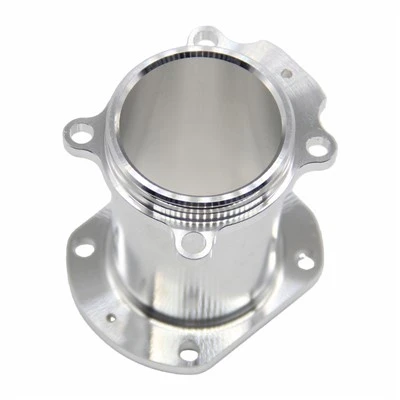
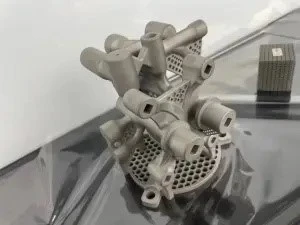
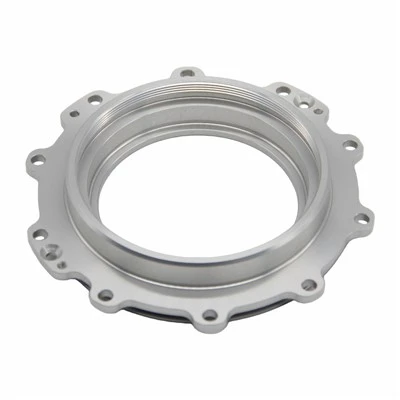
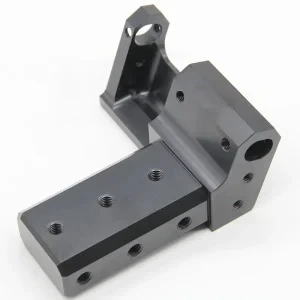
At Multi-Wins, the shop floor covers CNC milling, CNC turning, and five-axis work. The job can also move into metal 3D printing, rapid prototyping, finishing, or assembly when needed. That mix allows the process route to change as a project moves from an early prototype to repeat production.
For parts requiring several operations, coordination between departments matters as much as any individual machine. A component may be turned first, milled on the side, ground after heat treatment, and finished outside the cutting department. A cnc manufacturing company that manages those handoffs can simplify the job, provided its controls are clear.
Pay Attention to the Questions Asked Before Quoting
A complex drawing usually creates questions. Which general tolerance applies to unmarked dimensions? Are tool marks acceptable on the visible face? Must a bore meet its final size after anodizing? Is the sharp internal corner functional? Can a thin wall be adjusted? Does the material require a particular origin or certification?
An experienced cnc machining manufacturer raises these issues before cutting material. That may slow the first quote by a day, but it can prevent weeks of confusion later.
Be cautious when a cnc machine shop asks only for quantity and delivery date. The estimator may be calculating cycle time from the 3D model while overlooking notes and tolerances on the 2D drawing.
Useful DFM feedback is specific. "Increase this internal radius from 0.5 mm to 1.5 mm so a larger cutter can be used" is actionable. "The design is difficult" is not. A capable cnc manufacturing company should explain the manufacturing effect of any proposed change and leave the design decision with the customer.
This is one of the simplest ways to separate cnc machining companies that merely accept files from those that understand the work.
A Good Prototype Does Not Guarantee Stable Production
Making one approved sample and delivering 2,000 matching parts are different manufacturing tasks.
During prototype work, a machinist can stop frequently, adjust offsets, and inspect every feature. Repeat production needs stable fixtures, planned tool life, offset control, in-process checks, and a way to isolate suspect parts. Constant operator adjustment is not a scalable process.
Ask the cnc machining manufacturer how the prototype method will change for production. Will it build dedicated workholding? Which dimensions are checked at the machine? How often are cutting tools changed? What triggers an offset correction? What records are kept for critical features?
Expected volume belongs in the first RFQ. A general-purpose vise may be right for ten pieces. At 5,000 pieces, a multi-part fixture, bar feeder, or automated inspection step may lower unit cost enough to justify additional preparation.
Multi-Wins supports work from single prototypes through volume production. For projects expected to scale, its engineering review can consider future fixture design, inspection time, and process repeatability before the first batch is released.
When comparing cnc manufacturing companies, look for a believable bridge between sample approval and routine production. "We can make any quantity" is not a production plan.
What Does the Quality Certificate Actually Cover?
ISO 9001 and IATF 16949 tell you that a cnc manufacturing company has a documented quality system. They do not measure your bore.
Check the certificate scope, expiration date, and covered address. If production takes place at another facility, ask how that location is controlled.
Then look at measurement capability. Calipers and micrometers are suitable for many direct dimensions. Tight positional tolerances, spatial hole patterns, and complex profiles may require a coordinate measuring machine, optical system, contour instrument, or purpose-built gauge.
Ask the cnc machine shop how it intends to verify the dimensions that drive fit and function. The planned inspection method should be visible in the quote or quality plan, especially when a drawing contains geometric tolerances.
Medical, automotive, aerospace, semiconductor, and other controlled projects may also require material traceability, lot records, first article reports, process certificates, and formal change control. Some cnc machining companies handle that paperwork routinely. Others can machine the geometry but are not set up for the documentation.
A cnc machining manufacturer must be able to prove the part, not just cut it.
Which Operations Stay In-House?
Machining rarely ends when the spindle stops. Deburring, cleaning, heat treatment, anodizing, plating, passivation, painting, marking, and assembly may all sit between the machine and the shipping box.
Subcontracting is normal. A specialist finishing provider can do better work than a cnc machine shop attempting a process it rarely uses. The risk appears when ownership is vague.
If outside suppliers are involved, find out who verifies the part before and after each external process. Threads, sealing lands, bores, and electrical contact areas may need masking. Heat treatment or coating buildup may alter dimensions that were correct after machining. Cosmetic parts need protection while moving between facilities.
A cnc manufacturing company should track the lot, inspect the returned work, and take responsibility if the external process causes a failure. The customer should not have to referee an argument between the machine shop and the plating company.
Ask each cnc machining manufacturer to identify subcontracted steps in the quote. That one question makes comparisons between cnc manufacturing companies much clearer.
Test a New Supplier With a Real Order
A sample or pilot batch reveals things no website can show.
Do not judge the test only by the final measurements. Note whether technical questions were clear, whether the promised date was met, and whether the packaging protected the parts. Watch how the supplier handles a drawing revision or a minor nonconformance.
If material becomes unavailable, does the cnc machine shop ask before substituting it? If a dimension trends toward a limit, does the team report it early? When the drawing changes, can it stop the old revision from reaching the floor?
These habits matter during a long program. A cnc manufacturing company that communicates well during a twenty-piece pilot is easier to trust with the next order.
Once the pilot is approved, define the production inspection plan, packaging standard, revision, and release procedure in writing. That keeps the assumptions from the sample stage attached to the production order.
Match the Supplier to the Order
A cnc machine shop focused on prototypes may respond quickly but offer little advantage at higher volume. A production-oriented cnc manufacturing company may run large batches efficiently while resisting frequent design changes.
When evaluating cnc machining companies, describe that future stage. Share the prototype quantity, expected annual demand, revision status, and any planned qualification testing. Better context produces a more useful process proposal.
Questions Worth Asking a CNC Machining Manufacturer
Keep the discussion tied to your part. Ask which equipment will be used, how many setups are planned, and which feature presents the greatest risk. Confirm the material source, first article procedure, in-process checks, and outside finishing route.
It is also worth asking when the quoted lead time starts. Some cnc manufacturing companies count from the purchase order date; others begin after drawing approval, material arrival, or deposit. Those differences can turn a "two-week lead time" into a much longer calendar schedule.
For repeat work, ask how the cnc machine shop controls revision changes, fixtures, CNC programs, and inspection records. If a process change becomes necessary, who must approve it?
Strong answers will refer to the drawing. If the response stays at "high quality, fast delivery, and competitive price," you still do not know how the part will be made.
Record the answers in the same supplier evaluation sheet. This prevents the lowest quote from winning by default and gives engineering, quality, and purchasing teams a common basis for reviewing cnc machining companies.
Multi-Wins as a CNC Machining Manufacturer
Multi-Wins is a precision cnc machining manufacturer based in Shenzhen, China. Its capabilities include CNC milling, CNC turning, five-axis machining, metal 3D printing, rapid prototyping, finishing, and assembly.
The company works with aluminum, stainless steel, titanium, and a range of engineering plastics. Projects can move from a one-off prototype to pilot production and recurring orders. Multi-Wins serves applications in medical equipment, robotics, automotive systems, electronics, semiconductors, aerospace, and general industry.
As a cnc manufacturing company with machining and supporting processes, Multi-Wins can coordinate drawing review, material, production, inspection, finishing, and assembly. Customers have one point of contact for revision control and delivery.
That does not mean every project receives the same route. A useful review begins with the files. Send the 3D model, controlled 2D drawing, material, quantity, finish, and required documentation. The engineering team can then select equipment, estimate setups, define inspection, and confirm lead time.
Final Thoughts
Choosing a cnc machining manufacturer on price alone leaves too many questions unanswered. Machine count and company size are useful signals, but they say little about drawing interpretation, process control, or the response when something changes.
A reliable cnc machine shop should identify manufacturing risks and explain how the part will be produced and inspected. A long-term cnc manufacturing company must also manage material, subcontractors, revision changes, and consistency from batch to batch.
The most useful way to compare cnc machining companies is to make the discussion specific. Which supplier asks the right questions? Which one can explain the process route? Which inspection method matches the drawing? Those answers deserve more weight than broad claims on a website.
Start with a real pilot order, review the result, and expand the volume after the process has proved itself. To discuss a project with Multi-Wins, send the drawings, material, quantity, finish, and quality requirements for a manufacturing review.
Tags: cnc machining manufacturer, cnc machining companies, cnc manufacturing company, cnc machine shop, cnc manufacturing companies